Portable Electric Coffee Grinder Review: Can NT$339 Ceramic Burrs Handle Light Roast?
30-second verdict
Fits small-space medium-dark fresh grinding with entry evenness; skip if you need daily light-roast espresso fines.
Good for
- Dorm or office users who want fresh grounds
- Campers packing medium-dark beans
- Beginners budgeting around NT$300
Not for
- Daily light-roast espresso-fine users
- Buyers who want metal burrs and low retention
- Anyone unwilling to brush retention manually
Buying Guide Notes · First published:
Compiled from public sourcesWritten using official specs and user feedback.

Pros
- White/grey matte body with a clear chamber is easy to tell from blade choppers
- Type‑C plus twist grind control suits dorms and offices
- About NT$339 with 1,000+ sold keeps a first fresh-grind try cheap
Cons
- Same-model long posts are scarce; light-roast torque and step precision lack instrument checks
- Ceramic burrs in category threads are often warned against very hard beans
- Static retention on plastics is common—you need a brush habit
Specs
| Item | Detail |
|---|---|
| Product | Portable electric coffee grinder (CARTER HOUSE Taiwan-shipping badge on the thumbnail) |
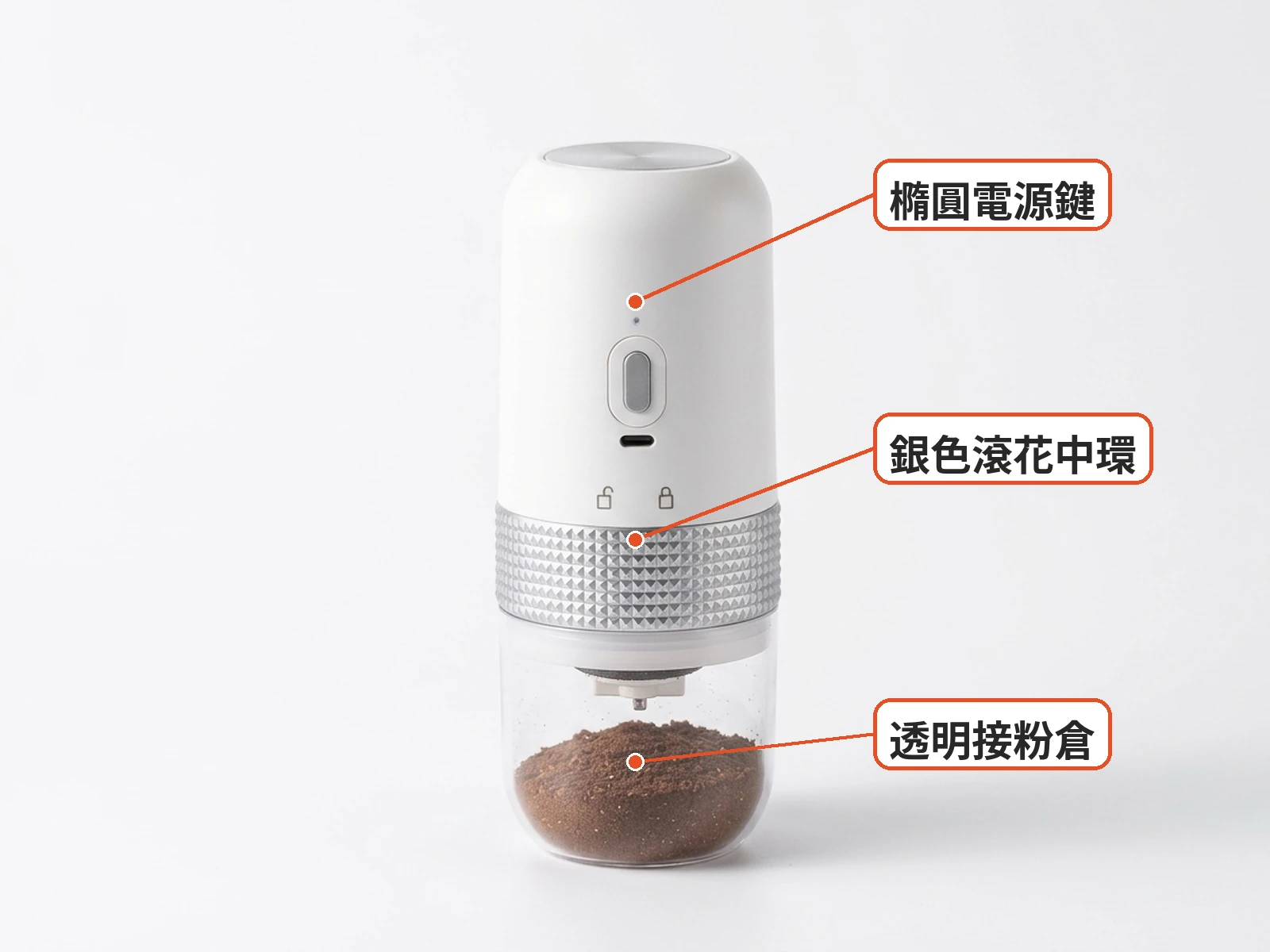
| Look | Matte white or dark-grey cylinder; oval power button; knurled silver mid ring; clear grounds chamber |
| Common labels | Type‑C charging, ceramic burr, adjustable grind (marketing labels) |
| Common claims | Wireless grinding with twist fine/coarse control; confirm step count and torque in the option text |
| Common use | Medium-coarse grinding for pour-over or French press; travel medium-dark beans |
| Price note | About NT$339 (promo prices change) |
| Sold note | About 1,000+ sold |
| Public data thin | Exact step count, burr size, battery capacity and cups per charge, light-roast jam reports, noise tests |

Sources and verification status
Verification status: compiled from public sources; not hands-on tested
Data updated:
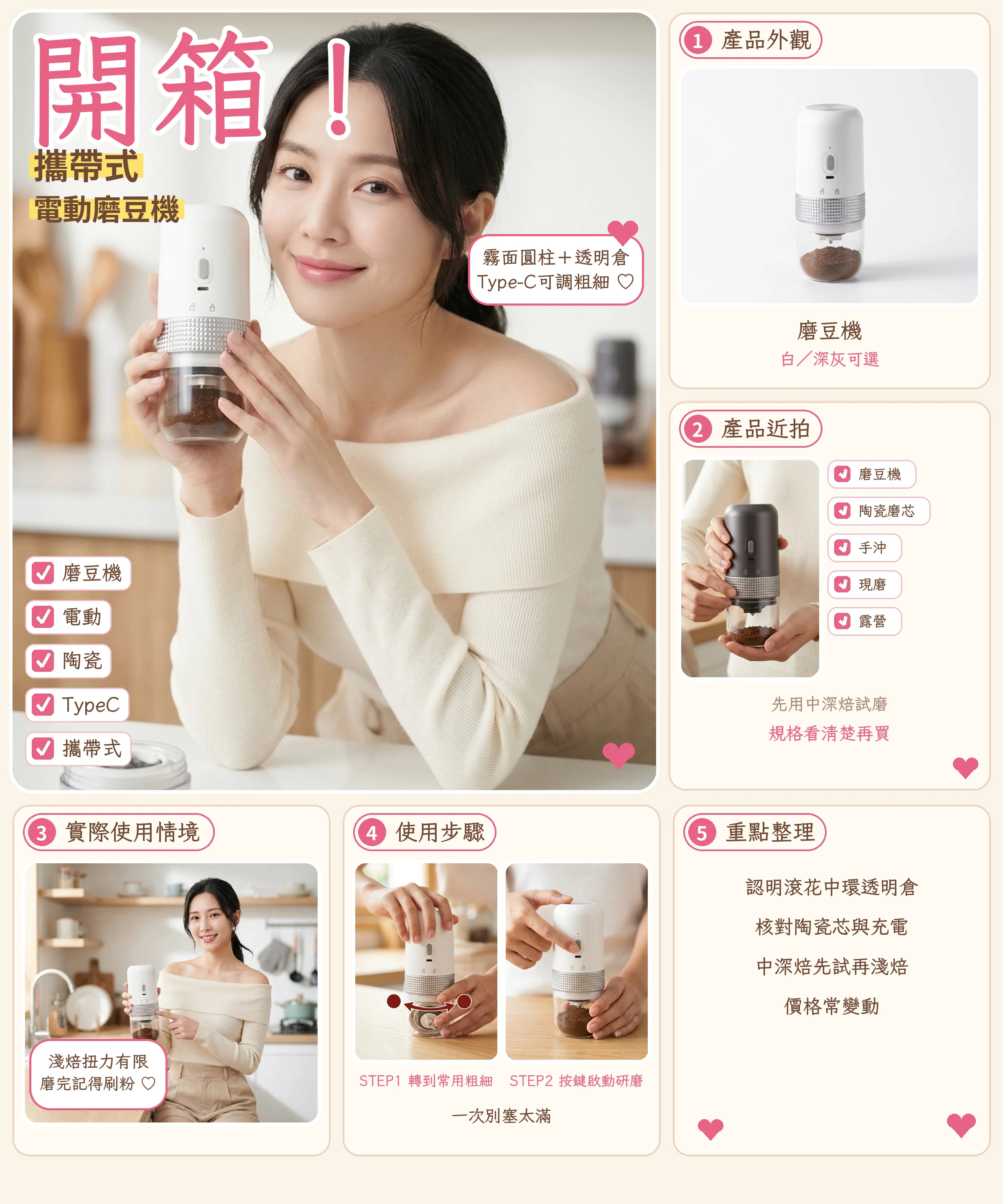
If you want fresh grounds without parking a full-size grinder on the counter, cylindrical chargeable units come up often. This portable electric coffee grinder thumbnail shows a CARTER HOUSE Taiwan-shipping badge, with a matte white or dark-grey body, an oval power button, a knurled silver mid ring, and a clear grounds chamber. Marketing calls out Type‑C, a ceramic burr, and twist fine/coarse control. Treat it as an entry wireless grinder, not a high-end espresso grinder.
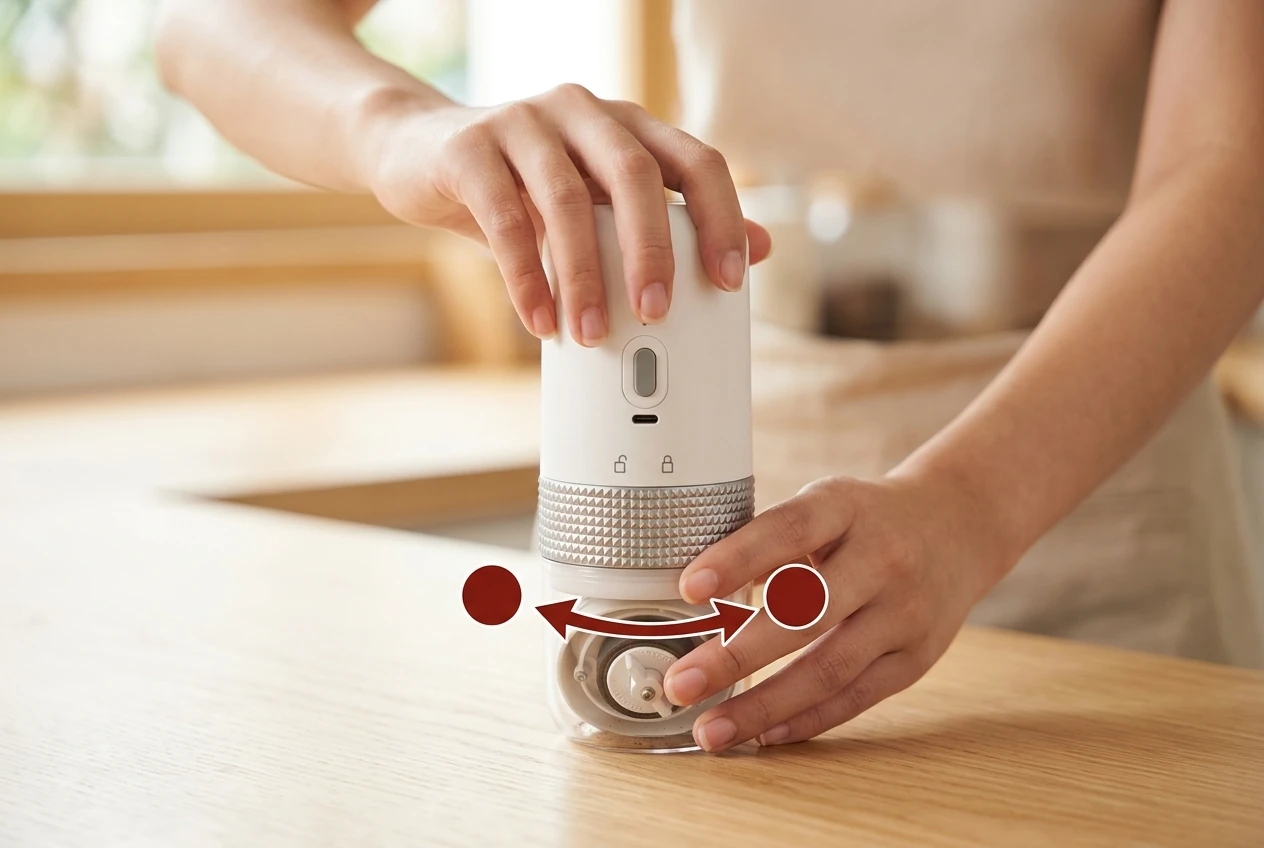
The look is easy to spot: frosted upper body, a turnable silver knurled ring (lock/unlock icons often sit above it), and a clear bottom chamber that shows grounds. Rotating the chamber relative to the burr moves between fine and coarse—icons mark the direction. Trust the physical scale on the unit you receive, not thumbnail overlays alone.
Which Brews Fit a Portable Electric Coffee Grinder?
On PTT Coffee, portable ceramic electric open-boxes and ask threads circle USB/Type‑C charging, whether steps cover pour-over, and whether ceramic burrs fear hard beans. Oceanrich G2 notes often praise travel use while nitpicking the bean chute or evenness; others warn limited torque on very hard light roasts, with jam or chip risk. This CARTER HOUSE-badged model lacks a same-model long thread, so keep those notes as category context.
Good fit: dorm, office, or camping users grinding medium-dark beans on a roughly NT$300 budget. Poor fit: daily light-roast espresso fines, or buyers who want metal burrs and low retention—those buyers usually look at Femobook A2, a steel hand grinder, or a countertop conical-burr grinder.
Daily rhythm: add beans, dial coarseness, press start, empty grounds, then brush retention. The clear chamber helps you see volume, yet static on budget plastics is common; tap and brush rather than soaking the burr assembly. Do not overfill; stop if the motor sounds strained.

Practical Take: What Should an NT$300 Portable Electric Coffee Grinder Deliver?
Set expectations at “leave instant coffee, usable for medium-dark pour-over” and the experience usually tracks; expect “one machine replaces a cafe grinder” and this price band disappoints fast. Type‑C charging shares cables easily, but cups-per-charge and cycle life rarely have public instrument data—test with your own beans after delivery.
Price is about NT$339, with about 1,000+ sold; spoon and brush extras often appear in the bundle (match the current set). When white and dark grey are both listed, decide whether the unit sits on a counter or disappears into a bag. Grind twice at home before a trip so a jam does not surprise you in a hotel.
On arrival check cracks, chamber seal, smooth ring travel, button feel, and charging response. First grind a cheap medium-dark bean to learn noise, range, and stall risk before feeding pricey light roasts.
Cleaning note: avoid soaking the burr and electronics; brush grounds and wipe the shell. Old oil flavor migrating into new coffee shows up in almost every portable-grinder thread when people skip brushing. If you only brew twice a week, air the chamber after grinding instead of sealing wet fines inside.
Mindset: this is a grab-and-go fresh-grind helper, not a lab particle instrument. Match the grind range to your bean hardness before upgrading to a steel burr or a hand grinder.
What users say
PTT Coffee: Oceanrich G2 portable ceramic electric open-box likes USB travel charging yet flags a messy bean chute; replies also question burr wobble. The board’s portable electric ask and travel electric grinder thread keep returning to runtime, jams, and ceramic vs metal burrs. Those are category threads; a full same-model long post for this CARTER HOUSE-badged unit is still missing.

Similar alternatives
- Oceanrich-style portable ceramic electrics: more forum open-boxes for charging and step feel
- Femobook A2-class metal-burr chargeables: higher price, more pour-over to home-espresso talk
- 1Zpresso-style steel hand grinders: no battery, steadier light-roast torque, but you turn the handle
Bottom line: this portable electric coffee grinder suits travelers and small kitchens that want medium-dark fresh grounds without a desk machine. Keep light-roast expectations modest and brush the chamber after each use.
FAQ
Can it grind light-roast espresso fines?
Budget ceramic chargeables in forum notes usually stay on medium-dark pour-over; very hard light roasts or ultra-fine settings jam more often.
Is CARTER HOUSE the grinder brand?
CARTER HOUSE is a Taiwan-shipping badge on the product image; there is no public info showing it is the grinder's maker.
Can I wash the burr under water?
Forum cleaning notes usually stick to soft brushes and dry wipes; soaking electronics and burrs often goes wrong.
How do I choose versus a hand grinder?
Pick electric if you want less effort and faster grounds; pick a steel hand grinder if light-roast torque and no battery care matter more.
Where to buy
NT$339 | See the lowest price →
Check the details on the seller's page before you buy.
You might also like
Appliances
Product analysisUSB Nail Drill Review: Can a NT$100 Pen Remove Gel?
Gel lifting at the edges and no time for a salon visit? Check this NT$100 USB nail drill pen's five bits, speed control and best uses before you buy.
NT$100

Appliances
Product analysisPiggy Ceramic Desk Heater Review: Is a NT$349 Heater Safe Under Your Desk?
Cold hands and feet but no need for a big heater? This piggy ceramic fan heater is built for spot heat at the desk—check the tip-over cutoff and wattage first.
NT$349
Pets
Product analysisPet Nail Grinder Review: Does the LED Help, and Will Cats Hate the Noise?
Afraid of cutting the quick? Grinders help, but LED usefulness and cat tolerance still hang on noise and pacing.
NT$47

Appliances
Product analysispro sonic ace Electric Toothbrush Review: Is a NT$55 Sonic Toothbrush Worth Trying?
The pro sonic ace ultrasonic electric toothbrush costs about NT$55, a cheap way to try an electric brush; check refill heads, waterproofing and power before the high-speed copy decides for you.
NT$55