Disposable Picnic Mat Review: Can It Handle Grass And Sand?
30-second verdict
Disposable waterproof picnic mats suit rare dirty-fear short sits without washing—for thickness, wind, and repeat trips, reusable mats usually win.
Good for
- Occasional picnickers who hate washing dirty-grass mats
- Campus or short beach sits needing light unfold-and-go
- People fine packing trash out after use
Not for
- Weekly outings needing thick comfort and wind hold
- Rocky or heavy-rain camps needing reliable damp barriers
- Zero-trash shoppers committed to reusable gear
Buying Guide Notes · First published:
Compiled from public sourcesWritten using published specs and user feedback.

Sources and verification status
Verification status: compiled from public sources; not hands-on tested
Data updated:
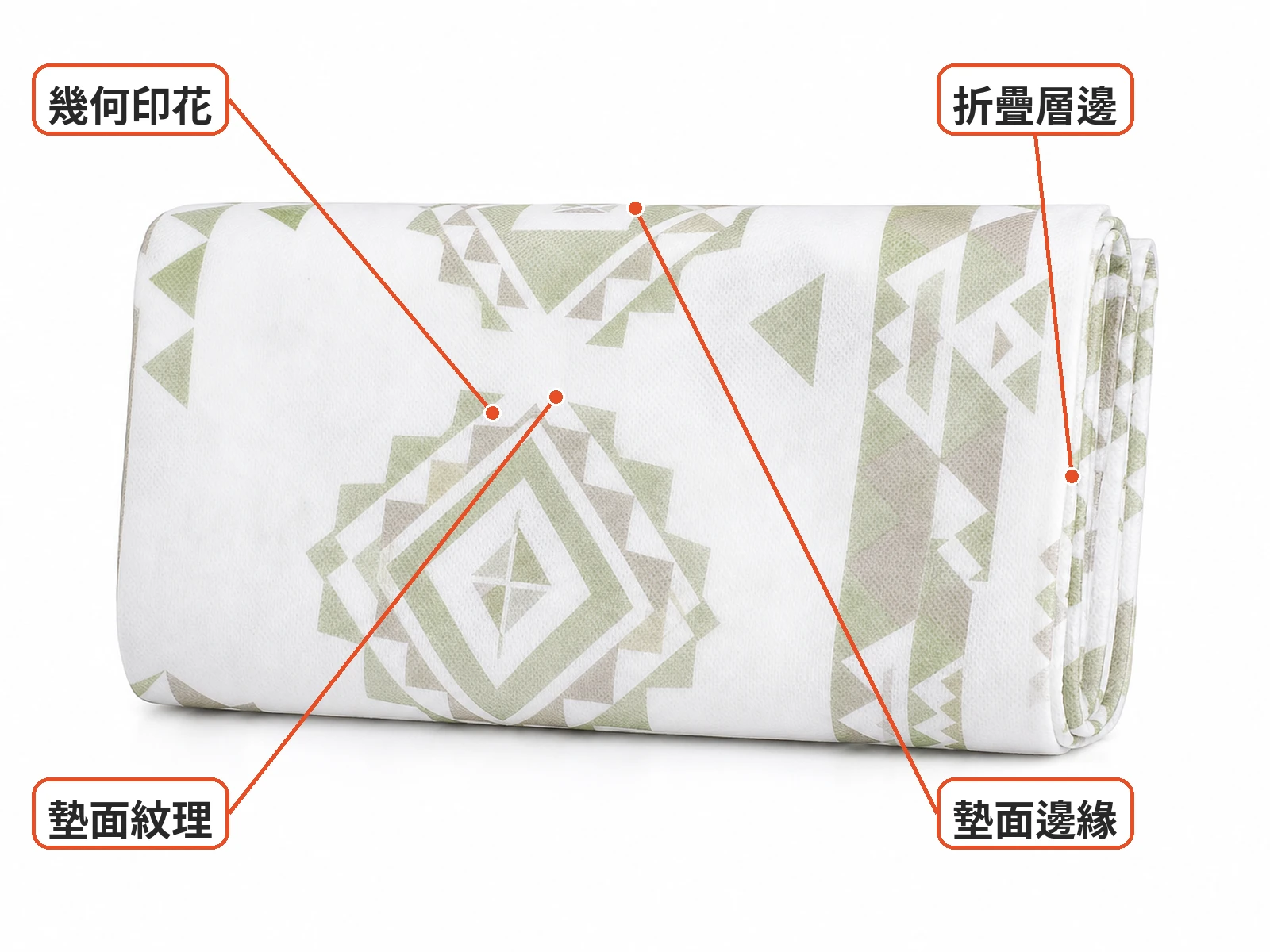
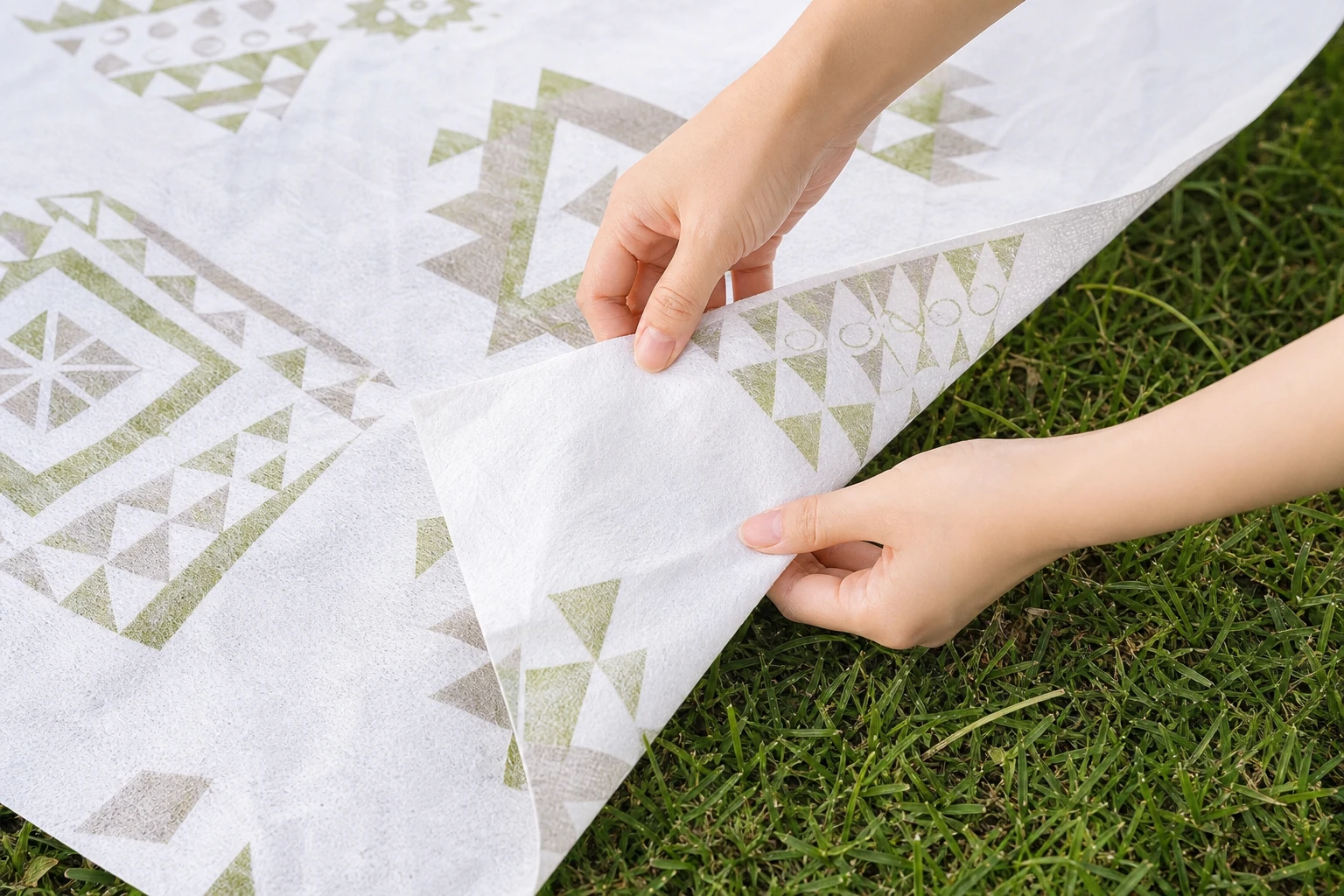
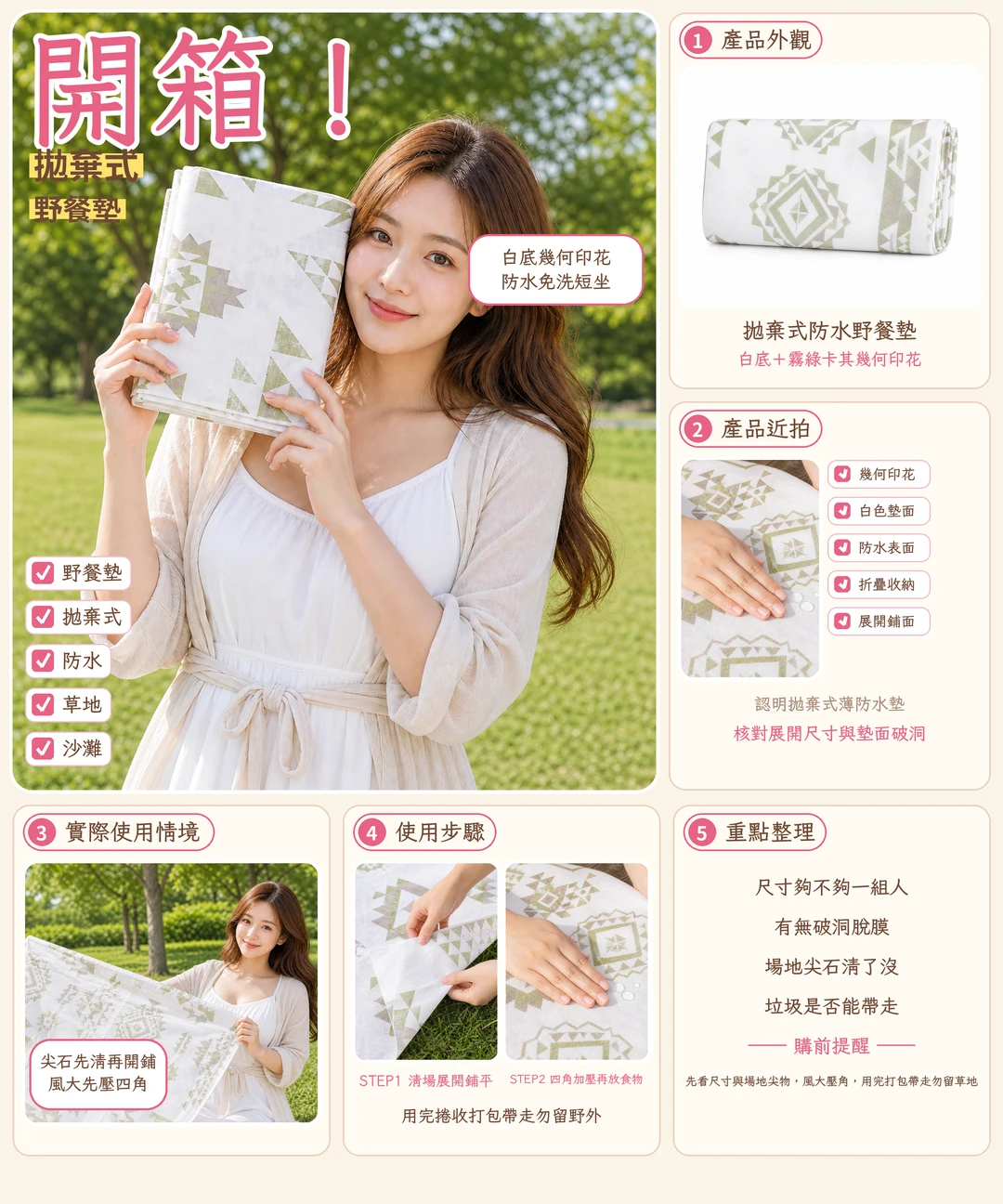
When a thick picnic blanket gets left at home, a disposable mat can seem like a convenient substitute. This one has a white nonwoven-feel surface with muted green and khaki geometric prints. Demonstrations show water beading on the surface, and the mat is marketed for one-time, waterproof use.

It is intended as a temporary surface that can be packed up after use, rather than a washable, padded blanket. It is thin, and no hydrostatic rating is published, so the waterproof label alone does not establish that it can handle heavy rain or a rocky campsite.
Who fits these disposable picnic mats?
People who picnic occasionally and do not want to wash grass and dirt off a mat may appreciate the disposable format. A Dcard discussion mentions disposable picnic mats, while a PTT selection thread includes a suggestion for people concerned about dirty grass. Neither discussion is a review of this particular mat.

A reusable, padded mat may make more sense for frequent outings or long sessions on hard ground. The listing does not specify this mat's exact open dimensions or thickness, so pictures of people sitting on it cannot establish how many people will fit. Ask about the measurements before ordering, and measure it on arrival if necessary.
Check the package and unfolded mat for damage, then see whether the space is adequate for your group and food. Bring a rubbish bag so the mat and other waste can leave with you.

Practical take: grass and beach trade-offs
Water resistance, punctures and wind are worth considering before taking a disposable picnic mat outdoors. The demonstration shows droplets on its surface, but there is no published hydrostatic rating or test stating how long it can handle wet ground. The sales count is about 1,000+, which describes sales rather than how each mat performs.
A short picnic on dry grass calls for a different setup from sitting for hours on wet ground. If the lawn is still damp after rain, consider both moisture and the cold felt through a thin layer. The available information cannot guarantee that the mat will stay dry during a long sit.

Before unfolding it, look for sharp stones, roots and other protrusions and clear what you can. Concentrated pressure from knees or the edges of containers may also damage a thin mat. For rough ground, bring another suitable layer or choose equipment intended for that setting.
Surface droplets are not evidence that the mat can withstand pooling water. If you expect to spend longer on damp ground, consider an additional moisture barrier and check for holes or gaps. No published test tells us how long this particular mat will block moisture.
Wind can lift an empty mat. Use belongings to hold down the corners before setting out food. Stake inclusion is not specified, so do not assume stakes are in the package; if you plan to use them, first check whether the location permits them.

On a beach, wind can also carry sand over the edges. Put food away first, then roll the mat up gently to avoid blowing sand towards other visitors. The available information does not establish how easily sand comes off this particular surface.
For a group, confirm the open size before deciding whether you need more than one sheet. The listing does not clearly explain single-sheet versus multi-pack options or say whether a storage bag is included. Ask the seller about the selected package before ordering.
The product is intended to be disposable. If it becomes oily, muddy or sandy, roll the dirty face inward and bag it for disposal. Reusing a clean-looking sheet is a personal choice, but check for damage and consider hygiene rather than assuming it will hold up like a reusable mat.
Before leaving, look around for packaging or fragments that may have blown away. Disposable does not mean the mat can be left on grass or sand. Burn and recycling marks are not specified in the available information, so check the actual packaging and local disposal guidance.
The white, green and khaki print adds a visual touch, but it does not imply padding, puncture resistance or wind resistance. For a long outing, dimensions and ground conditions deserve more attention than the pattern.

What users say
In a Dcard FJU discussion, a commenter mentions disposable mats sold in multi-sheet packs at beauty and discount stores. A PTT e-shopping thread includes a suggestion to buy a disposable mat at a hardware store for people worried about dirty grass; others prefer easy-to-clean Oxford cloth.
The PTT outdoorgear thread mentions options including Decathlon mats, umbrella fabric and lightweight groundsheets. A PTT camping discussion notes limitations in thin materials' moisture blocking and potential slipperiness. These are discussions of other products or related categories, not tests of this geometric mat.

Similar alternatives
- Reusable waterproof Oxford or woven mats: suitable for frequent trips if you are willing to clean and store them; thickness varies by model.
- Blue-and-white plastic mats or hardware-store tablecloths: simple temporary surfaces; check dimensions and ease of cleaning.
- Tyvek or lightweight groundsheets: often used with outdoor equipment or tents; weight, grip and puncture resistance vary by product.
Consider how often and how long you will use the mat, as well as how you want to clean up. Disposable may suit an occasional short outing, while a reusable mat is worth comparing for repeated trips and less waste.
Pre-purchase checklist
- Check that the white nonwoven-feel surface and green-and-khaki print suit your preference.
- Ask about open dimensions, thickness and weight, and whether there is enough room for your group.
- Confirm whether the selection is a single sheet or a multipack, and whether stakes or a storage bag are included.
- Check for holes and clear sharp objects before laying the mat down.
- Consider damp ground and wind; bring another layer or corner weights if needed.
- Check shipping origin, return and warranty terms, and bring a bag to carry the mat out.

Specs
| Item | Detail |
|---|---|
| Product | Disposable waterproof picnic mat (white with muted green/brown geometric print) |
| Look | White nonwoven-feel surface with muted green/khaki geometric print; demos show beaded water rather than soak-in |
| Common use | Grass, sand, or quick picnics; unfold, use, then bag trash out |
| Sold (from sales count) | About 1,000+ sold |
| Open gaps | Exact open size and thickness/weight, hydrostatic rating, stake inclusion, single vs multi-pack chart, burn/recycle marks |
Pros
- The disposable format avoids washing and drying after use.
- The white geometric print is distinctive, and demonstrations show water beading on the surface.
- It can provide a temporary surface for occasional picnics, campus activities or short beach sits.
Cons
- The thin mat may be damaged by sharp stones, roots or concentrated knee pressure.
- Exact dimensions, hydrostatic rating and stake inclusion are not specified publicly.
- Wind may lift the edges, and there is no performance data for long sits on wet ground.
Where to buy
FAQ
How does it compare with a reusable Oxford mat?
A disposable mat may suit occasional short outings without washing. Frequent picnickers concerned about comfort and waste can compare reusable mats. The PTT discussion covers both preferences, not a test of this product.
How long will it block moisture on wet grass?
No hydrostatic rating or duration is published, so it is unknown. Beaded water in a demonstration does not establish resistance to standing water. Bring another suitable barrier for a longer sit.
What should I consider at the beach?
Wind can lift the edges and carry sand onto the mat. Weight the corners and roll it up gently when leaving. There is no published test showing how easily sand comes off this mat.
Must it be thrown away after one use?
It is intended as a disposable mat. Reusing a clean sheet is a personal choice, but check it for damage and consider hygiene. Never leave it outdoors.
You might also like

Beauty & Skincare
Product analysisCompressed Mask Tablet Review: DIY Toner for Travel and Fit
These individually wrapped mask tablets let you soak familiar toner into a dry sheet; fit and fiber details remain unclear.
NT$2

Motorcycle & Car Accessories
Product analysisWaterproof Scooter Phone Bag Review: Does Touch Work in the Rain?
Afternoon storms still need navigation, so a waterproof mount bag sounds calming—until touch lag and a loose clamp appear.
NT$115

Baby & Maternity
Product analysisWaterproof Baby Bib Review: Is the Neck Fit Too Tight or Loose?
This silicone waterproof baby meal bib review: cheap to stock up on with many prints, but check whether the 3D pocket stays open and the neck fits. Feel it by hand before mealtime.
NT$49