SAMSTRONG Hiking Gaiters Review: Will Mud and Snow Get In?
30-second verdict
Orange-and-gray gaiters help block trail debris—coverage and straps matter more than color.
Buying Guide Notes · First published:
Compiled from public sourcesWritten using published specs and user feedback.

Sources and verification status
Verification status: compiled from public sources; not hands-on tested
Data updated:
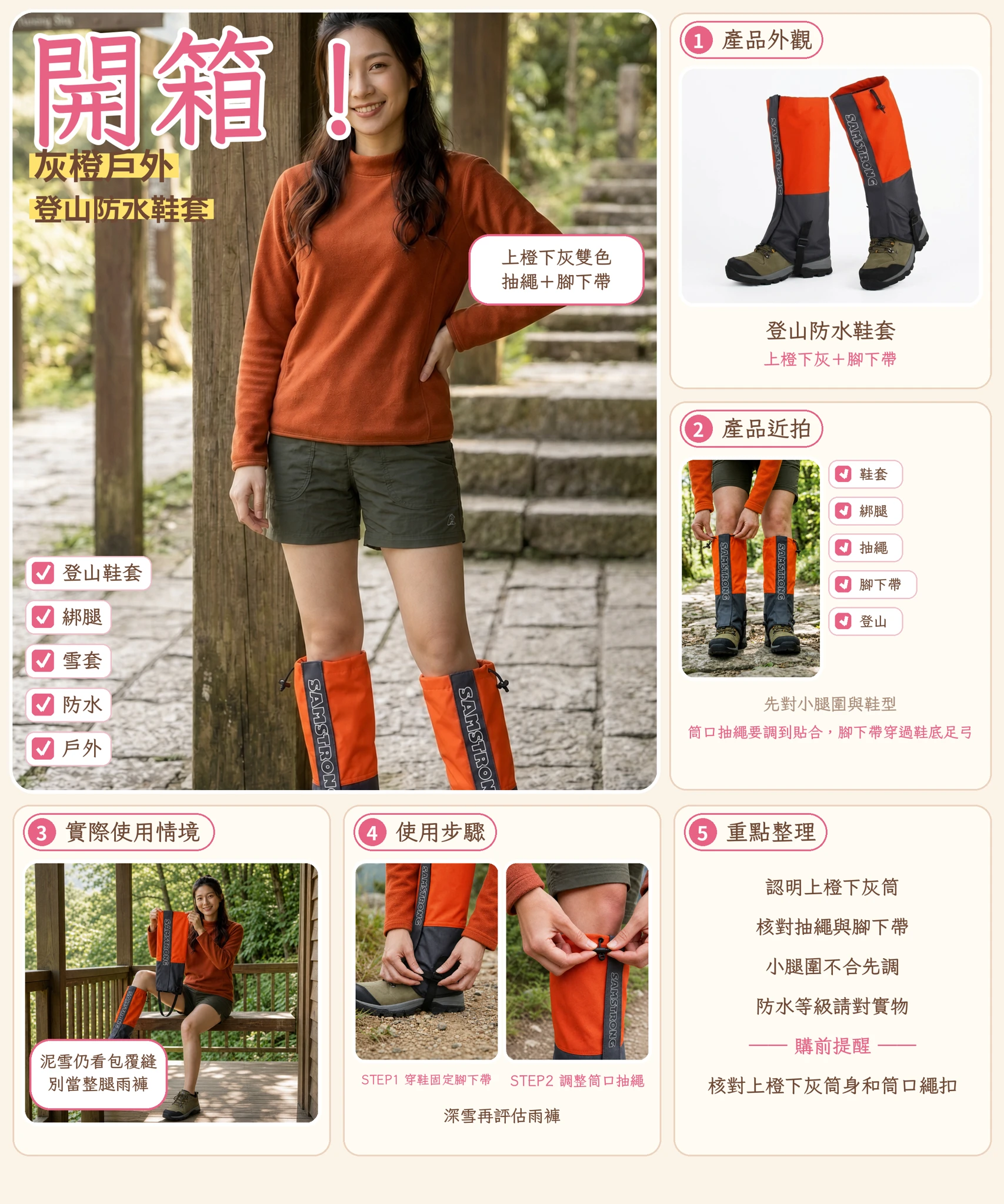
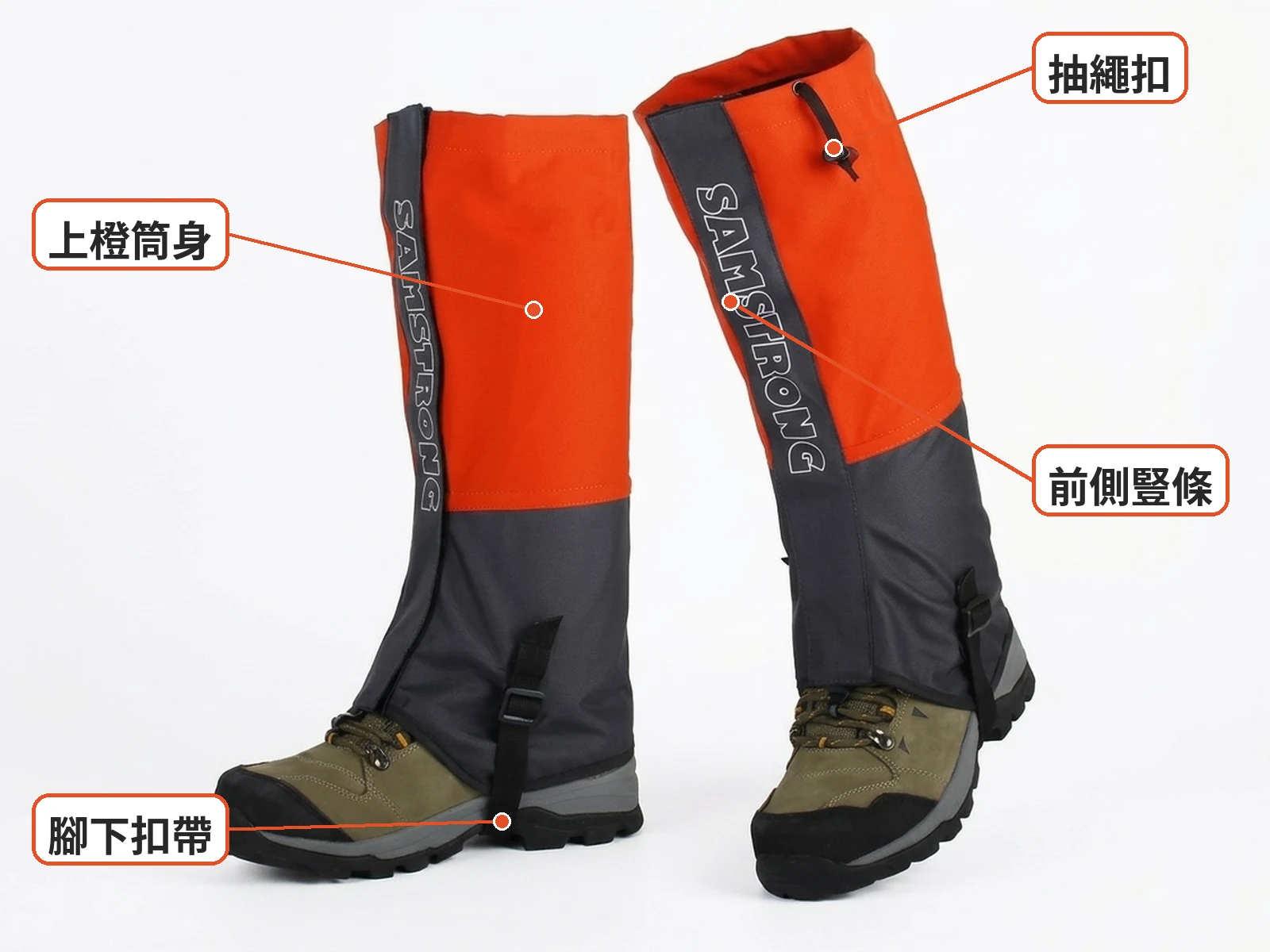
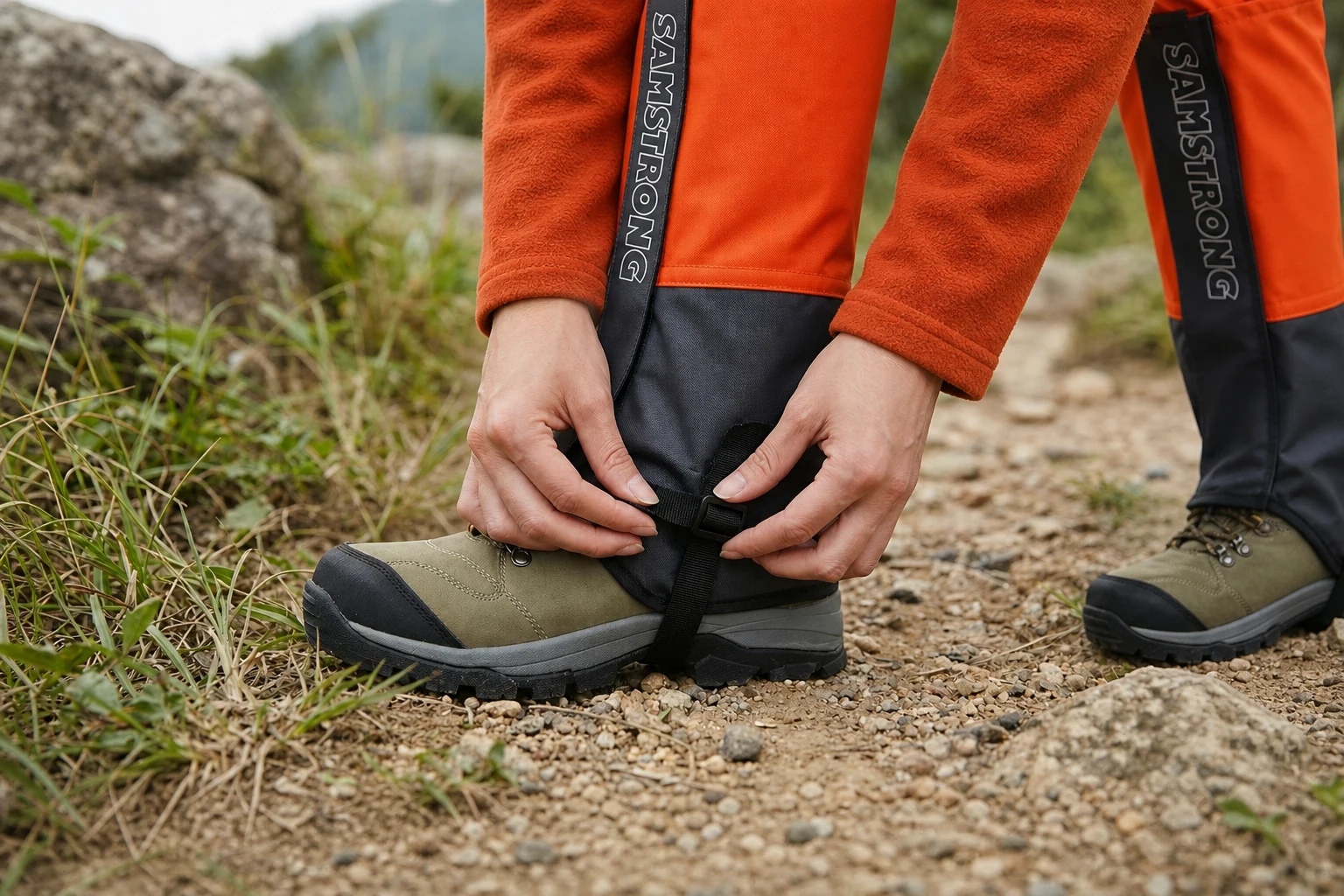
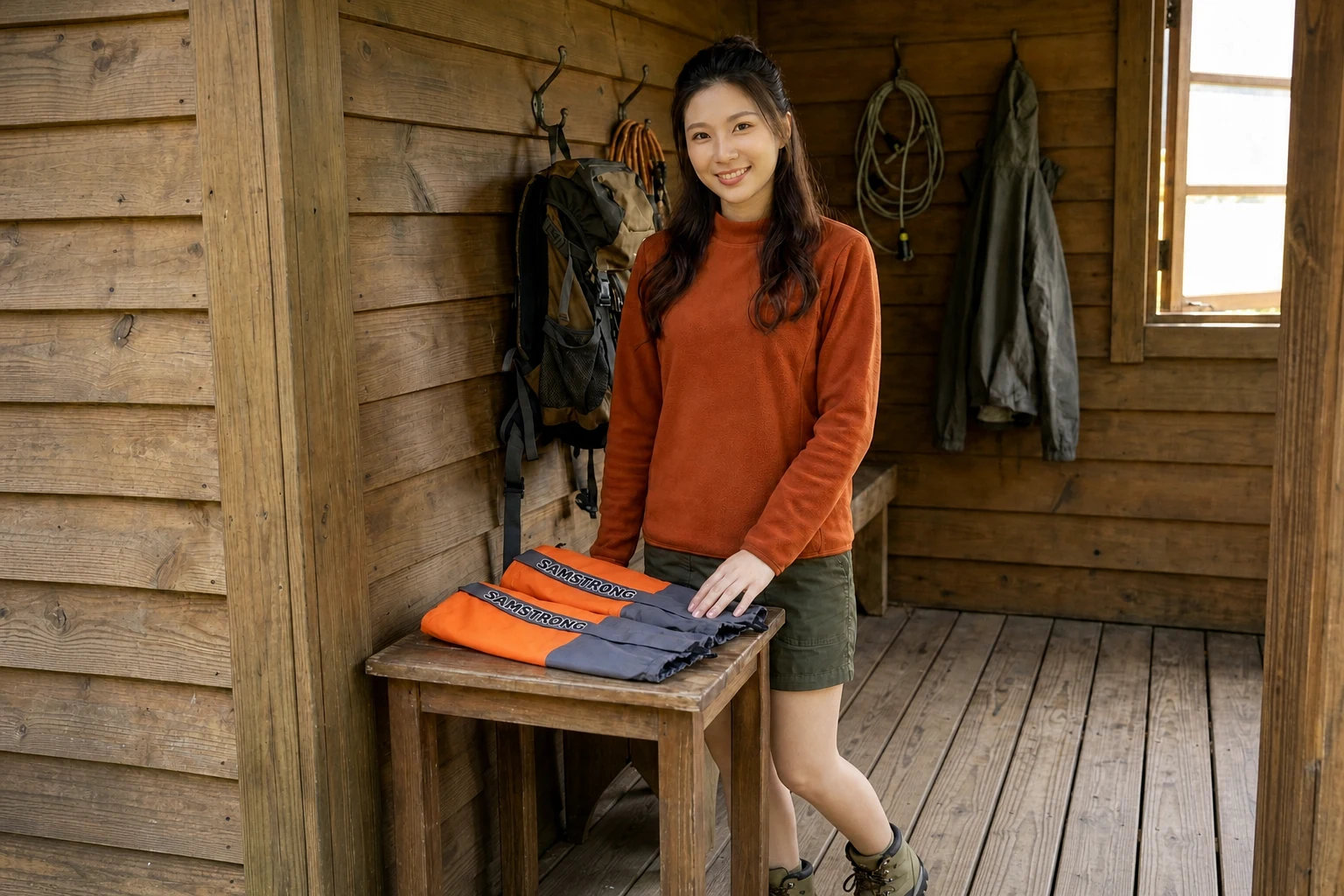
Mud, grit and light snow can find their way into boot cuffs on a trail. Gaiters are designed to cover that opening and the lower leg while also protecting trouser hems. These gray-orange outdoor hiking waterproof gaiters have orange upper sections, gray lower sections, dark front strips, black top drawcords and black under-arch straps.
The pictured front strip has white-outlined SAMSTRONG lettering. The contrasting colors are easy to recognize, but fit around your calves and boots matters more when it comes to coverage. These gaiters are not full rain pants or short covers that only shield the tops of shoes.
What Do SAMSTRONG Hiking Gaiters Help Block?
Gaiters are intended to reduce the amount of grit, mud and light snow entering through boot cuffs. They can also keep some trail dirt off lower trouser hems. The top drawcord and under-arch strap are there to help position the fabric, though their presence does not guarantee a close fit with every boot.
They may be useful on muddy paths, loose gravel or light-snow hikes. If your walks are mostly on clean pavement and your cuffs rarely collect grit, you may not need them. They are also not a substitute for full-leg rain protection or a guarantee of dry feet during prolonged stream crossings.
On arrival, check the stitching, drawcord, buckle and strap length. A typical sequence is to put on your boots, fit the gaiters, fasten the under-arch straps and then snug the top cords. Check that the straps stay in place while walking, and look for fraying after contact with rocks.

Can Waterproof Gaiters Really Stop Mud and Snow?
Gaiters can reduce entry through the cuff, but they cannot guarantee a complete seal. The drawcord adjusts the top opening and the strap helps hold the lower edge in place. Calf size, trouser thickness and boot shape all affect coverage; a gap can still let debris or snow in.
The listing records more than 1,000 sales, but that does not establish fit or performance. A waterproof rating, membrane name, breathability figures, exact height and calf-size range have not been published. Ask the seller if those details matter for your trip. Once the gaiters arrive, you can measure their height and check coverage with the trousers and boots you intend to wear.
Adjust the top cord so it sits comfortably rather than tightly enough to cause discomfort. Place the under-arch strap in the hollow of the boot and check that it does not slide toward the toe or heel. Inspect the webbing and buckle before and after a walk, particularly if the strap has rubbed against rough ground.
For storage, fold the gaiters and avoid pressing their plastic buckles against hard equipment. Orange can make them easier to find among your gear, while the gray lower section may show less dirt than a pale fabric. Color, however, does not indicate how well the gaiters will perform in rain or snow.
No load or abrasion rating is published for the under-arch strap, so its lifespan is unknown. Check for serious fraying, cracked buckles and split stitching. If a component is badly damaged, stop using it and ask whether a replacement is available before taking it into snow.
In heavy rain, deep snow or repeated water crossings, parts of the leg and boot beyond the cuff can still get wet. Rain pants cover more of the leg and can be paired with gaiters, but the two are not interchangeable. Choose equipment for the route and conditions.
Waterproof boots, gaiters and crampons also serve different purposes. Boots cover the feet, gaiters help guard the cuff, and crampons provide additional traction when snow conditions call for them. Gaiters do not turn non-waterproof boots into waterproof ones.
After a trip, remove mud and let the gaiters air-dry before storing them. Check the cord ends and buckles as well. Since complete fabric and coating details are not published, ask the seller if you are unsure about cleaning, and avoid leaving the gaiters wet in a pack or drying them with high heat.
What Users Say
In Mobile01's discussion on choosing gaiters, a hiker describes using an inexpensive pair over multiple mountain trips, while the discussion also raises boot coverage and underfoot strap durability. The supplied article also refers to snow-season experiences in which gaiters helped reduce snow entering boots. In a PTT Hiking winter discussion, hikers consider gaiters alongside waterproof boots and crampons. These are experiences with the category and winter gear, not a test of this exact gray-orange pair.
Similar Alternatives
- Waterproof-breathable gaiters: Compare models with published membrane or waterproofing information if documented performance is important, and check strap and boot compatibility.
- Rain pants or a rain skirt: These cover more of the leg but fit differently around the boot; gaiters may still be useful alongside them.
- Short shoe covers or gaiters: These are generally more compact but cover less height, which may matter on muddy or snowy routes.
Think about where you usually walk. If grit at the cuff is the main concern, focus on how the gaiter meets your boot. If your legs often get soaked in rain, consider rain pants too. The word waterproof alone does not describe how much of your body an item covers.
Pre-Purchase Checklist
- Check that the orange-and-gray body, front strip, top drawcord and black under-arch strap suit your needs.
- Ask about height and calf range. If measurements are unavailable, check the return policy and measure the gaiters after arrival.
- Try them with your intended boots and trousers, checking the cuff adjustment and strap length.
- Ask the seller about the unpublished waterproof rating, membrane and breathability information if your trip requires specific performance.
- Inspect stitching, cord ends, webbing and plastic buckles for damage.
- Consider whether the route also calls for rain pants or other equipment.
- Check the available options, shipping origin, returns and warranty terms.
Specs
| Item | Detail |
|---|---|
| Product | Gray-orange outdoor hiking waterproof gaiters |
| Look | Orange upper, gray lower, dark front strip, black top drawcord and toggle, black under-arch strap |
| Common uses | Reduce grit, mud and light snow entering boot cuffs; protect lower trouser hems |
| Sales count | More than 1,000 sold |
| Information not published | Waterproof rating, membrane, exact height, calf range and breathability figures |
Pros
- Contrasting orange and gray are easy to recognize among gear.
- A top drawcord and under-arch strap provide adjustment and positioning.
- Coverage from the boot cuff to the lower leg suits consideration for muddy, gravelly or light-snow routes.
Cons
- Waterproof rating, membrane and breathability figures are not published.
- Exact height and calf range are unknown, so fit needs checking.
- Gaiters alone do not address deep snow, prolonged water crossings or full-leg rain protection.
Where to Buy
FAQ
Can mud and snow still get into boots with gaiters?
Yes. Gaiters help cover the cuff, but debris or snow can enter through gaps. Check the fit with the boots and trousers you plan to wear.
Can hiking gaiters replace rain pants?
No. Gaiters mainly cover the boot cuff and lower leg, while rain pants cover more of the legs. They can be used together.
How durable is the under-arch strap?
No abrasion rating is published, so its lifespan is unknown. Check the webbing and buckle for damage, and stop using it if either is badly worn.
How can I check whether the gaiters will fit my calves?
The exact height and calf range are not published. Ask the seller, check the return policy, and measure and try the gaiters with your intended trousers and boots after arrival.