How to Use Maldon Salt Without Wasting the Flakes
Buying Guide Notes · First published:
Compiled from public sources · Written using published specs and user feedback.
As an Amazon Associate I earn from qualifying purchases.

Pros
- + Distinctive flakes for a finishing crunch
- + Manufacturer permits finishing and cooking
- + Small original-flake pack available from the brand seller
Cons
- - US title and shared bullet conflict on pack weight
- - Flake texture is lost when fully dissolved
- - Food purchase has different return limits from reusable tools
Sources and verification status
Verification status: compiled from public sources
Data updated:
To use Maldon salt without wasting its distinctive flakes, add a small pinch near serving time when you want a noticeable crunch on the food's surface. You can also cook with it—the manufacturer explicitly allows that—but if it will dissolve completely, an everyday salt you already own may be the more economical choice.
Checked November 13, 2026. This guide is compiled from public sources, including Maldon's current directions, the selected Amazon offer and dated individual cooking discussions. We have not personally compared taste, measured crystal dissolution or tested the delivered package.
Quick Verdict
Buy Maldon for a texture you plan to use. It is a sensible small addition for a cook who enjoys finishing toast, vegetables, meat or desserts with a light crunch. Skip it if you mainly need salt to disappear into a large pot or if your existing salt already does everything you want.
There is no rule that a flake used during cooking has been ruined. The practical question is whether that use gives you a benefit worth its cost. Starting with one modest pack is easier to assess than buying a catering tub because a cooking video made it look essential.
AI-generated illustration: all five images use the manufacturer's cream-and-green UK carton as a visual example. The selected US listing has a weight-description conflict; these images do not establish delivered packaging or exact carton dimensions.
What does the selected pack cost, and how does it compare?
| Choice | Price information | Main characteristic | Best for |
|---|---|---|---|
| Maldon original flakes, B00017028M | $8.99 observed one-time Amazon offer | Pyramid-shaped sea salt flakes; title says 8.5 oz/240 g | Adding texture and surface seasoning before serving |
| Everyday cooking salt already in your pantry | No new purchase; replacement price not checked | Whatever grain and recipe compatibility your existing salt provides | Dissolving into dishes when intact flakes are not the goal |
| Larger Maldon pack | Current US offer not verified here | More salt to store and use; check exact weight | A cook who already knows their consumption |
The selected original-flake offer was new and in stock for ZIP 10001, sold by Maldon Salt and shipped by Amazon. Its displayed aggregate was 4.8 stars from 66,730 ratings. The $8.99 figure is an observed offer, not a historical range or a guaranteed checkout total; it is below our usual $30 selection preference and appears here because this was a specifically requested topic.
The title says 240 g, but a shared Amazon bullet calls the box 250 g. The current UK manufacturer product page also describes 250 g and links a different UK ASIN. Those details should not be silently merged. The US title also says packaging may vary, so check the selected label rather than relying on a shared photograph.
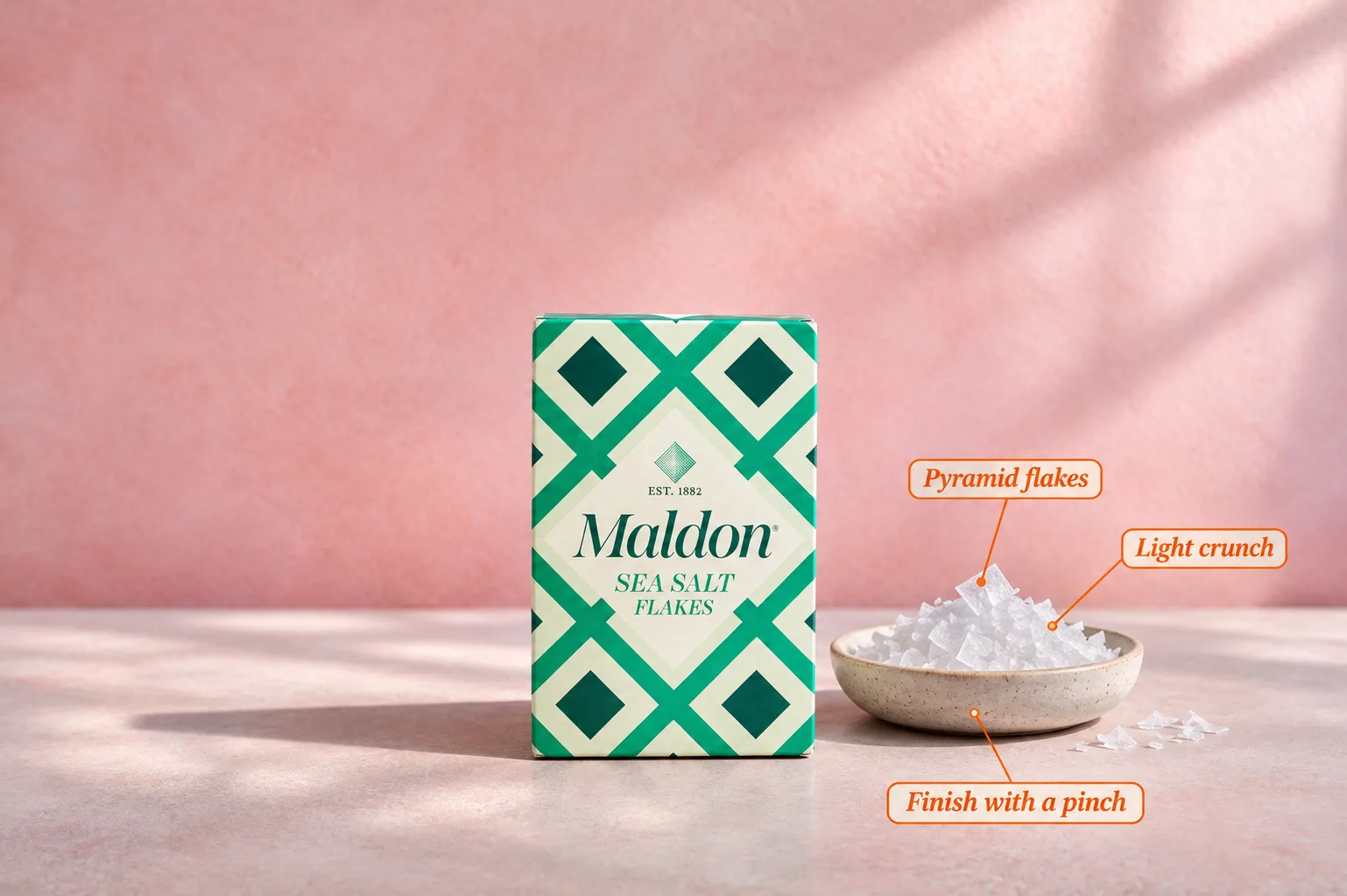
AI-generated illustration — UK carton example and flake features; packaging is not proof of the selected US net weight.
Why does finishing make the clearest use of the flakes?
Maldon identifies the original product as 100 percent sea salt flakes, with a pyramid structure and delicate crunch. Its directions say to pinch and sprinkle to finish, or use during cooking for even seasoning. The distinctive selling point is therefore easy to understand without claiming a mysterious improvement in every recipe.
When you want that physical texture, keep the flakes on the part of the food you will bite. Stirring them into a wet dish until they disappear does not preserve a flake to crunch. That is an explanation of the intended use, not a laboratory finding about exactly how long crystals survive on every food.
A useful first try is a finished piece of buttered toast or a small portion of roasted vegetables. Start sparingly, taste that portion and decide whether you enjoy the effect. There is no universal pinch size: hands, flake size, serving size and existing seasoning differ. We have not calculated a cost per serving from an invented standard pinch.
How can you use it without oversalting the finished dish?
Treat the final addition as part of the dish's seasoning, not an automatic flourish after every recipe. Taste before adding more, and consider whether sauces, butter or other ingredients already give the food enough salinity. A photograph with a dramatic shower of flakes is not a measured serving recommendation.
Keep a small amount in a separate dish while you finish the meal. This lets you add a little at a time and makes it easier to see what you are using. It also avoids turning the full package into a container that sits beside a steamy pan or wet preparation area.
If intact flakes are too large for the result you want, lightly crush the pinch as you release it. If you want a uniformly fine ingredient throughout a recipe, consider whether a finer salt is already a better match. Buying flakes and immediately reducing all of them to powder removes the structure that makes this purchase distinctive.

AI-generated illustration — a finished-vegetable serving idea; no dish was prepared or tasted for this guide.
Is cooking with Maldon always a waste?
No. The manufacturer's own directions allow cooking with it, and its product description includes rubs, marinades and desserts. It would be inaccurate to say Maldon prohibits those uses or that anyone who does them is using the product incorrectly.
The budget argument is narrower: when the salt disappears into the food and you do not prefer the handling or another practical aspect, you may not need to pay for the flake format. That is particularly relevant to large-volume uses where you are not trying to preserve a surface texture.
Conversely, a cook who enjoys reaching for one salt and uses a modest amount may decide the convenience is worth it. We have not priced every competing salt or evaluated the total cost of that person's recipes. The recommendation is to choose deliberately, rather than copy either an influencer's habit or a blanket rule from a comment thread.
Which dishes and buyers make the most sense?
It is for cooks who want a finishing ingredient they can notice. The manufacturer offers inspiration with peppers, steak frites and brownies, illustrating that the same original flakes can suit savory dishes and desserts. These are suggestions from the brand, not dishes we prepared or tasted for this guide.
Skip it as an essential purchase if texture is unimportant to you. A person outfitting a first kitchen may get more immediate value from the staples their recipes require. A small specialty salt is a pleasant optional gift, but it should not be described as indispensable equipment for anyone who cooks.
For gifting, confirm the recipient actually likes visible finishing salt and has somewhere dry to store it. The product is a food purchase, and the selected Amazon offer showed it as non-returnable for food-safety reasons. Check the current terms before treating it like a tool that can simply be tried and returned.
How should you keep the remaining flakes?
Maldon's official storage direction is a cool, dry place; it says you may decant into a salt pig. Keep the supply away from routine splashes and use clean, dry fingers or a dry utensil when taking some out. We have not tested containers, shelf life after exposure or a method for restoring wet flakes.
A bigger pack does not automatically save money in practice if you dislike managing it or barely use the salt. The brand currently offers several formats, but the larger US offers were not verified for this article. Choose a size based on a habit you already have, rather than assuming every larger container is the best deal.
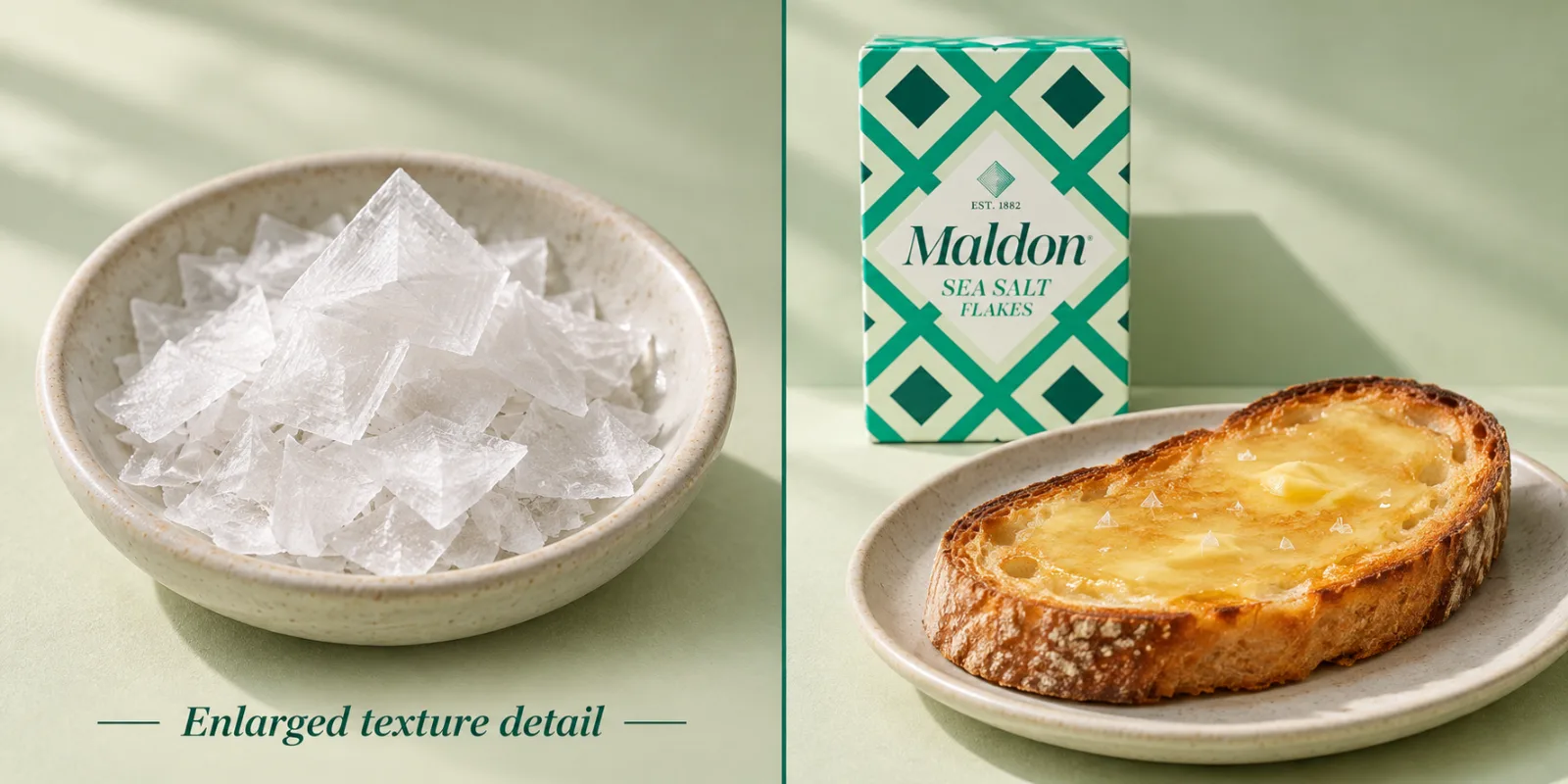
AI-generated illustration — enlarged texture at left and a finishing idea at right; not microscopic or test photography.
What do cooks say about the value?
- The concern is dissolved texture, not a proven quality decline. Familiar-Bee-9823, November 12, 2026, objected to influencer videos mixing flakes into recipes rather than leaving them crunchy on top. This is a use-and-value concern, not evidence of a fault in the selected Amazon pack.
- Convenience can outweigh strict finishing-only use. sheneversawitcoming, November 12, 2026, described using a large tub in many dishes because it was easy to grab, while choosing cheaper iodized salt for pasta water. That person's tub and local costs differ from this single-box offer.
- Some cooks prefer saving the flakes for topping. Jhomas-Tefferson, November 12, 2026, considered general-purpose use poor value. This is their preference, not a controlled taste comparison or a manufacturer restriction.
These are individual accounts, not consensus or a promise about your cooking. We excluded the thread's jokes, unrelated product tangents and unsupported pricing as evidence for the current offer.

AI-generated illustration — a small food-gift scenario; carton dimensions and US printing are not verified by this image.
How did we research this buying decision?
We checked the exact US listing and its one-time seller, then compared the wording with Maldon's current ingredient, direction and storage information. We read the original discussion and retained opposing views because the useful answer is conditional: finish with flakes when you want their structure; cook with them if that suits your preference and budget.
The illustrated box follows the official UK reference. Its precise physical measurements were not verified, so do not use the pictures to judge pantry clearance or infer that the US pack will have identical printing. This guide makes no personal taste-test or health-benefit claim.
FAQ
Can I use Maldon while cooking, or only at the end?
The manufacturer permits both. Finishing is the clearer value choice when you specifically want intact flakes and crunch; dissolving it during cooking uses the salt without preserving that texture.
Is the linked Amazon pack 240 g or 250 g?
Its title says 8.5 oz (240 g), while a shared bullet says 250 g and the current UK manufacturer page describes 250 g. We did not inspect delivered stock. Check the selected pack and label before ordering.
Should I grind the flakes?
If you want the texture you paid for, leave them intact or lightly crush a pinch to suit the dish. Grinding them removes that flake structure; buy a suitable finer salt when fine texture is the goal.
How should I store Maldon flakes?
Maldon says to keep them in a cool, dry place and allows decanting into a salt pig. Use a clean, dry utensil or dry fingers and protect the remaining supply from splashes and steam.
Does the $8.99 price guarantee a cheap serving?
No. The amount used varies, and we did not measure a standard pinch or serving. $8.99 was the observed one-time Amazon offer on November 13, 2026; shipping and tax can affect the total.