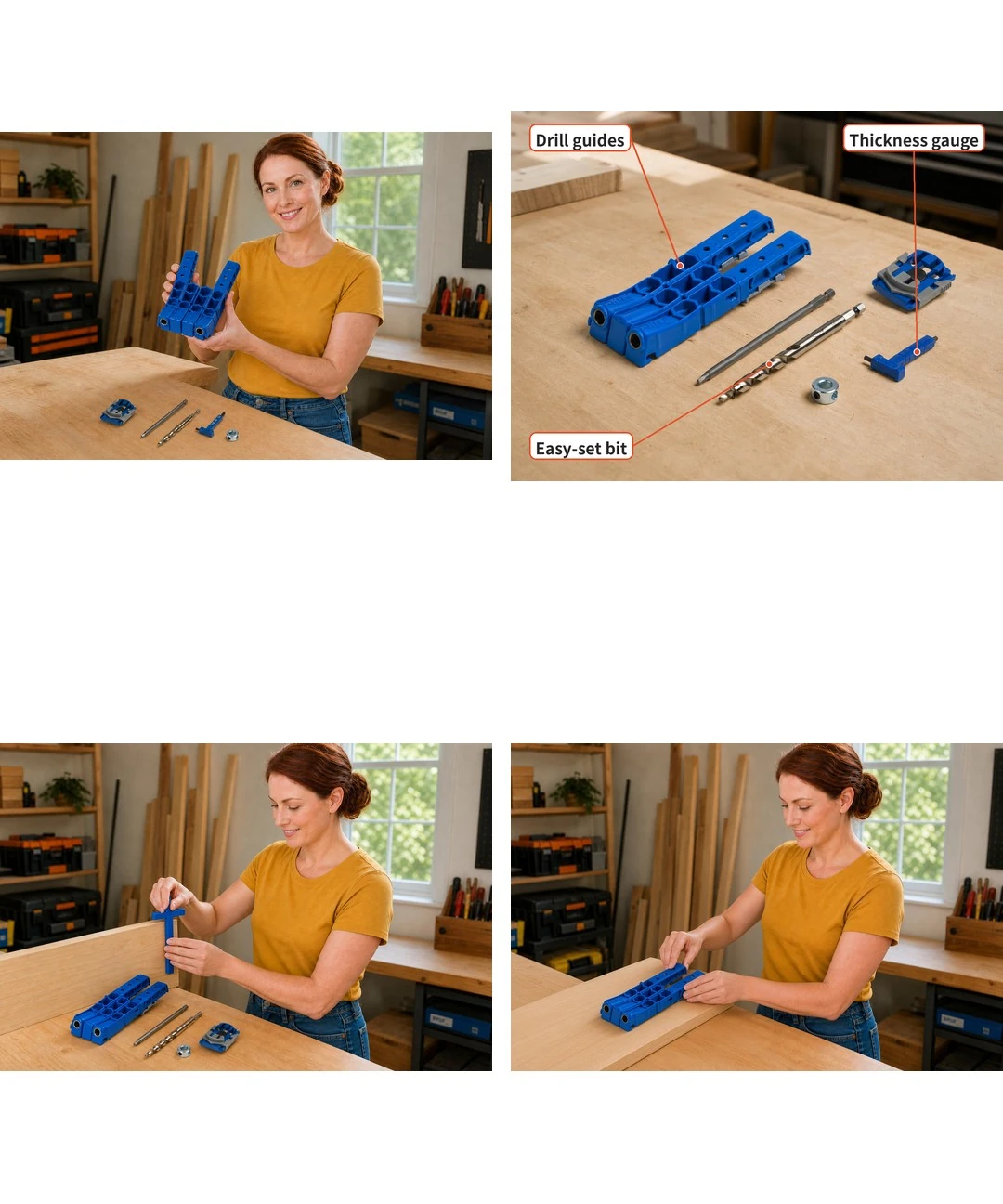
The Kreg 320 Packs a Pocket-Hole Kit, Minus the Clamp
Buying Guide Notes · First published:
Updated
Compiled from public sources · Written using published specs and user feedback.
As an Amazon Associate I earn from qualifying purchases.
Pros
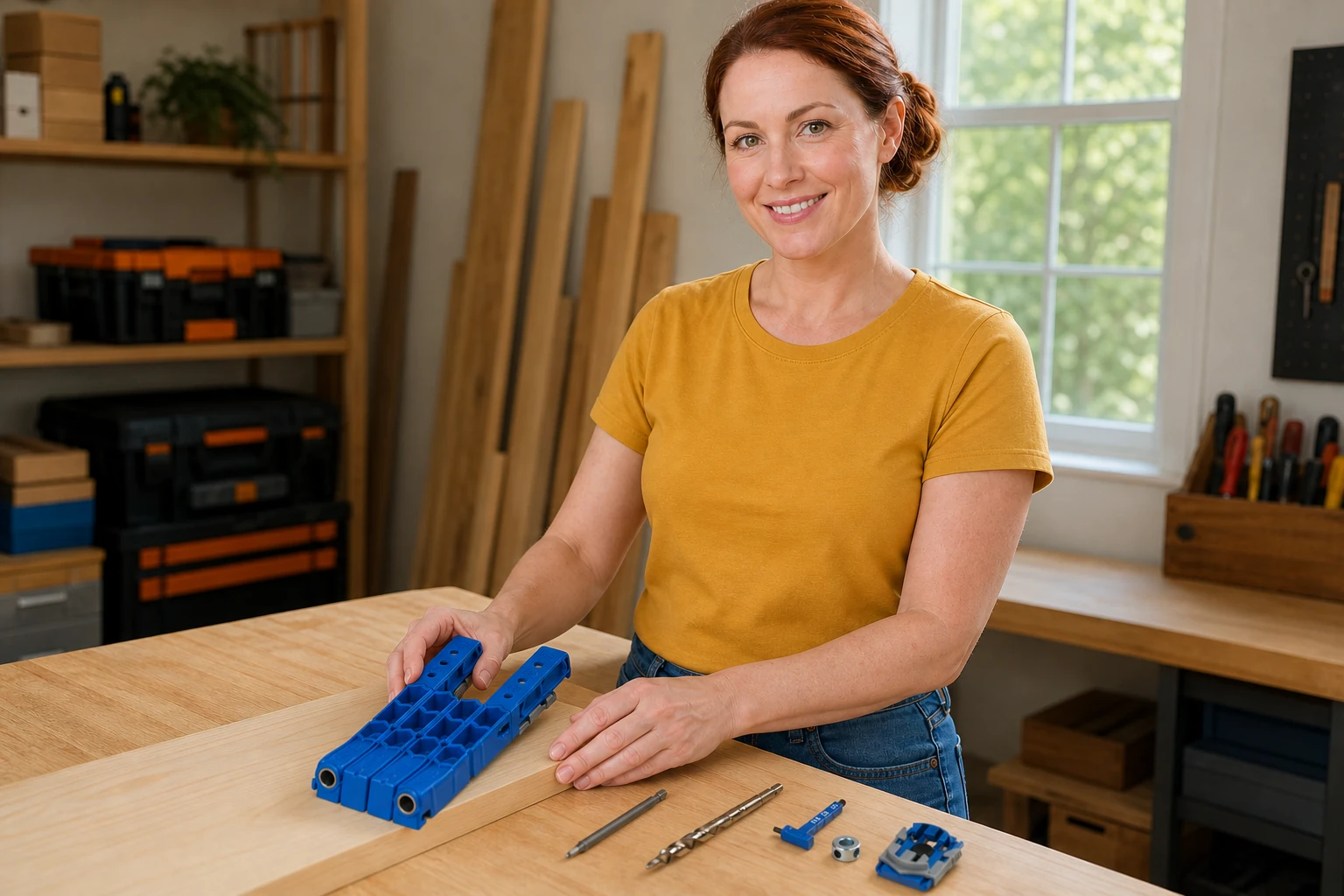
- + Two drill guides with a removable spacer for variable spacing
- + Carrying case and 40 sample screws included
- + Works with 1/2 to 1 1/2 inch material and includes setup gauges
Cons
- - No wood clamp in the box
- - Requires a separate drill
- - Not a self-adjusting bench-mounted jig
Specifications
| Model / ASIN | KPHJ320 / B07VQ9S57K |
|---|---|
| Selected version | Jig kit with case, no clamp |
| Material capacity | 1/2 in to 1 1/2 in, with 1/2, 3/4, and 1 1/2 in stops |
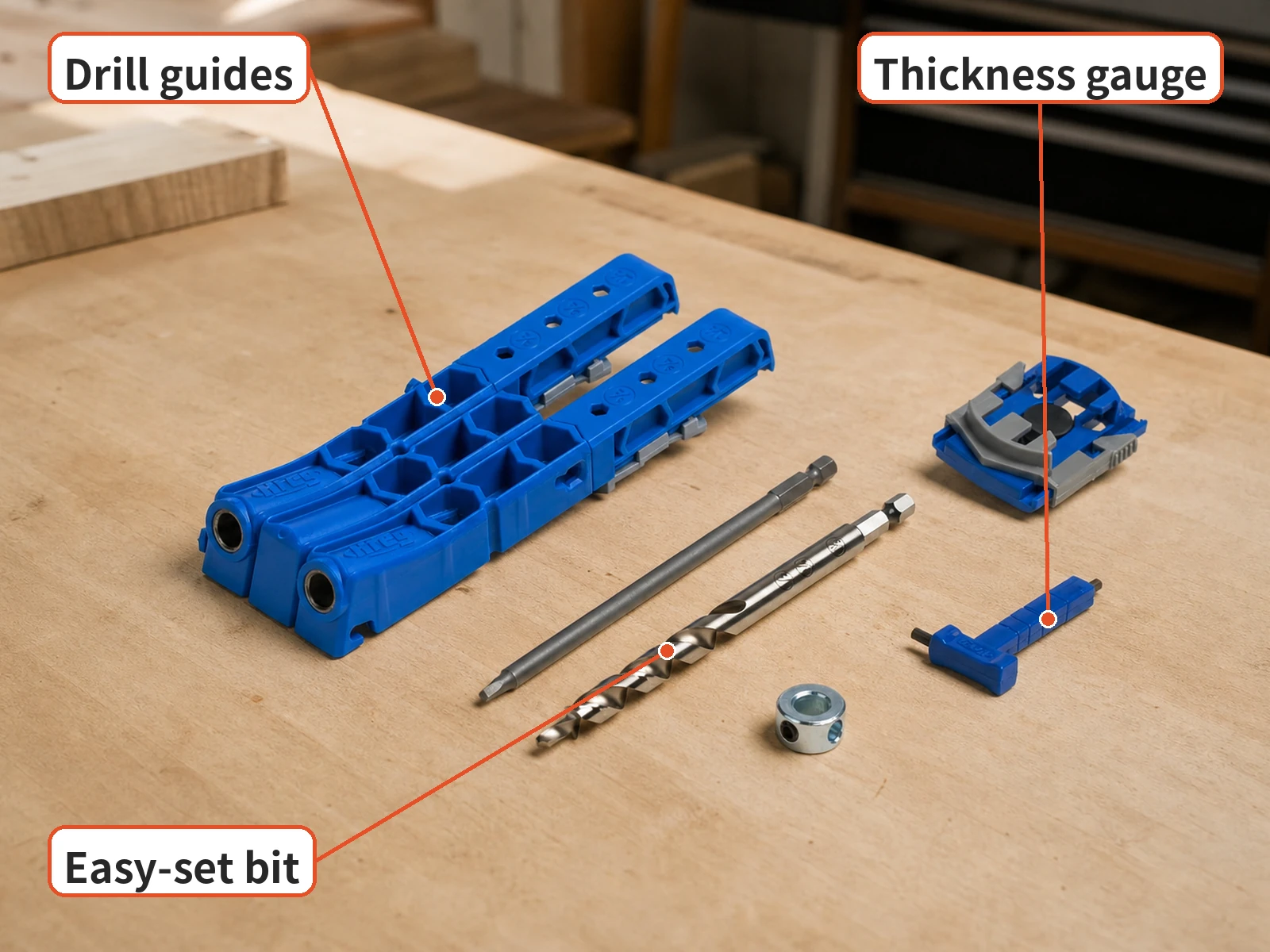
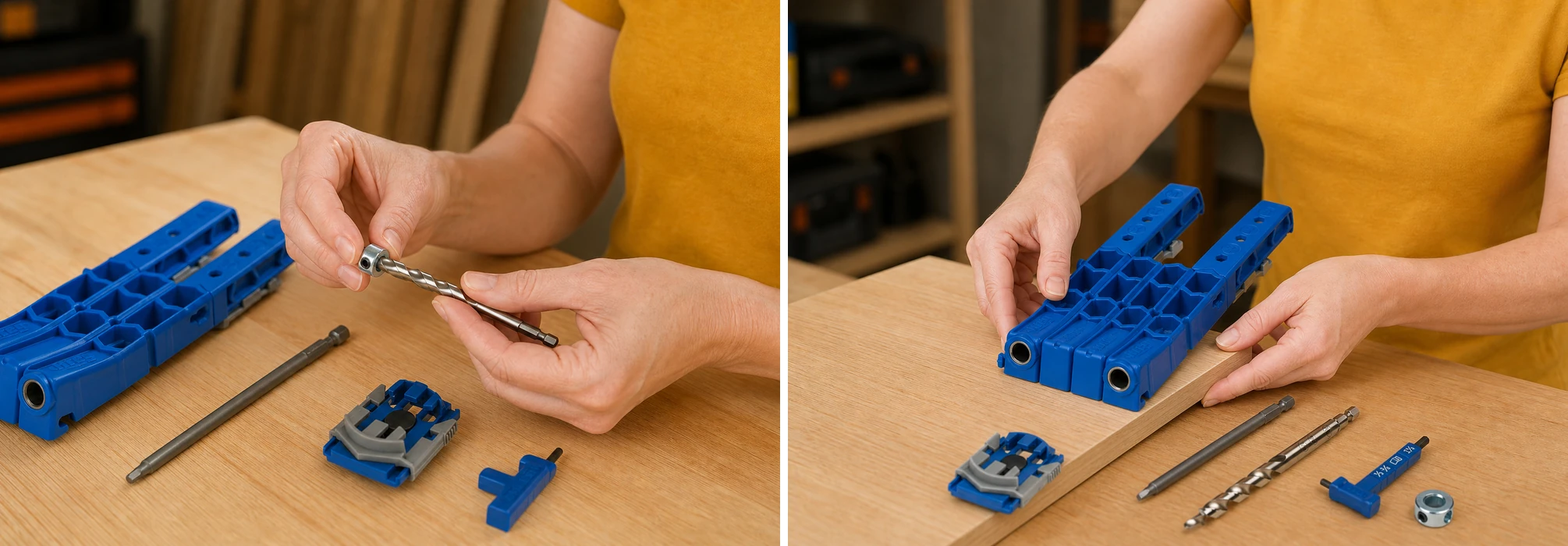
| Included | Two drill guides, spacer, easy-set bit and collar, gauge/wrench, 6 in driver bit, case, 40 sample screws, manual |
| Not included | Wood clamp (clamp adapter is included) |
| Guide warranty | Lifetime drill-guide warranty (Kreg) |
Sources and verification status
Verification status: compiled from public sources
Data updated:
Quick Verdict
Choose the Kreg 320 for adjustable two-hole spacing when you already own a drill and a suitable clamp. Its case and starter screws are useful additions, but a clamp adapter is not the missing wood clamp. A buyer tackling one isolated repair can reasonably choose the simpler310 instead.
Kreg Pocket-Hole Jig 320 vs Kreg Pocket-Hole Jig 310
Kreg Pocket-Hole Jig320, ASIN B07VQ9S57K, is $39.00; Kreg Pocket-Hole Jig310, ASIN B07VP77GQD, is $21.00. The $18.00 premium buys a second drill guide, removable spacer, case and forty sample screws, not a wood clamp. Both use the same material-thickness range, from half an inch to one-and-a-half inches.
For a bookshelf with wider rails, the 320's joined guides let you place a pair of holes before repositioning the jig. Removing the spacer changes their separation; splitting the guides lets you work with one in a narrower location. Bob Vila's exact 320 review describes those configurations and the removable thickness stops for tight corners. If your job only needs one guide placed at a time, buy the 310 and keep the simpler kit.
What Stands Out
The case matters when a weekend project moves between a garage bench and the room being repaired. Kreg provides designated storage for the jig and accessories, plus space for screws. Choose the 320 when keeping that small collection together is a real part of the job.
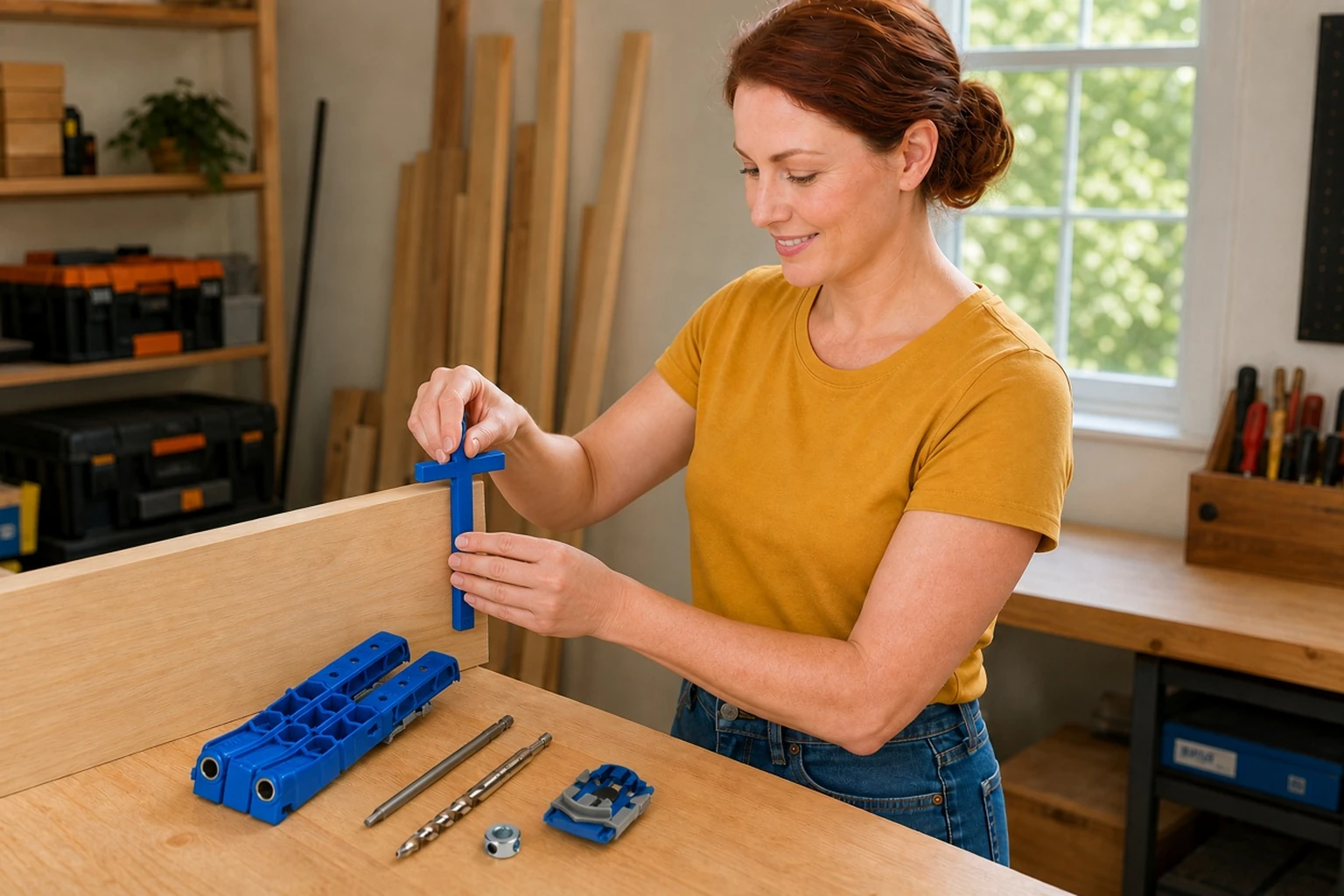
Its setup aids address different parts of the same adjustment. The material gauge identifies the board thickness, the stops position the jig and the collar controls drill depth. Positive stops cover half-inch, three-quarter-inch and one-and-a-half-inch material. Match the instructions to the actual stock rather than assuming a nominal lumber name is the setting.
Where It Falls Short
Skip this portable design for production work where repeatedly releasing and reclamping it is the main inconvenience. The anti-slip base assists positioning, but does not replace securing the jig. Kreg explicitly says wood clamps are not included. Bob Vila also found unusual thicknesses harder to configure and sideways drilling less comfortable for long sessions, which are more useful limits than calling it a complete kit.
Who It's For
A DIYer building a small bookcase should choose the 320 when rails need paired holes and a compatible clamp is already available. Its reconfigurable guides can follow changing board widths without buying a different jig for each location. The portable body is also useful for an accessible cabinet repair that cannot conveniently be taken to a bench.
For an occasional single-guide task, choose the 310 rather than paying for storage you will not use. If you have no clamp, obtain a suitable one before planning work around either jig. For repeated shop batches, look for an integrated-clamp bench setup instead; a second guide does not automate the portable jig's clamping cycle.

Product illustrations are AI-generated.
How We Researched This
We researched this guide using public sources; we did not test the product ourselves. Our assessment draws on the product information, buyer feedback, and independent sources linked below.
Sources
FAQ
Does the Kreg 320 include a wood clamp?
No. It includes a clamp adapter, but a suitable wood clamp is a separate requirement. Do not mistake the adapter for a complete clamping tool.
What material thicknesses does it support?
Kreg specifies material from 1/2 inch to 1-1/2 inches thick. Measure the actual stock and follow the setup instructions for the jig and drill collar.
How does it differ from the Kreg 310?
The 320 adds a second drill guide, removable spacer, storage case and sample screws. The 310 is the simpler single-guide option.
Can the drill guides be separated?
Yes. The 320’s guides and removable spacer can be rearranged for different hole spacing and access. This flexibility still requires positioning and securing the jig for each setup.
Does the jig include a powered drill?
No. It is a drilling guide and accessory kit. You need a suitable drill and clamp, plus the correct screws for the material and joint.