Rubbermaid Brilliance Glass vs Plastic for Reheating
Quick Verdict
Choose glass when conventional-oven use matters and you accept the weight and breakage precautions. Choose plastic for lighter everyday storage and carrying, while following its narrower reheating limits. Both versions still have plastic lids.
Good for
- Glass: home reheating and suitable conventional-oven use
- Plastic: lighter packed lunches and everyday storage
Not for
- Glass: buyers expecting unbreakable or freezer-to-hot-oven containers
- Plastic: oven cooking or unrestricted microwave use
Buying Guide Notes · First published:
Compiled from public sources · Written using published specs and user feedback.
As an Amazon Associate I earn from qualifying purchases.
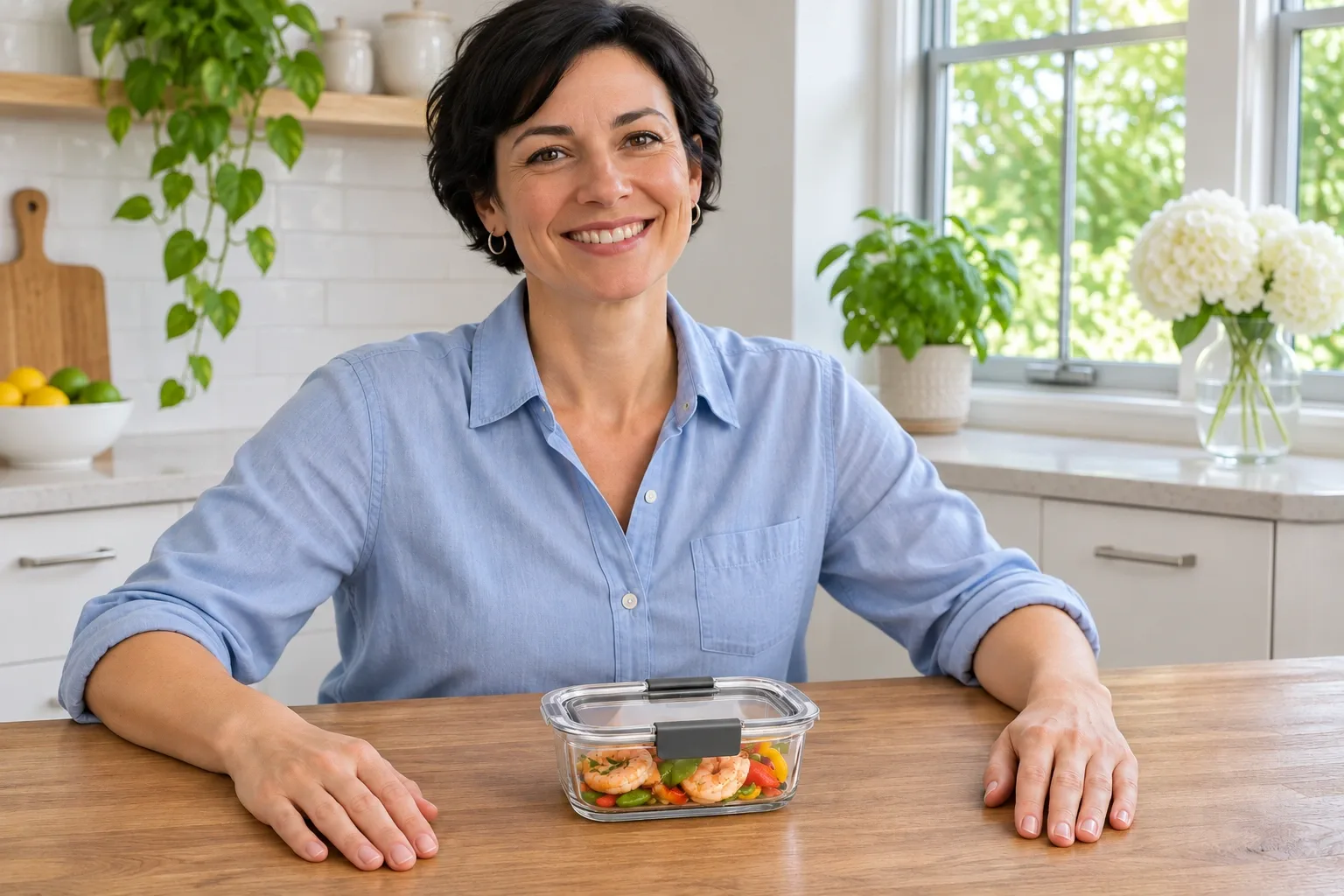
Rubbermaid Brilliance glass is the more versatile choice for home reheating that may also involve a conventional oven; plastic is the lighter choice for carrying lunch. Both versions permit microwave reheating under their own care instructions, and both still use plastic lids. Buy for the heating method and handling routine you actually need, rather than assuming “glass” or “microwave-safe” removes every limitation.
Checked November 14, 2026. This comparison is compiled from public sources, not a hands-on heating or leak test. We checked two 3.2-cup packs: glass ASIN B08B7GLYZC, four containers with four lids, and plastic ASIN B079M8FPTW, five containers with five lids. Both showed new offers sold and shipped by Amazon.com.
AI-generated illustration — Single glass3.2cup exterior example, not a heating or leak test.
Which exact packs are being compared?
The capacity per container is matched, but the package counts are not. A four-container glass set and a five-container plastic set cannot be compared honestly by headline price alone. Also remember that retailers often count a body and its lid as two pieces.
| Checked pack | Observed Amazon offer | Capacity and count | Heating distinction | Best for |
|---|---|---|---|---|
| Brilliance Glass, B08B7GLYZC | $43.96; 4.6 stars, 14,806 ratings | Four 3.2-cup bases plus four lids | Glass base: conventional oven up to450°F; remove lid | Home use where oven versatility matters |
| Brilliance Plastic, B079M8FPTW | $32.48; 4.7 stars, 18,999 ratings | Five 3.2-cup bases plus five lids | Reheating under plastic care limits; not an oven container | Lighter packed lunches and storage |
Those are current offer observations, not historical price ranges or guaranteed checkout prices. Ratings may pool variants and do not establish either material’s failure rate.
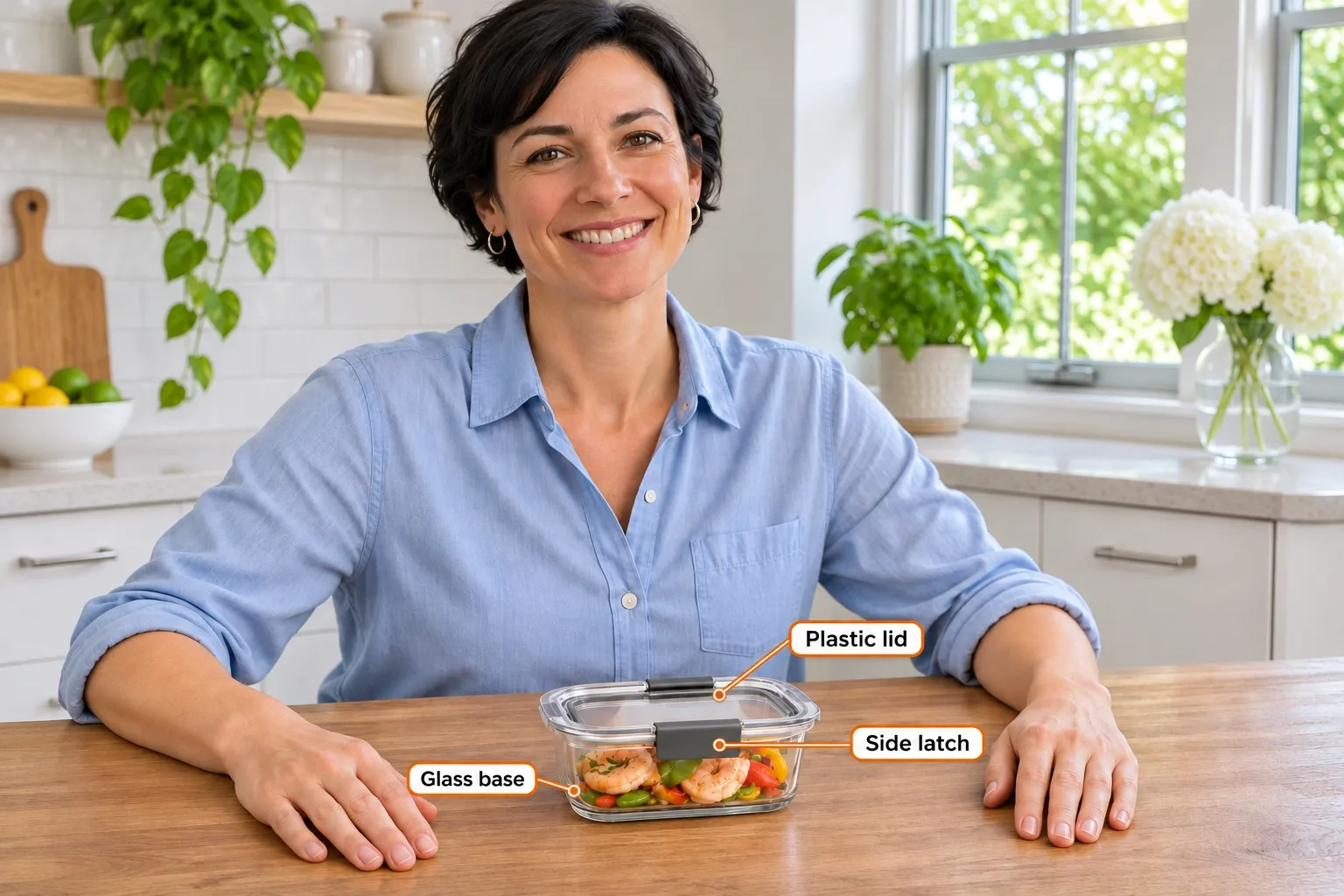
AI-generated illustration — Glass version only; the lid remains plastic.
Which is better if I mainly reheat lunch in a microwave?
Either line can suit that task when used within its instructions, but their limitations deserve more attention than the shared microwave-safe label. The current care documents tell users to open the latches for venting. A latched storage seal is not the reheating configuration.
For plastic, Rubbermaid describes reheating precooked food rather than cooking in the container. Its care sheet also warns against reheating foods high in salt, oil, fat or sugar and describes damage risks from excessive heating. That makes the actual lunch menu relevant to the buying decision.
The glass base avoids making the base itself a plastic reheating vessel, but its lid remains plastic and has its own reheating restrictions. Decide whether you are comfortable following that split rule or prefer moving food to another appropriate dish. We have not tested any material-migration or health claims and do not rank these sets using unsupported health promises.
When does glass justify the extra weight?
Glass has a clear functional advantage when conventional-oven use is part of the plan. Rubbermaid lists the glass base as oven-safe up to450°F, with the lid removed and the full glass-use precautions followed. That is a capability the plastic base does not provide.
This can simplify a home routine for someone who wants a suitable container that serves more than refrigerator storage. However, an oven permission is not a guarantee that every appliance with a heating element is acceptable. The glass safety instructions exclude toaster ovens, broilers, stovetops and grills.
Choose glass if that extra permitted use is something you will actually use. If every lunch is carried to work and then transferred to a plate, paying and carrying more for oven versatility may not solve a meaningful problem.
AI-generated illustration — Meal-planning setting, not evidence of food-storage performance.
Can glass go straight from the freezer into heat?
No. Rubbermaid’s glass instructions warn against sudden temperature changes and specifically say not to take the container directly from freezer to oven or microwave. They tell users to thaw food before reheating.
That is an important limitation for batch-prep buyers. “Freezer-safe” and “oven-safe” are separate permissions with handling steps between them. A weekly routine built around moving a frozen container straight into heat does not match those instructions.
Inspect glass before use and follow the manufacturer’s direction to discard damaged pieces. For hot-glass handling and cooling, use the supplied instructions rather than an illustration or an improvised shortcut. We did not conduct a thermal-shock, drop or durability test, and no photograph here demonstrates one.
What is the practical case for plastic?
Plastic makes more sense when carrying weight and everyday storage convenience dominate the decision. A person packing several containers in a work bag may value that difference more than someone who leaves the containers in a kitchen.
The trade-off is accepting the plastic line’s narrower heating role and treating it as reusable storage with specific care limits, not universal cookware. Buying plastic because it is lighter does not require pretending it can go in an oven, tolerate every food during reheating or remain undamaged indefinitely.
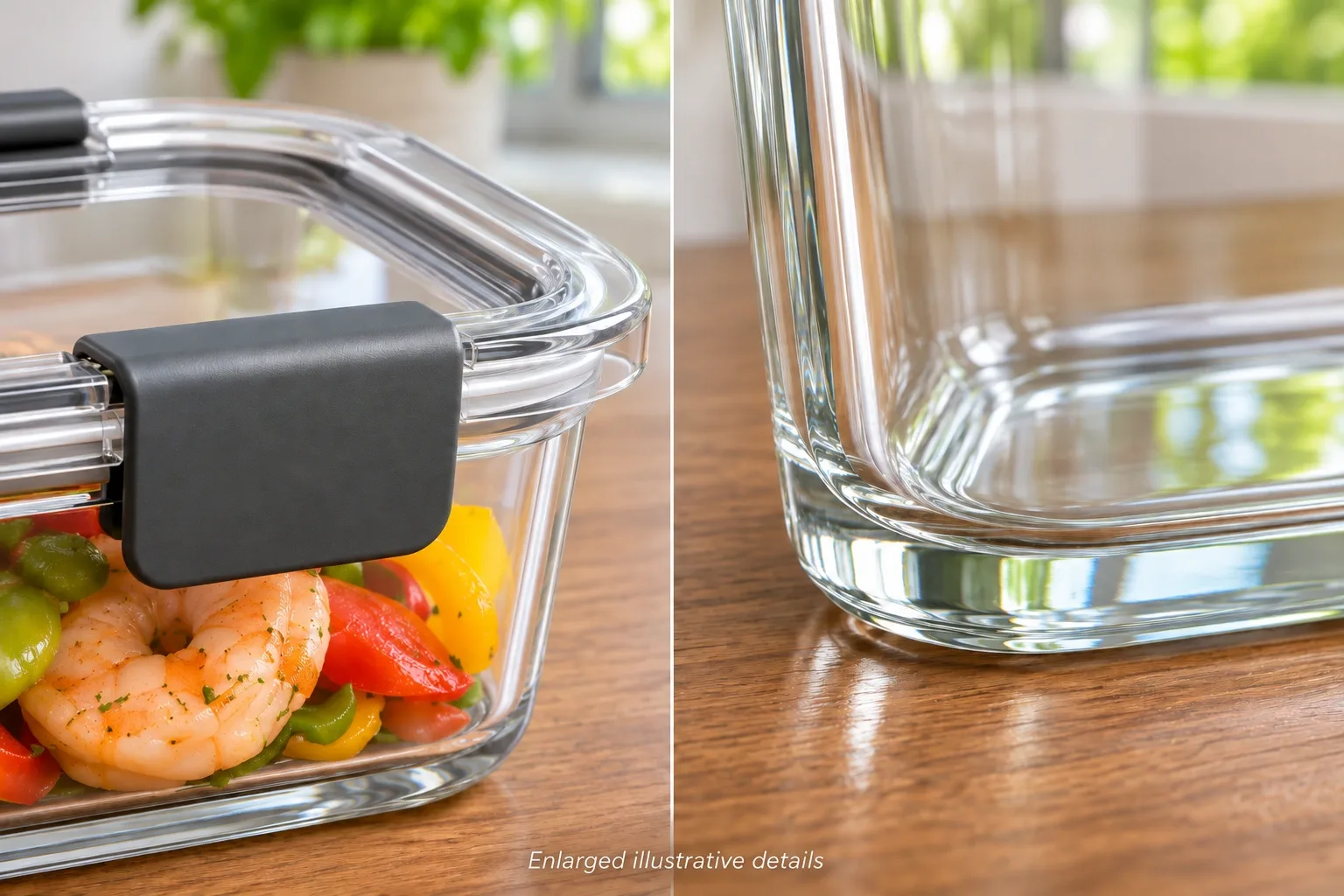
AI-generated illustration — Enlarged exterior details, not a safety or material-testing demonstration.
Are the lids interchangeable, and are the glass sets plastic-free?
The glass sets are not plastic-free: their clear lids are plastic. If eliminating plastic throughout the storage system is your requirement, neither of these packs meets it as described.
Rubbermaid promotes a shared Brilliance lid system across materials. That should be understood as matching compatible sizes and shapes, not as a claim that one rectangular lid fits every capacity in the range. Check the exact size when ordering replacements or combining sets.
Also evaluate lids as part of the purchase rather than treating them as incidental packaging. A lid, latch or seal problem can limit a useful base. We did not verify a currently available replacement-lid offer for every size, so we will not promise that a lost or damaged lid is always inexpensive to replace.
How do the two current prices compare fairly?
The observed glass pack costs more while providing four usable containers; the plastic pack provides five. If you need five lunches prepared at once, the checked glass pack alone does not supply five separate containers. That is a more practical distinction than comparing eight pieces with ten pieces as though all pieces store food.
The right value calculation also depends on which jobs a pack replaces. Glass may be worthwhile for its permitted oven role; plastic may be sufficient for cold storage and suitable reheating. Neither conclusion requires claiming one material is categorically better for every household.
What owners say about glass versus plastic
- Glass versatility was useful: On October16, 2024, rextraverse said they owned plastic Brilliance and used their glass versions more often because of oven versatility. That is one person’s use pattern, not proof that our exact four-container pack is the better purchase for everyone.
- The same owner noted the downside: In that same October16 comment, rextraverse described glass as heavy and less convenient to nest than plastic. These are the positive and negative sides of one owner’s account, not independent reviewers forming a consensus. The exact capacities and ASINs were not stated, so we do not use it to establish current pack dimensions or long-term failure rates.
We found useful material-level discussion, but not a controlled comparison of the exact current packs. We excluded deleted-author remarks and did not convert comments about a container feeling safe into medical or laboratory conclusions.
What stands out, and where do both options fall short?
Both lines give buyers a clear view of stored food and a latching, vented lid arrangement. Glass adds a documented oven capability; plastic offers the carrying convenience that often matters for lunch. Those differences are concrete enough to make a choice without inventing a test winner.
Both still require care. Glass introduces breakage and temperature-change precautions, while plastic introduces food and heating limitations. Neither should be sold as indestructible or as cookware suitable for any heating method.
Our five illustrations use only the glass3.2-cup shape as an exterior example, rather than mixing both materials into a misleading side-by-side image. Scale follows the official single-container family page: 8.13×5.36×2.619 inches. That page describes a single container, not the exact four-pack carton dimensions.
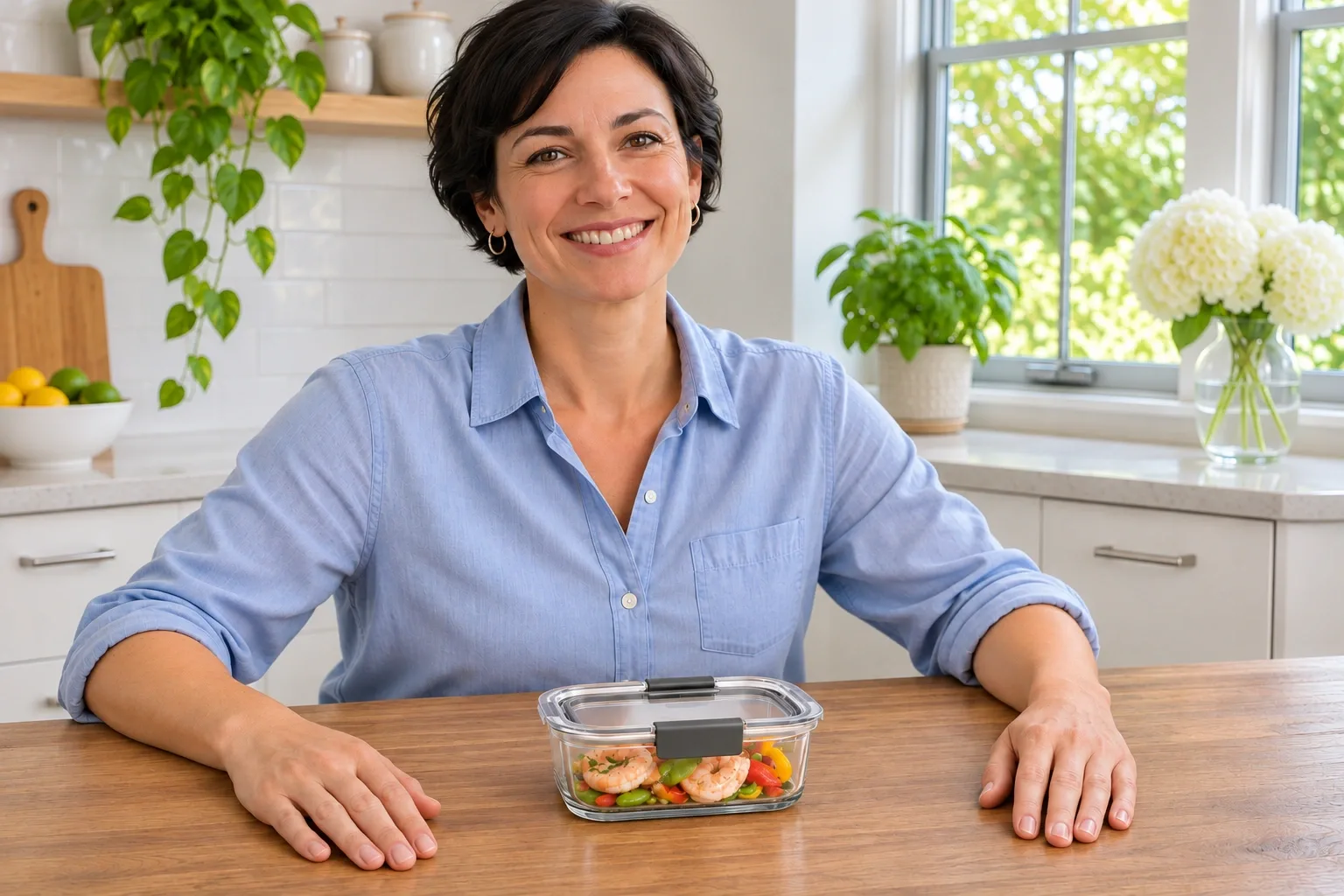
AI-generated illustration — Glass example scaled from official single-container family dimensions.
How we researched this comparison
We checked both Amazon offers, Rubbermaid’s glass and plastic product information, their separate use-and-care documents and the dated owner discussion. We also read the site’s earlier plastic-container coverage to avoid presenting this material comparison as a duplicate single-product article. No food was heated or stored by us.
Sources: Rubbermaid glass3.2-cup family specifications; plastic use-and-care instructions; glass safety and use instructions.
View Current Offers on Amazon → — checked glass pack.
View Current Offers on Amazon → — checked plastic pack.
Pros
- + Glass bases add conventional-oven versatility up to450°F
- + Plastic offers a lighter carrying option
- + Both lines provide clear bases and vented latching lids
Cons
- - Glass is heavier and requires thermal-shock and damage precautions
- - Plastic has specific microwave-food and heating restrictions
- - Glass sets still use plastic lids, and the checked packs contain different counts
Sources and verification status
Verification status: compiled from public sources
Data updated:
FAQ
Can both Brilliance glass and plastic go in the microwave?
Both lines allow reheating within their instructions. Open the latches to vent. The plastic-container care sheet limits them to reheating precooked food and lists additional food restrictions; microwave-safe does not mean unrestricted cooking.
Can the lid go in a conventional oven with the glass base?
No. Rubbermaid allows the glass base in a conventional oven up to450°F, but the plastic lid must be removed. The glass care instructions also exclude broilers, toaster ovens, stovetops and grills.
Can I move frozen glass Brilliance directly into the microwave?
No. Rubbermaid’s glass safety instructions say not to move it directly from freezer to oven or microwave and to thaw food before reheating. Follow the full supplied instructions for temperature changes and hot-glass handling.
Are the compared Amazon packs the same number of containers?
No. B08B7GLYZC is the checked four-container glass pack with four lids; B079M8FPTW is the five-container plastic pack with five lids. Each container holds 3.2 cups, so compare usable containers rather than piece counts alone.
Does buying glass eliminate plastic from this storage system?
No. The glass version still uses clear plastic lids with latches. Rubbermaid describes compatible Brilliance lids across materials, but match the actual size and shape rather than assuming one lid fits every capacity.
You might also like
Home & Kitchen
Product analysisRubbermaid Brilliance 3.2-Cup 5-Pack Stops Short of the Oven
Rubbermaid Brilliance's 3.2-cup 5-pack is $32.48 on Amazon. Compare it with Glasslock and see who should skip plastic.

Home & Kitchen
Product analysisRubbermaid Brilliance 14-Piece: Why It's Really Seven Containers
Brilliance costs $11.20 more for clear Tritan latch storage, while EasyStore provides two more containers.