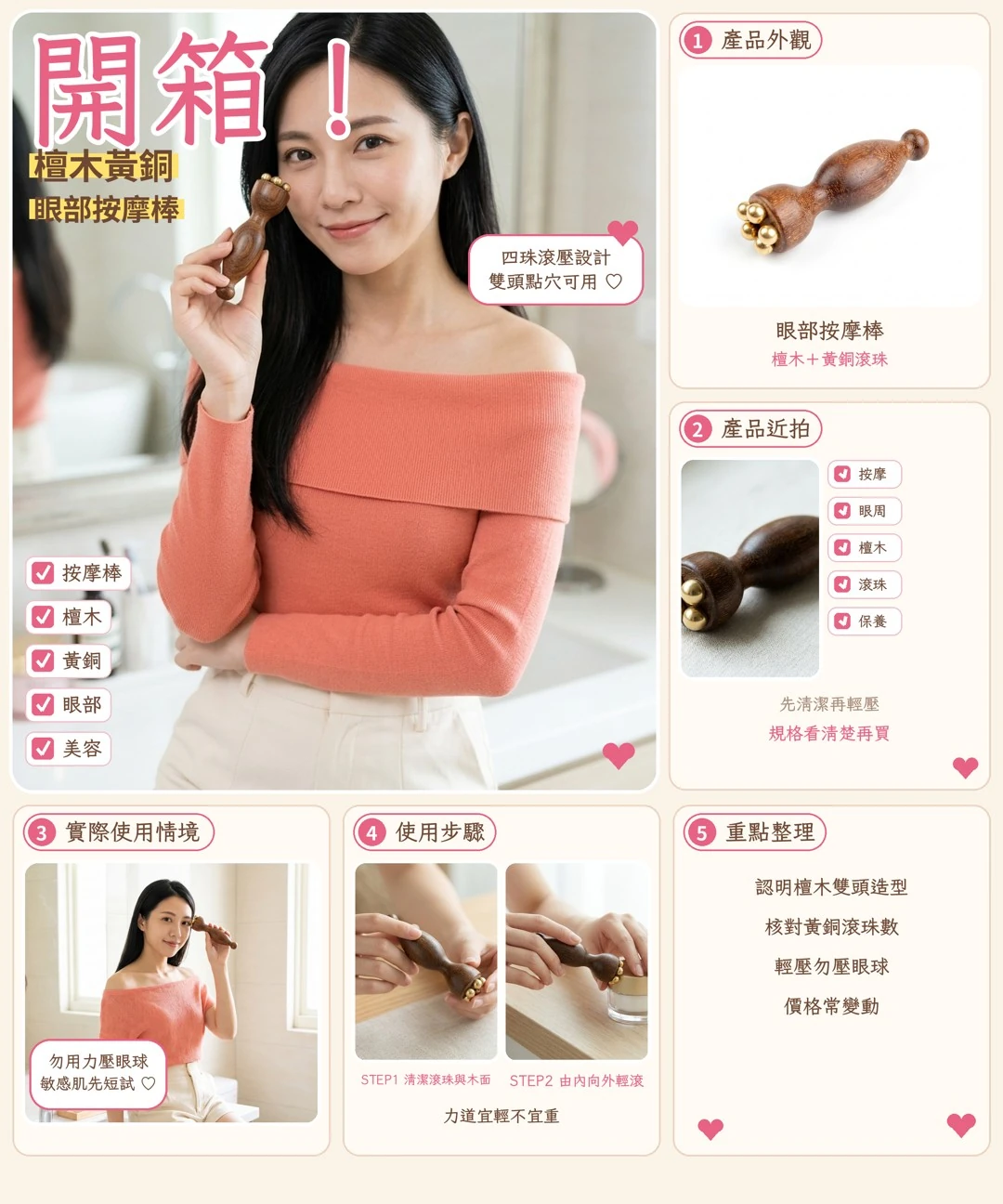
Sandalwood Brass Eye Massage Stick Review: Will NT$12 Brass Beads Scratch Your Under-Eyes?
30-second verdict
A dual-end wood stick with four brass beads and a sphere tip—glide with slip, don’t scrape dry skin.
Buying Guide Notes · First published:
Compiled from public sourcesWritten using published specs and user feedback.
Sources and verification status
Verification status: compiled from public sources; not hands-on tested
Data updated:
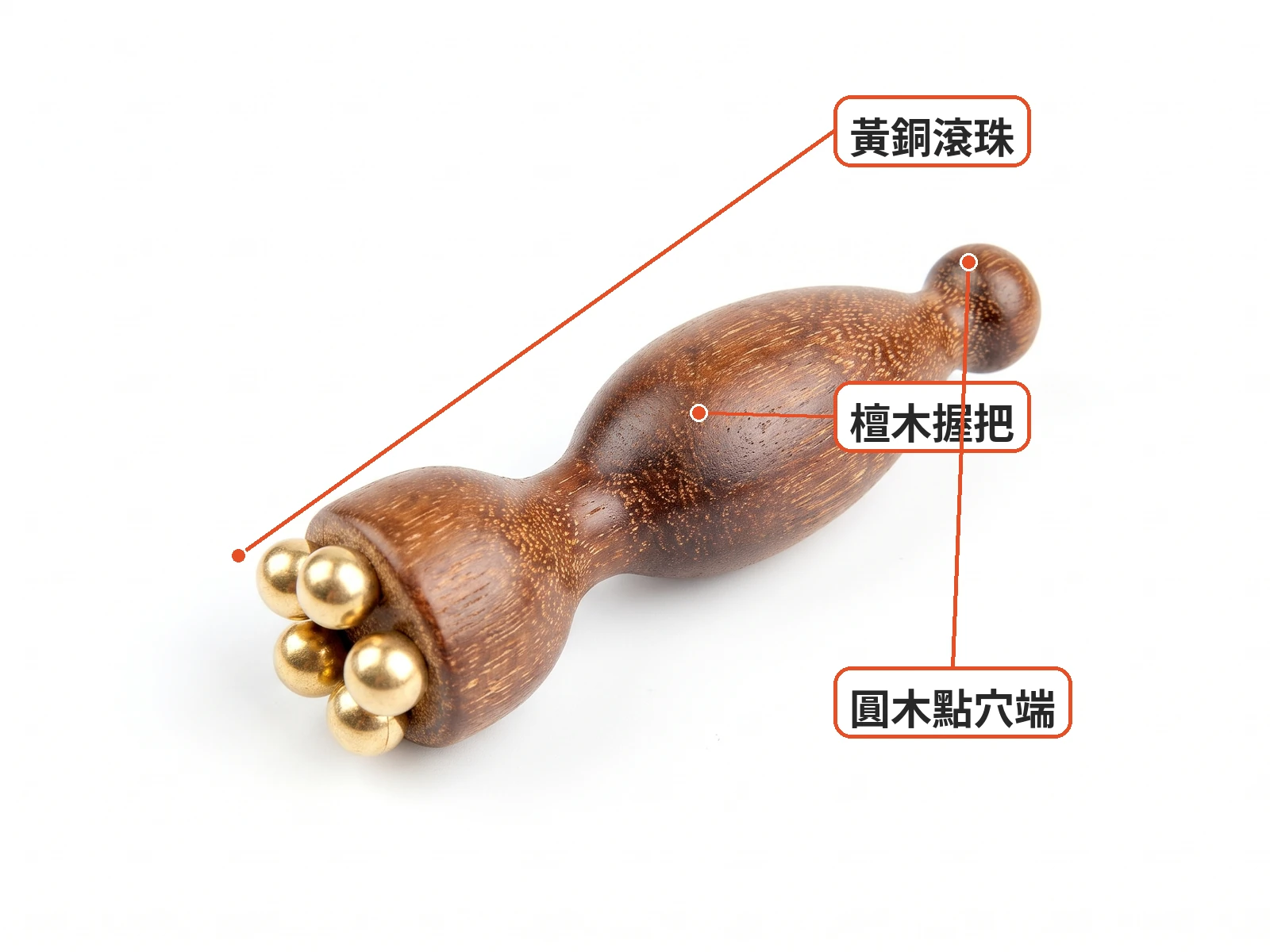
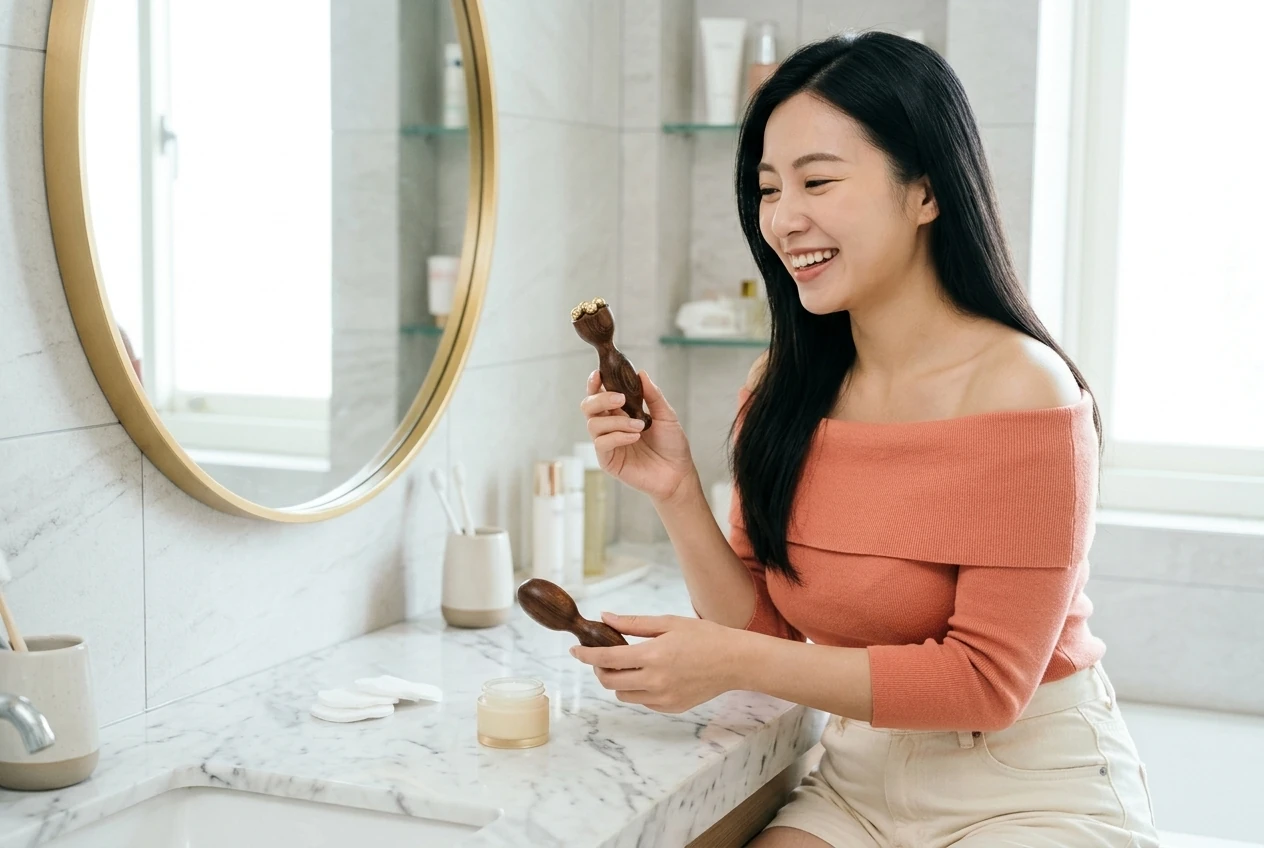
When eye cream alone still leaves the eye area feeling tight, uneven finger pressure is often the missing piece. A compact dual-end tool can help. This sandalwood brass-bead eye massage stick is a dark polished wood handle with four gold/brass spherical rollers on one end and a smooth wooden sphere on the other—shaped like a tiny hourglass that sits in the palm.
Easy to spot: deep-brown wood grain, a bulbous mid grip, a four-bead brass cluster on one tip, and a rounded wood ball on the other. It is not a wide gua-sha board, a dual jade roller, or an ice globe.
When does a brass-bead wood stick fit a routine?
If you already layer a thin cream or oil and only need controlled pressure, dual-end sticks often become a two-minute wind-down. PTT BeautySalon threads on facial gua-sha stress lubricating first and keeping eye-area pressure light. Home-tool roundups split between press-only sticks (easier to clean) and rollers paired with eye cream—both camps warn against scraping dry skin.
Good fit: people who want cream spread more evenly, temple relief after screens, or a wood feel over acrylic. Less ideal: active rashes or broken skin, anyone expecting clinic-level results from a stick, or shoppers who refuse any extra cleaning.
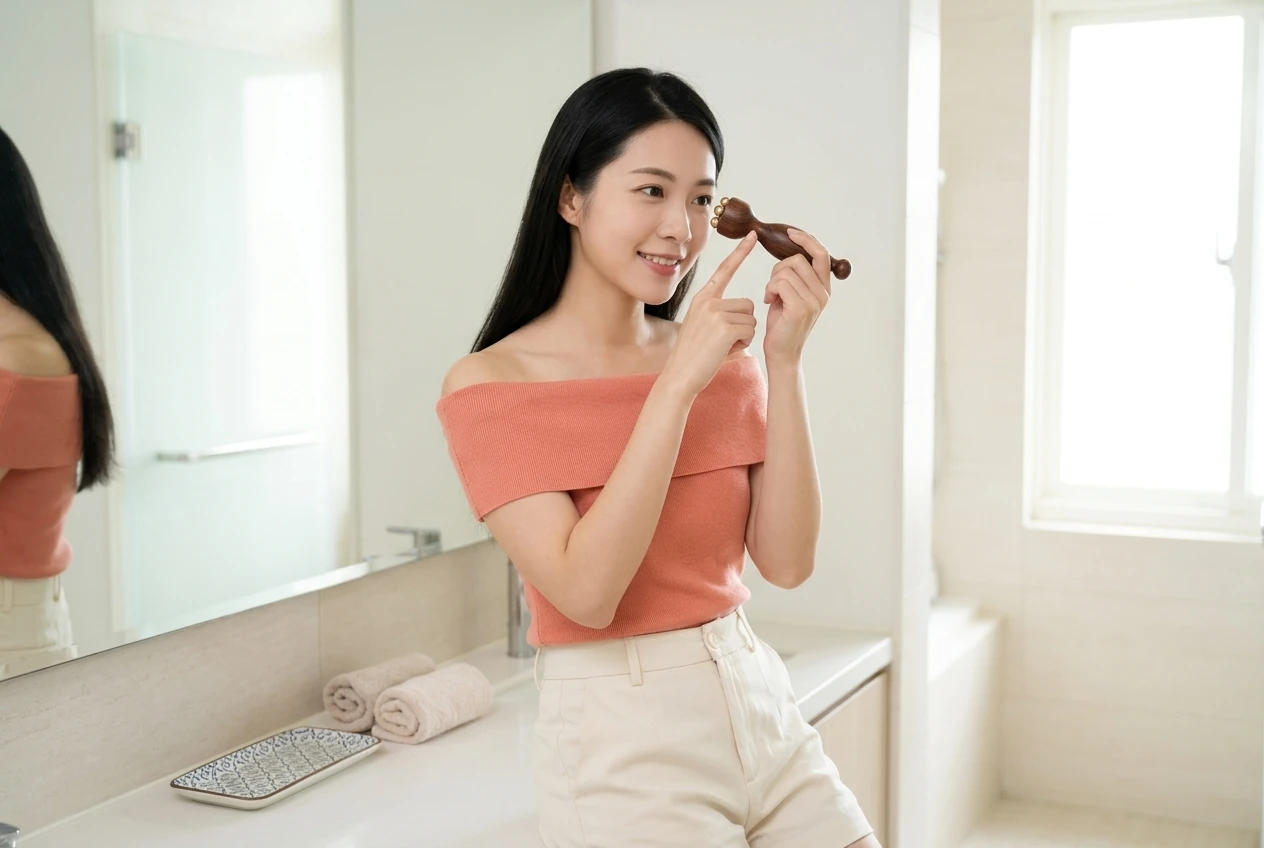
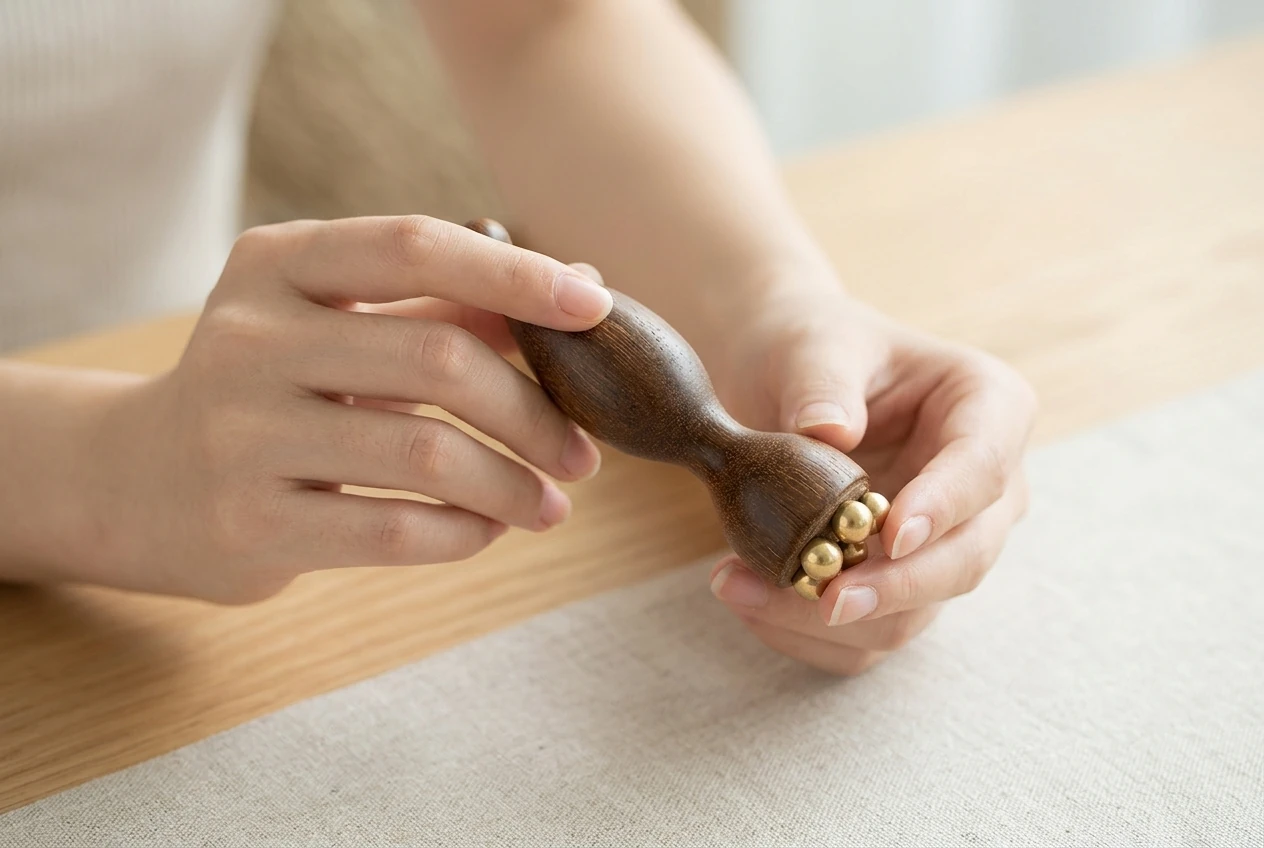
Basic use: clean hands and the tool, add a thin slip layer, glide the bead end along the outer eye area and temple, and tap acupoint spots with the wood sphere as lightly as you'd press a remote button—never into the eyeball. The exact wood species, whether the beads spin freely, and the length and weight are rarely published for this model, so check the unit when it arrives.

Practical take: can an NT$12 dual-end stick be your main eye-area tool?
Searches for a sandalwood brass eye massage stick review usually ask whether a cheap wood tool will scratch or shed finish. Treat it as a glide-and-press helper, not a de-puffing guarantee. Stop if beads feel sharp or the wood smells strongly chemical before face contact.
Price is about NT$12, with roughly 630 sold. Peers include horn scrapers, single-bead cream wands, and plastic boards; this one’s pitch is roll-plus-press in one piece. Dry dragging without slip increases tug near fine lines—material won’t save bad technique.
On arrival: confirm four beads, no sharp seams, an uncracked wood sphere, and a grip free of peeling finish. Test on the back of the hand first. Loose beads or wood splinters mean stop, photograph, and start a return.
Wipe with a barely damp cloth; avoid long hot soaks. Dry oil out of bead gaps. Let it air-dry after use instead of sealing it in a damp pouch.
Pairing tip: fingertip-dot the cream, then bead-glide the edges; save the sphere for short temple taps. Skip daytime if makeup smudge worries you—nights after cleansing are calmer.
Travel-friendly size, but packed pressure can loosen bead seats—use a soft pouch. Keep away from kids; small metal beads are choke hazards.
Pause tools during strong retinoid or acid weeks while the barrier is thin. Tools speed technique; they are not an excuse to grind actives harder.
What users say
PTT BeautySalon on facial gua-sha stresses oil first and personal pressure tolerance. A post on the same board about home massage tools compares press sticks vs rollers and cleaning. Another thread on choosing a gua-sha stick debates shape for jawline vs precise points. A Dcard eye-tool review mentions cream assist plus temple use. These are category notes—not long-term tests of this exact four-bead sandalwood stick.

Similar alternatives
- Horn/resin gua-sha boards: wider faces for cheeks
- Single-bead metal cream wands: simpler cream spotting
- Jade dual rollers: different roll feel and care habits
Wood feels warmer, brass cooler—summer glides can feel nicer than warm fingers; in winter, pre-warm the wood sphere in your palm. Those are comfort notes, not medical claims.
Before-you-buy checklist
- Confirm the look: dark solid-wood handle, four metal beads on one end and a round wood ball on the other (not a gua-sha board or lotus-head shape)
- On arrival, check that bead seams have no sharp edges, the wood ball is not cracked and there is no harsh chemical smell; test on the back of your hand before your face
- Apply a thin layer of cream or oil first; glide lightly around the eye area and never press on the eyeball
- Don't soak the wood for long; dry the bead seams and store it somewhere airy
- Wood grade, free-spinning beads and exact size are not well documented, so compare the unit with its instructions
- Confirm the option you picked and where it ships from
- Read the return, exchange and warranty terms
Specs
| Item | Detail |
|---|---|
| Product | Sandalwood/brass facial eye massage stick (dual-end) |
| Look | Dark polished wood; four gold/brass beads; wood sphere tip |
| Common use | Light eye-area glide, temple/acupoint taps; needs slip |
| Price note | About NT$12 (prices change often) |
| Sold (from sales count) | About 630 sold |
| Open gaps | Exact wood species proof, brass grade, free-spin vs fixed beads, length/weight |
Pros
- Dual ends: bead glide plus wood-sphere taps in one tool
- Clear wood look; about NT$12 keeps trial risk low
- Pocketable for travel kits
Cons
- Few long-term reviews of this model—check the wood and bead finish yourself
- Bead seams can trap cream and need wiping
- Skip on broken or inflamed skin
Where to buy
NT$12 | See the lowest price →
Check the details on the seller's page before you buy.
FAQ
Must I use oil first?
Yes—use a thin cream or oil; dry dragging tugs the eye area.
Will four beads scratch?
Inspect seams and polish; stop and return if edges feel sharp or finish flakes.
Can it replace clinic treatments?
No. It is a home technique aid with highly individual feel.
How to clean?
Wipe damp, dry bead gaps, avoid long soaks.