Sonicare 4100 Voltage: Can You Charge It Abroad?
Quick Verdict
Buy the black HX3681/24 if you want a familiar Sonicare with a USB-powered base. Check the wall adapter’s input range before international travel; the brush’s DC5V specification alone does not describe mains compatibility.
Good for
- Travelers who already carry a suitable USB wall adapter
- Sonicare users willing to pack a separate charging base
Not for
- Travelers demanding a USB-C socket built into the brush
- Buyers expecting a wall adapter or charging travel case in this basic kit
Buying Guide Notes · First published:
Compiled from public sources · Written using published specs and user feedback.
As an Amazon Associate I earn from qualifying purchases.

Pros
- + DC5V USB-powered charging base can share a suitable USB power source
- + Official two-week battery claim may reduce charging stops
- + One handle, one C2 brush head and one charger listed for HX3681/24
Cons
- - USB charging still requires a proprietary base and its cable
- - Wall power adapter is separate; check its input rating and plug fit
- - Older 4100 and other Sonicare chargers should not be assumed electrically identical
Sources and verification status
Verification status: compiled from public sources
Data updated:
Verified on:
The black Sonicare 4100 HX3681/24 uses a DC5V USB-powered charging base, so taking it abroad is mainly a question of choosing a suitable USB power source and outlet connection. Check the wall adapter’s input label before you travel; the brush’s 5V specification does not mean the base plugs directly into a 230V outlet. You must also pack the separate base if you expect to recharge.
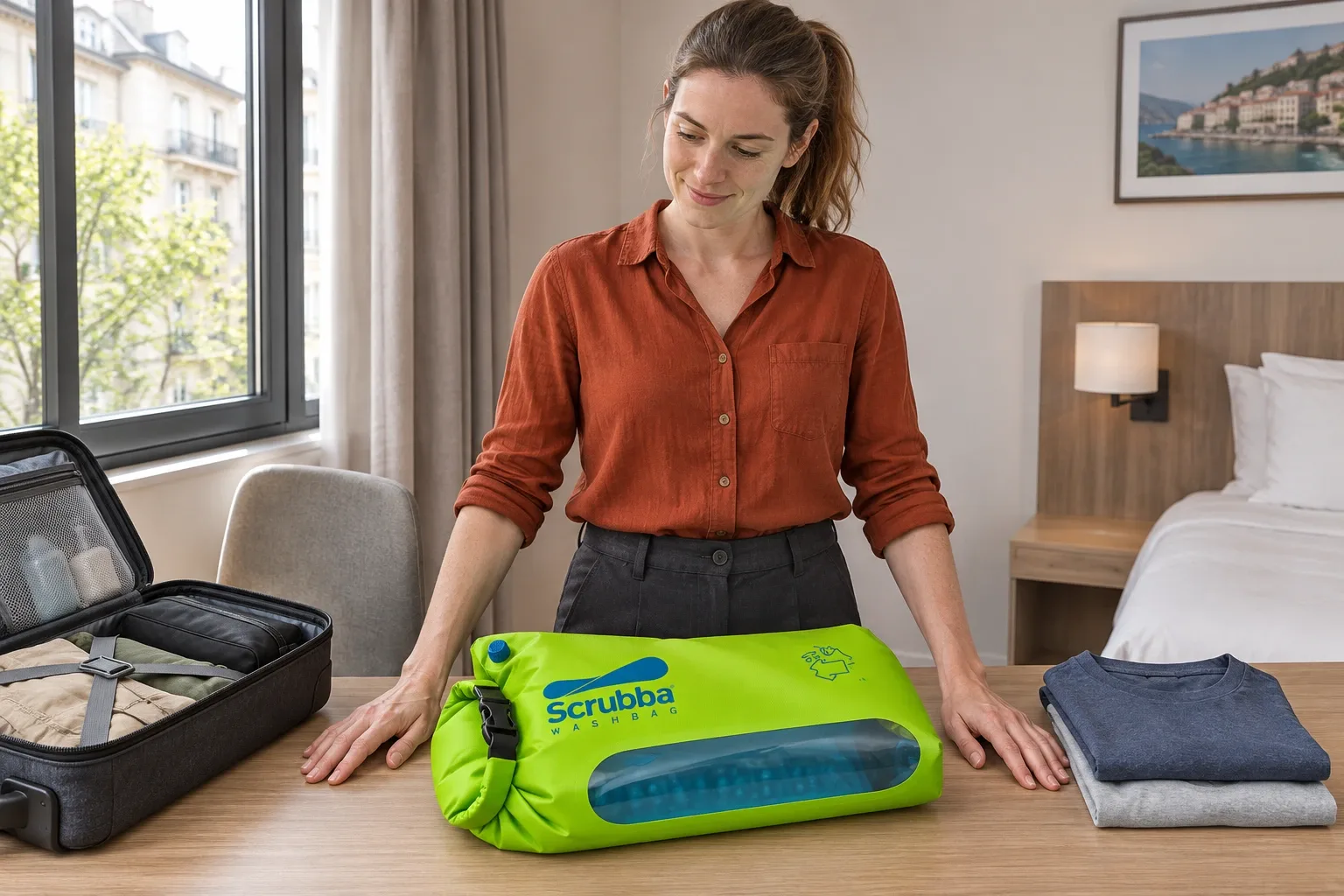
AI-generated illustration: a packing scenario using the black HX3681/24 appearance. Exact assembled dimensions were not independently verified; this is not a measuring or fit photograph.
Which Sonicare 4100 is this guide about?
This guide covers the black HX3681/24, ASIN B09LD7WRVS, checked November 13, 2026. The observed Amazon.com new offer was $39.96, sold and shipped by Amazon.com, with 4.3 stars from 23,436 ratings. These are a dated offer snapshot, not a future price promise; checkout price and seller can change.
The model suffix matters. Sonicare uses similar series names across years and markets, while chargers and bundles can differ. A recommendation about an older 4100 with a mains-powered base does not automatically answer the question for this USB version. Read the handle and charger labels, not just the large series number on the box.
View Current Offers on Amazon →
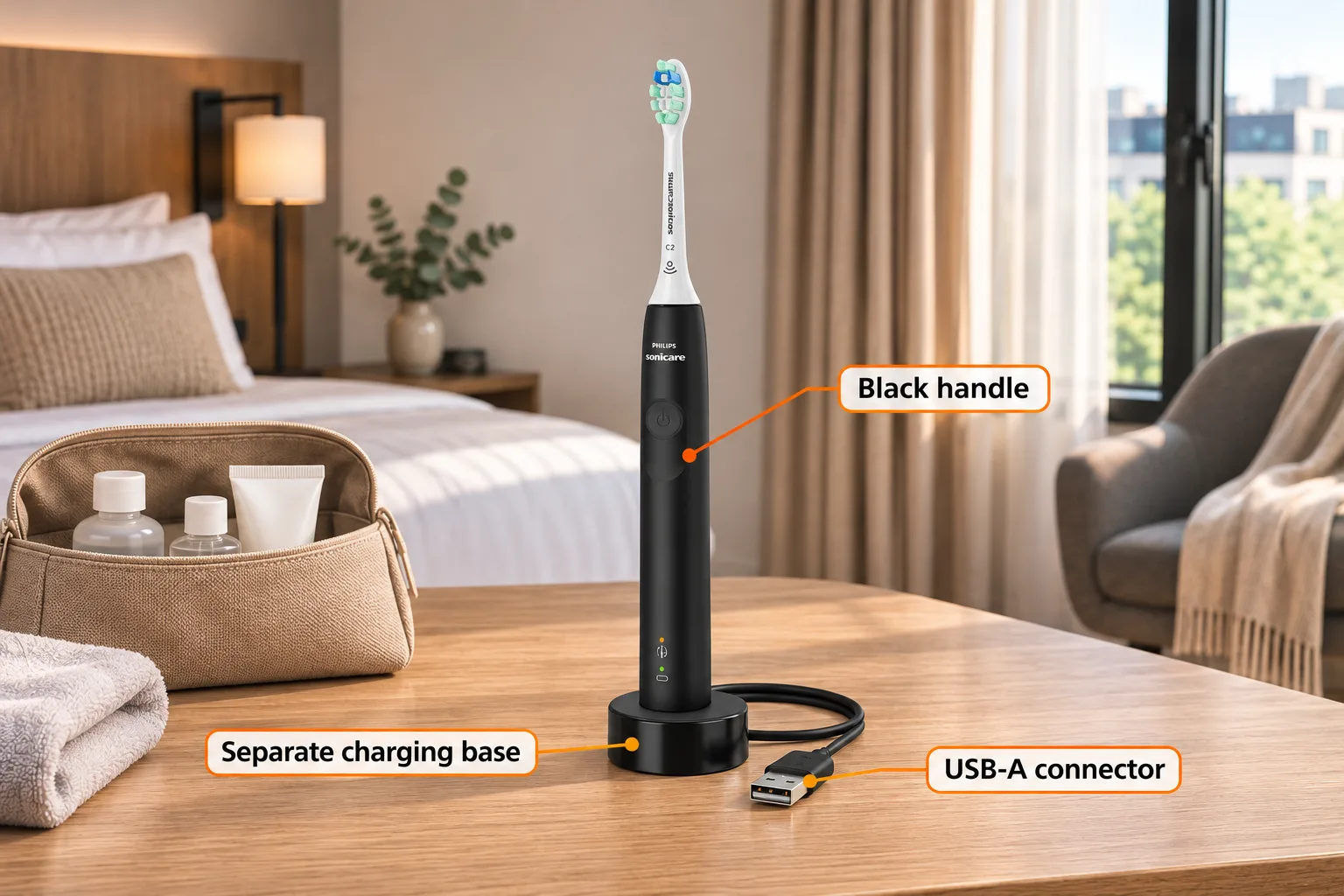
AI-generated illustration: enlarged product view identifying the separate base and USB-A connection. No wall adapter is represented as included.
What does the voltage label actually tell you?
Philips’ exact-model specifications list DC5V. Think of the charging setup as three separate pieces: the destination wall outlet, a USB power adapter, and the supplied Sonicare base. The adapter deals with mains electricity; the base receives USB power and supports the brush on its charging post.
A wall adapter marked for an input range of 100–240V covers that stated voltage range, provided the local supply is within it and its plug connection is suitable. A plug adapter changes the physical connection; it does not make a single-voltage appliance universal. Do not infer electrical ratings from a plug that happens to fit.
Philips’ general USB-adapter support guidance specifies a 5V output and a current rating of 1A or higher, with a 100–240V input. Its currently visible revision is dated November 6, 2025. This is general manufacturer guidance; the instructions and labels supplied with your particular charger remain the final check. For a moist environment Philips specifies a splash-proof IPX4-rated adapter. A dry bedroom packing table is simpler than treating any spare phone charger as bathroom equipment.
Which travel charging setup makes sense?
| Setup | Price status | What must match | Best for / real limitation |
|---|---|---|---|
| Buy HX3681/24 and use a suitable USB wall adapter | Brush $39.96 at check; adapter not priced here | USB-A base connection, correct USB output, adapter input and outlet plug | Travelers wanting this brush; still requires the separate base |
| Keep your existing compatible brush and charger | No new brush purchase; accessories depend on what you own | Exact charger instructions and voltage label | Owners with a working setup; do not assume all Sonicare bases match |
| Charge before departure and carry no base | No extra charger purchase | Battery must cover the trip and your routine | Shorter trips; no recharge option if the battery runs down |
| Use a manual travel toothbrush | No current offer verified here | Personal preference and suitability | People prioritizing minimal electrical luggage; a different brushing experience |
The table compares packing approaches, not four tested products or verified retail offers. If your current setup works internationally, confirm its label before replacing it.
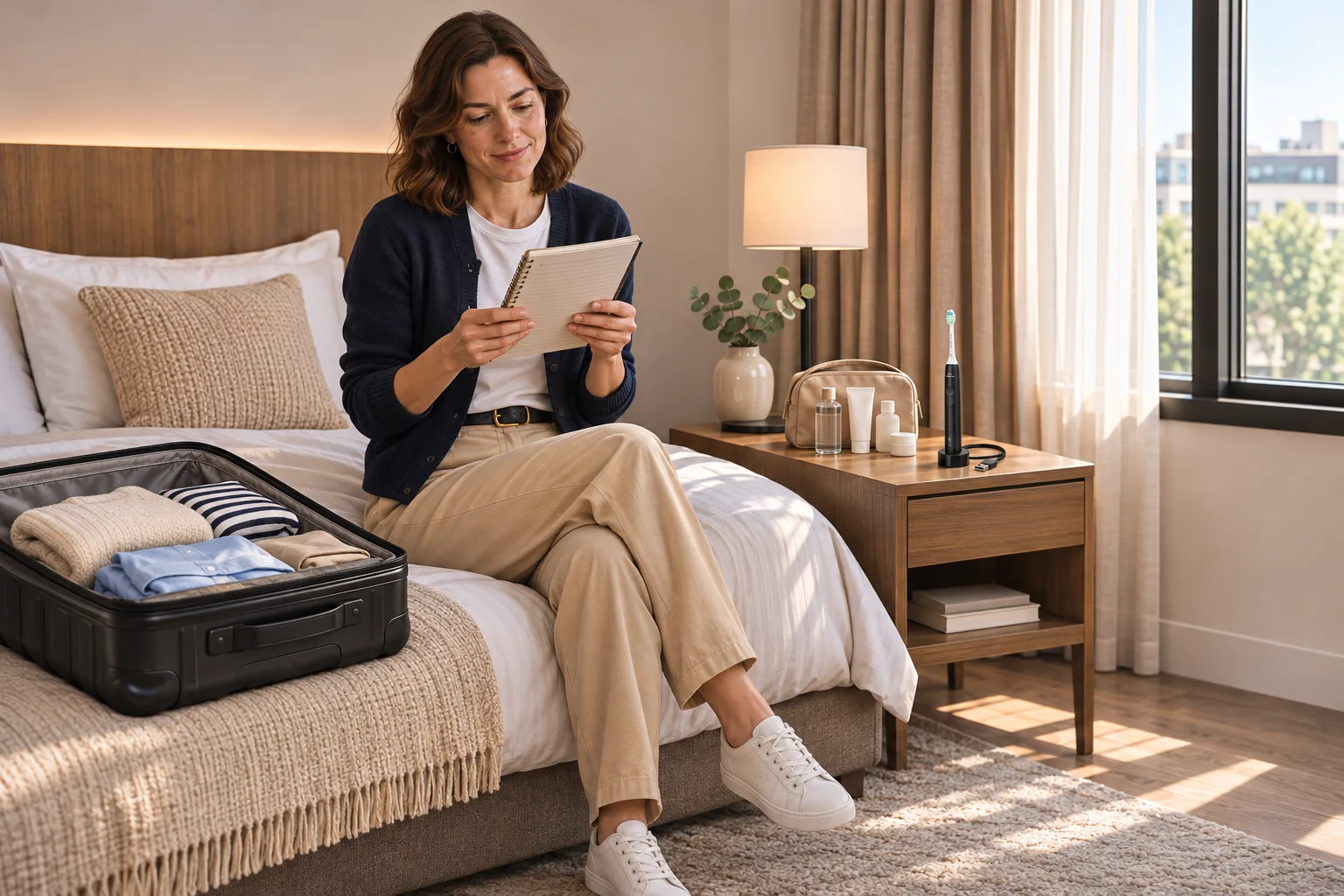
AI-generated illustration: the same traveler prepares a dry packing area; no overseas charging test is shown.
Can a USB-C phone charger replace the base?
The power source and the base are different things. The supplied USB-A lead is attached to the Sonicare base. The handle does not gain a direct USB-C charging port just because the other end of the system can use a USB power adapter.
A charger with a suitable USB-A output offers the straightforward connection. With a USB-C-only charger, connector compatibility adds another decision. One owner reported success with an adapter, but that is not certification of every USB-C hub, cable or power bank. Test your complete setup at home while you still have time to change it, rather than discovering an unsupported combination after check-in.
What stands out for travelers?
A familiar brush can stay in the packing list. The exact model has a slim handle, one Clean mode and two intensity settings. A two-minute timer and interval pacing are listed by Philips. Those are practical controls rather than travel-specific extras; there is no need to learn an app just to maintain a familiar routine.
The manufacturer claims 14 days of use, based on two two-minute sessions daily in standard mode. That can make a charged brush attractive for a short trip. Treat it as a planning reference, not a promise that a worn battery will last precisely two weeks. Longer trips or a routine that differs from the stated basis make bringing the base more sensible.
The basic kit is easy to understand once the words are separated. Philips lists one handle, one C2 Optimal Plaque Control head and one charger. A listing that says “charger included” should not be read as “every wall adapter and travel accessory included.” Check the actual bundle rather than relying on a shared product-family photo.
Where does it fall short?
The main drawback is the extra base. Someone seeking one USB-C cable for a phone, headphones and toothbrush will not get that arrangement here. The base and attached lead remain a dedicated item to pack, and forgetting them cannot be fixed with a loose phone cable alone.
A second limitation is bundle ambiguity. A wall adapter or charging travel case should not be assumed part of this basic configuration. Do not choose a case from an illustration or use Amazon’s package dimensions as the handle’s assembled size. We did not verify exact assembled dimensions for this suffix, so the AI illustrations are not luggage-fit evidence.
Finally, the USB connection does not establish long-term reliability, universal dock compatibility or clinical superiority. We have not tested this brush, overseas outlets, charging speed or battery endurance. Those uncertainties matter more than an attractive claim that one brush is “perfect for every trip.”
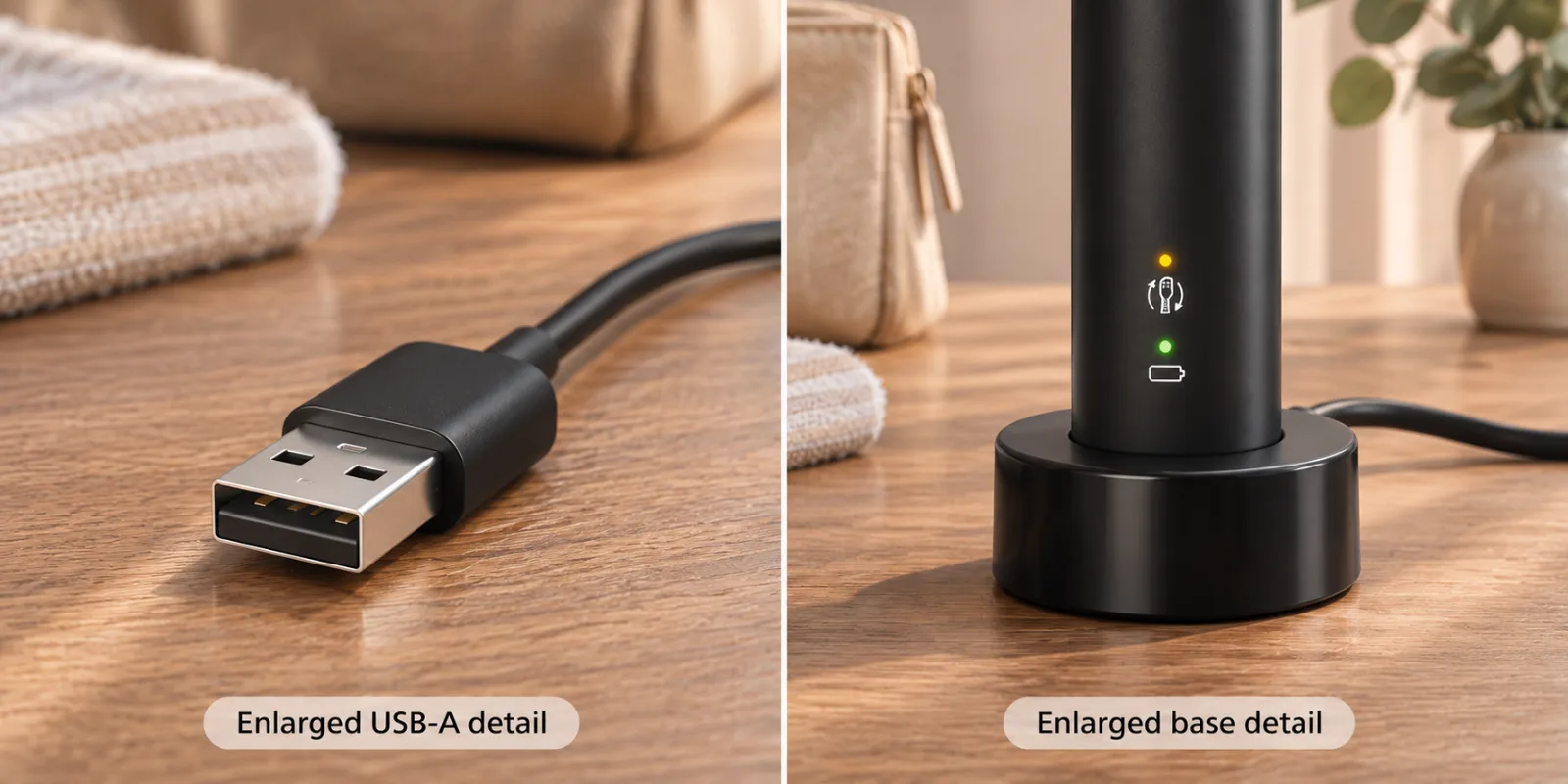
AI-generated illustration: exactly two enlarged details show the USB-A connector and inductive base. Enlarged views are not to scale.
What do owners say about travel charging?
- A reported successful setup. Emergency-Presence56, February 16, 2023, said a Sonicare 4100 charged from a USB-C PD charger through a USB-C-to-USB-A adapter during a month of travel. The suffix and adapter model were not specified, so this supports the convenience of that individual setup, not universal compatibility with the current ASIN.
- USB does not eliminate the dock. Virtual_Barracuda_54, July 4, 2022, pointed out that the 4100 still used a normal base with USB at the other end. The commenter saw the universal power connection as potentially useful but was less impressed by the packing advantage. This is an older series-level observation, not a measurement of the current kit.
These are two individual accounts with different priorities, not a consensus or failure-rate study. Neither establishes the electrical safety of an adapter you own.
Who should buy it—and who should keep looking?
Choose the HX3681/24 if you want a straightforward Sonicare, already have an appropriate USB power source, and can spare room for its base. It is also a reasonable gift for someone who values a familiar home-and-travel brush more than the smallest possible kit. Include the power-source question in your gift planning.
Skip it if your defining requirement is direct USB-C charging on the handle, an included charging case, or a guaranteed charger-free extended trip. Keeping a working existing brush is the cheaper alternative when its own charger already suits your destination. The useful buying decision is about the complete kit, not voltage in isolation.
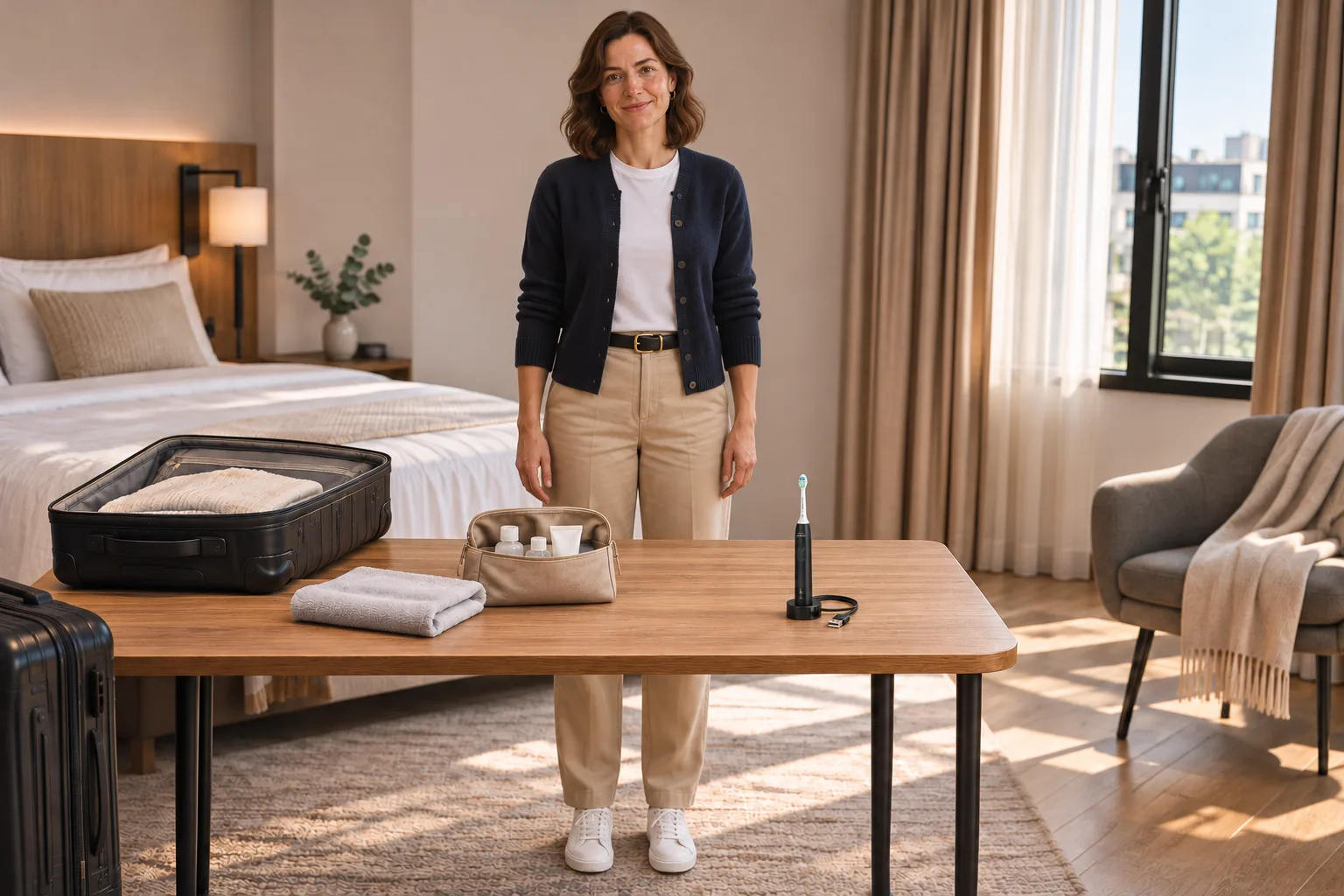
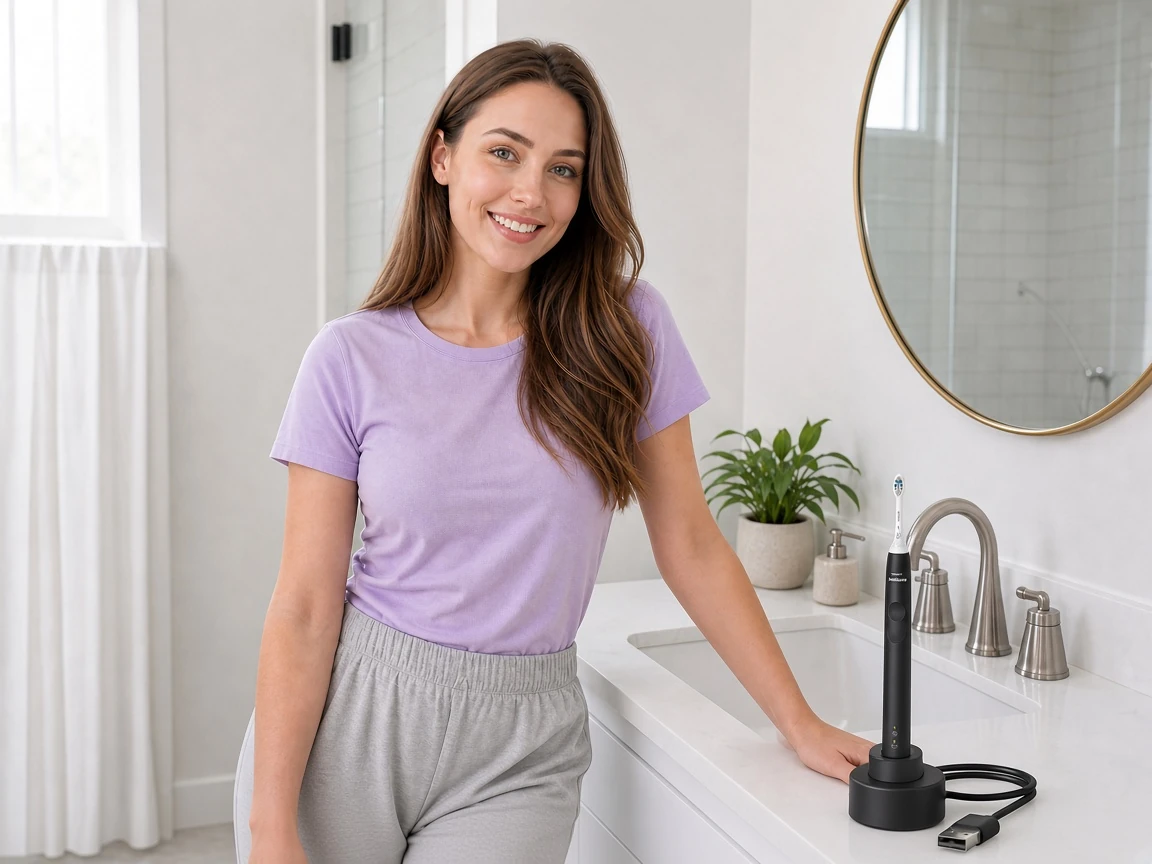
AI-generated illustration: a portrait with the same black brush and traveler; this is not ownership or testing evidence.
How we researched this
This guide was compiled from public sources, including the selected Amazon offer, Philips’ HX3681/24 specifications and adapter guidance, and the dated owner comments above. We checked the same-product article on UnboxRank to keep this guide focused on international charging rather than repeating a 4100-versus-2100 comparison. No firsthand brushing or travel test is claimed.
Sources: Philips exact-model specification page, current product page, Philips USB adapter guidance, and the individually linked Reddit comments. Older downloadable specification URLs failed to load directly at this check, so they are not presented as newly retrieved manuals.
FAQ
Can the black Sonicare 4100 charge in Europe?
The HX3681/24 uses a DC5V USB-powered base. For a European mains outlet, check that your USB wall adapter accepts the local supply, such as an input label covering 100–240V, and that its plug fits. Do not connect the USB base directly to mains voltage.
Does HX3681/24 include a wall adapter?
Philips lists one handle, one C2 Optimal Plaque Control brush head and one charger for this version. The USB charging base is not a wall power adapter; a suitable wall adapter is separate. Check the selected retailer bundle before ordering.
Can I plug a USB-C cable directly into the toothbrush?
No. This version charges through its small inductive base, whose cable ends in USB-A. It is not a toothbrush with a USB-C socket on the handle. A USB-C-only power source requires a compatible connection arrangement, rather than just a loose USB-C cable.
Will a two-week trip require the charging base?
Philips claims 14 days based on two two-minute brushing sessions per day in standard mode. That is a manufacturer claim, not a guarantee for an aged battery or every routine. Charge before departure and bring the base if running out would be inconvenient.
Can I use my older Sonicare mains charger instead?
Do not assume compatibility from the Sonicare name or physical fit. Check the charger label, supported handle models and the instructions supplied with your exact brush. This guide verifies the USB-powered HX3681/24 configuration, not every older mains-powered base.