Packing Light With Sony XM5 Means Making Room for a Case
Buying Guide Notes · First published:
Updated
Compiled from public sources · Written using published specs and user feedback.
As an Amazon Associate I earn from qualifying purchases.

Pros
- + Newer eight-microphone design compared with the XM4’s four
- + Up to 30 hours of battery life and a 3-minute quick-charge claim
- + Includes a case plus USB-C and wired cables
Cons
- - Headband does not fold down like the XM4
- - USB-C is for charging, not wired digital audio
- - No published IP rating for sweat or rain
Specifications
| Model / ASIN | WH-1000XM5 / XM5BK / B09XS7JWHH |
|---|---|
| Selected version | Black over-ear wireless headphones |
| Microphones | 8 microphones (Sony comparison table) |
| Battery | Up to 30 hours; 3-minute charge for about 3 hours (Sony) |
| Folding | Does not fold; redesigned carrying case included |
| In the box | Headphones, USB-C cable, headphone cable, protective case |
Sources and verification status
Verification status: compiled from public sources
Data updated:
Quick Verdict
Choose XM5 when its included case fits your bag; choose the folding XM4 when compact packing is non-negotiable. The black XM5 earcups swivel, but the headband does not collapse like its predecessor's. That difference matters more for a tightly packed commuter bag than the age of the model.
Sony WH-1000XM5 vs Sony WH-1000XM4
Sony WH-1000XM5 Black, ASIN B09XS7JWHH, is $198.00; Sony WH-1000XM4 Black, ASIN B0863TXGM3, is $294.00. The older XM4 costs $96.00 more in these selected new offers, buying folding portability rather than newer hardware. These are different third-party offers: Focus Camera for XM5 and Beach Camera for XM4. Do not assume an older generation is automatically the cheaper choice.
Both include cases, multipoint Bluetooth and an up-to-thirty-hour battery claim, so none of those alone justifies paying more for XM4. Sony rates XM5 quick charging at three minutes for three hours, requiring a compatible USB-PD adapter that is not included. XM4's stated top-up is ten minutes for five hours; these are different charging intervals, not a single like-for-like speed test. For someone often plugging in briefly before leaving, XM5's shorter quoted interval is relevant.
What Stands Out
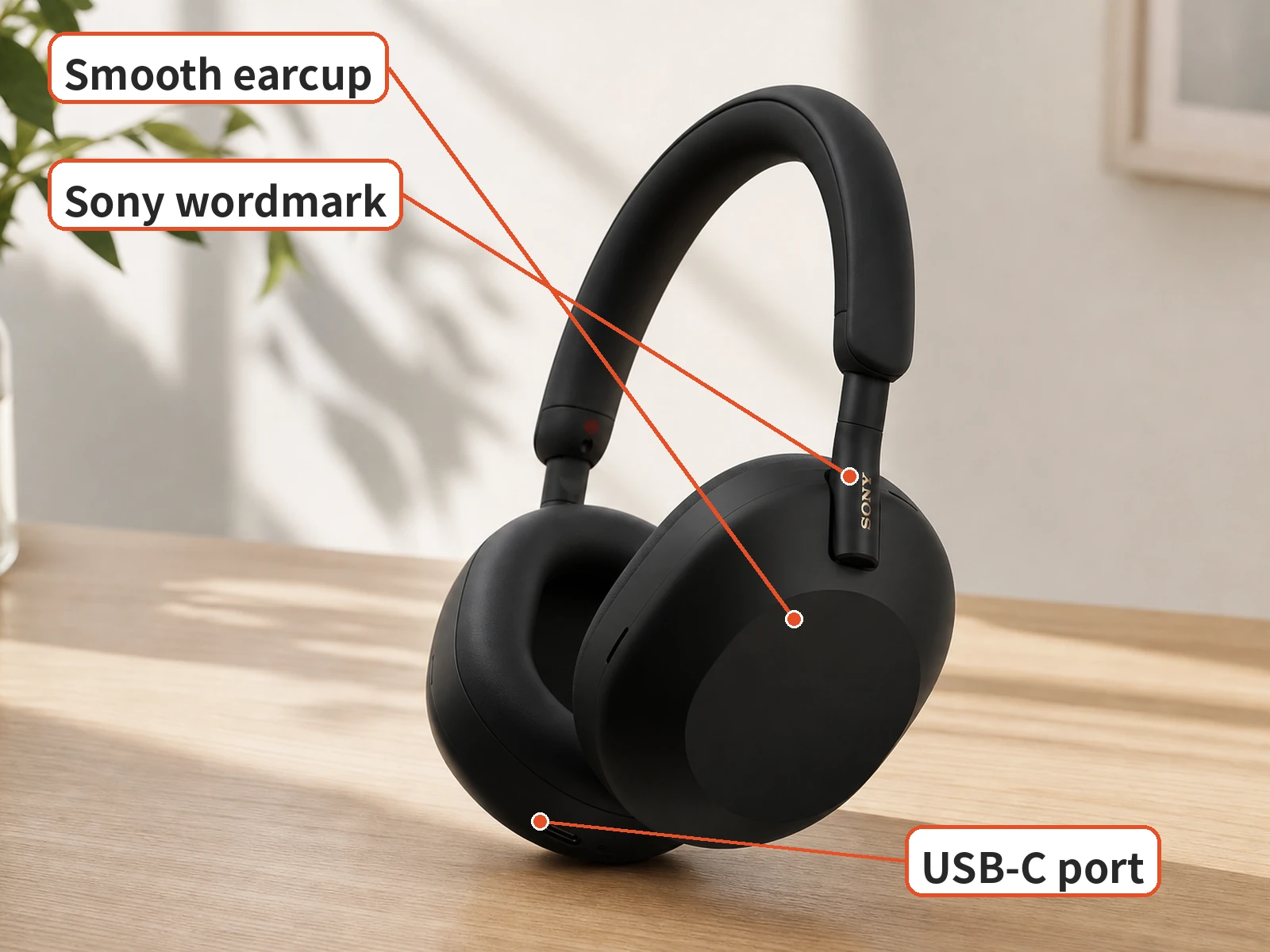
For a phone-and-laptop desk setup, multipoint pairing is more useful than adding another travel accessory. XM5 can keep two Bluetooth devices connected, while wearing detection can pause audio when the headset comes off. Choose it for that daily device-switching workflow when the case size is not a constraint. XM4 also offers multipoint, so this convenience is not exclusive to XM5.

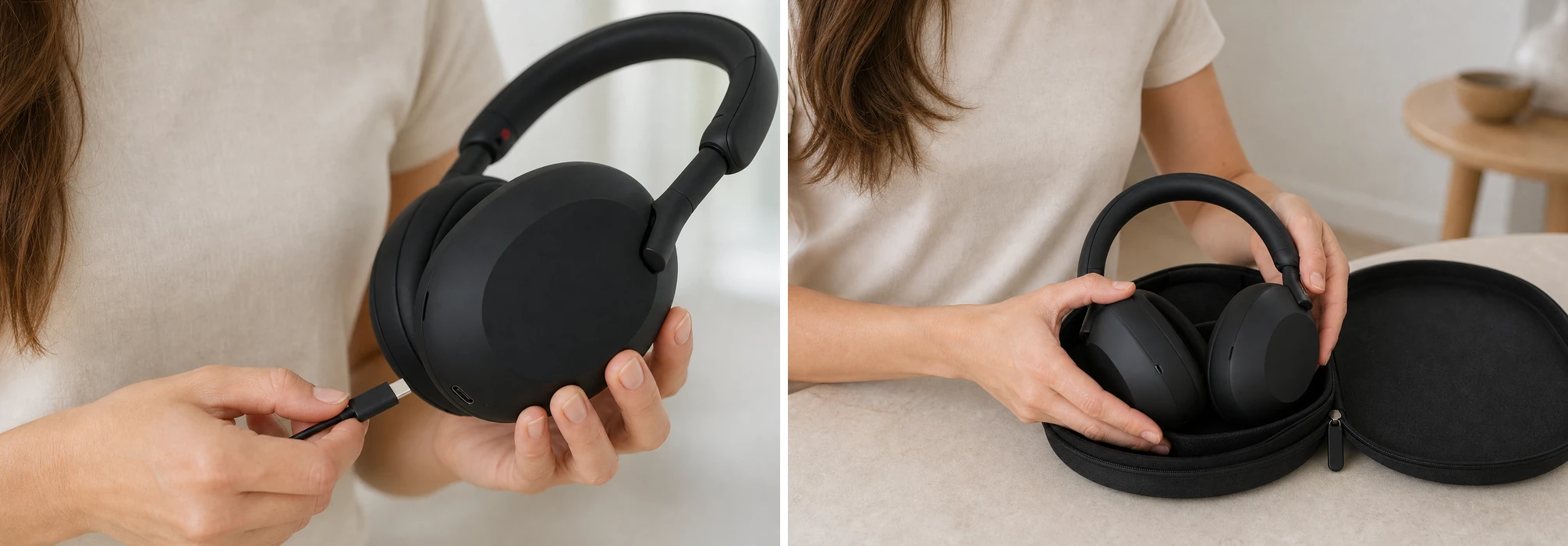
SoundGuys confirms that the included analog cable works with the headset powered off, but powered noise cancellation requires the battery. That makes the cable a listening backup, not a way to preserve every wireless feature after the charge runs out. The box also contains a USB-A-to-USB-C charging cable and protective case, but no wall adapter.
Where It Falls Short
Do not buy XM5 expecting USB-C digital audio or a rain-ready workout headset. SoundGuys identifies its USB-C port as charging-only and notes the absence of an IP rating. Its headband adjusts continuously rather than returning to a remembered click-stop size. For a bag that only accommodates folded earcups, the included case does not erase the packing problem.
Who It's For
A hybrid worker moving between a laptop and phone should choose XM5 if the case has a regular place in their work bag. Wearing detection suits interruptions when you remove the headphones rather than reaching for playback controls. The analog lead is also useful for a compatible wired source, without promising that every airline socket will accept it.
Pick XM4 when folding is the purchase-deciding requirement, despite its higher selected offer. Skip XM5 for a headset routinely exposed to sweat or rain, because it has no published water-resistance rating. If most listening stays at a desk, do not pay for compact packing you will rarely use.

Product illustrations are AI-generated.
How We Researched This
We researched this guide using public sources; we did not test the product ourselves. Our assessment draws on the product information, buyer feedback, and independent sources linked below.
Sources
FAQ
Do the WH-1000XM5 headphones fold like the XM4?
No. The earcups swivel, but the headband does not collapse in the same way as the WH-1000XM4. Check that the XM5 case fits your bag.
Can USB-C carry audio from my computer?
No. The XM5 USB-C connection is for charging. Use Bluetooth or the analog audio connection for listening.
Can I listen with the analog cable when the battery is empty?
Yes. Passive analog listening is possible with the headset powered off. Powered features such as active noise cancellation still require battery power.
Can the XM5 connect to a phone and laptop together?
Yes. Multipoint Bluetooth supports connecting two devices. Check the current Sony setup instructions for enabling and using the feature with your devices.
Is a USB wall charger included?
No. The package includes a charging cable, analog audio cable and case, but not a wall adapter. Sony’s fastest quoted quick-charge result requires a compatible USB-PD power adapter.
Price and purchase links
You might also like

Electronics
Buying guideSony WH-CH720N USB Audio: What the Cable Actually Does
The USB cable charges the WH-CH720N; its separate 3.5 mm input handles wired listening, with different controls and battery requirements.

Sports & Outdoors
Product analysisPetzl TIKKINA Review: A Simple Camping Gift—If Three White Light Levels Are Enough
A straightforward headlamp for ordinary campsite tasks, with battery choice and feature limits to settle before buying.
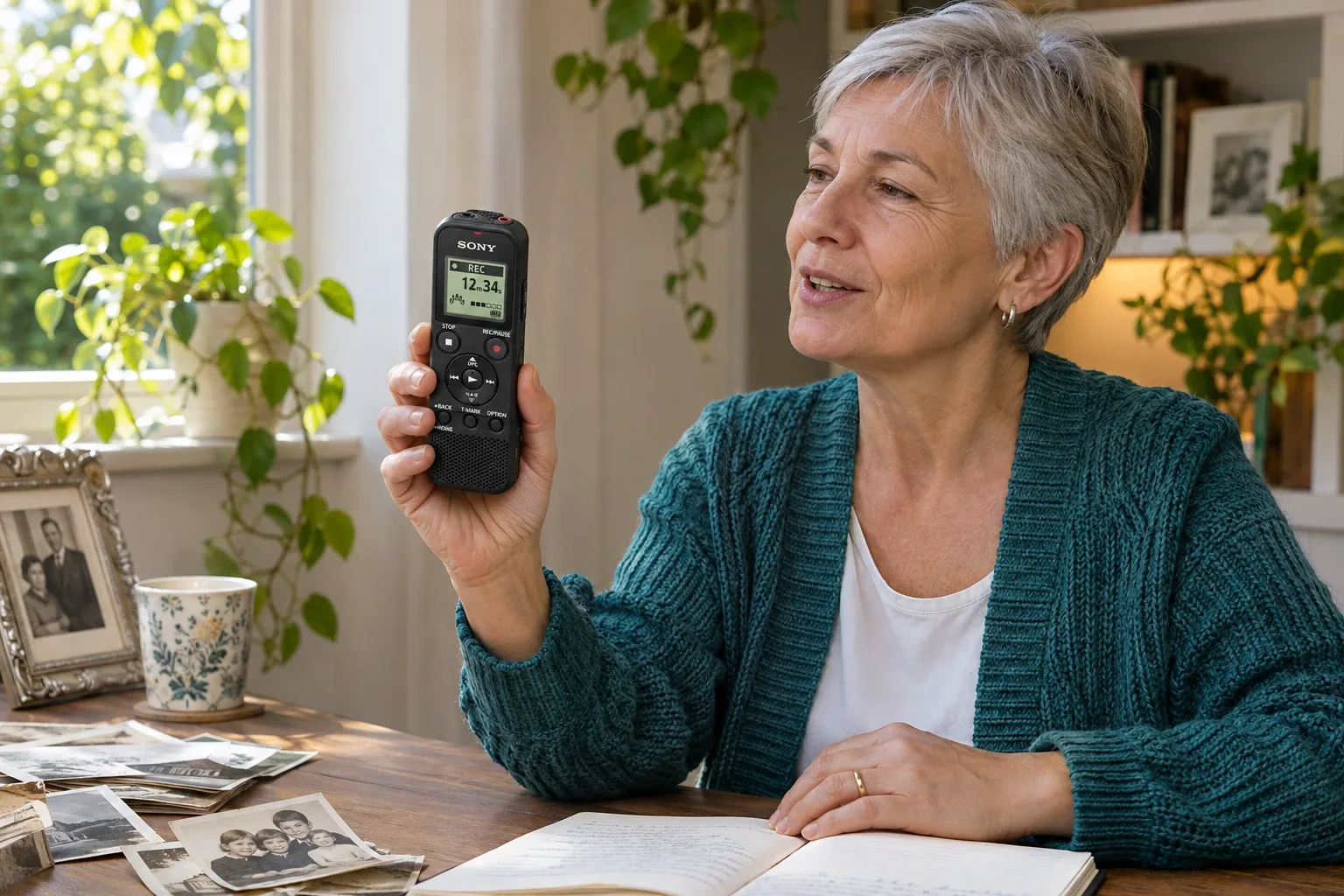
Electronics
Product analysisSony ICD-PX370 Review: A Gift for Saving Family Stories—Without Making a Phone the Recorder
A dedicated spoken-word recorder for planned conversations, with separate batteries and file backups to organize.

Tools & Home Improvement
Product analysisWhy the Black+Decker LD120VA Is Enough for Light Home Jobs
The Black+Decker LD120VA kit costs $61.10 less than the DEWALT DCD771C2. It suits light home jobs but struggled with large bits.