Space-Aluminum Knife Rail Rack Review: Can an NT$149 No-Drill Double Bar Really Hold Your Knives?
30-second verdict
Fits renters who want no-drill utensil and knife parking on flat degreased walls; skip heavy cast-iron loads or failing paint—compare magnetic strips, blocks, or screwed rails.
Good for
- Renters who will not drill tile
- Small kitchens with a modest knife and utensil set
- Buyers willing to degrease before sticking
Not for
- Buyers hanging heavy cast-iron cookware
- Peeling, sandy, or uneven walls
- Buyers who insist on screws into studs
Buying Guide Notes · First published:
Compiled from public sourcesWritten using official specs and user feedback.
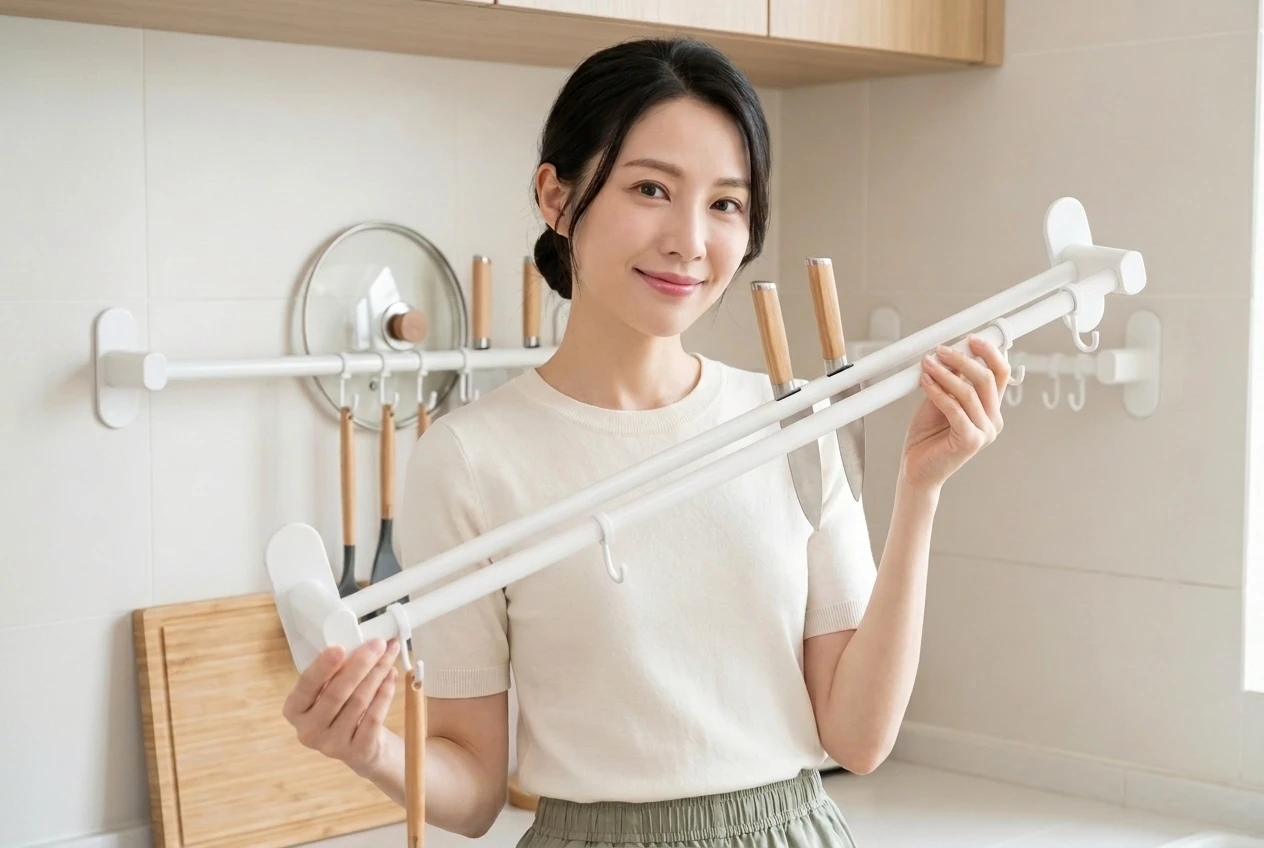
Pros
- White dual rail covers hooks, knives, and lids so counters clear faster
- No-drill path is renter-friendly
- About NT$149 with 1,000+ sold lets you test wall material cheaply
Cons
- Hold strength depends on wall prep; greasy heat zones fail sooner
- Load and length details for this model are scarce; read your option text
- Not for loading heavy cast-iron cookware
Specs
| Item | Detail |
|---|---|
| Product | Space-aluminum no-drill knife rail rack (white dual rail with S-hooks) |
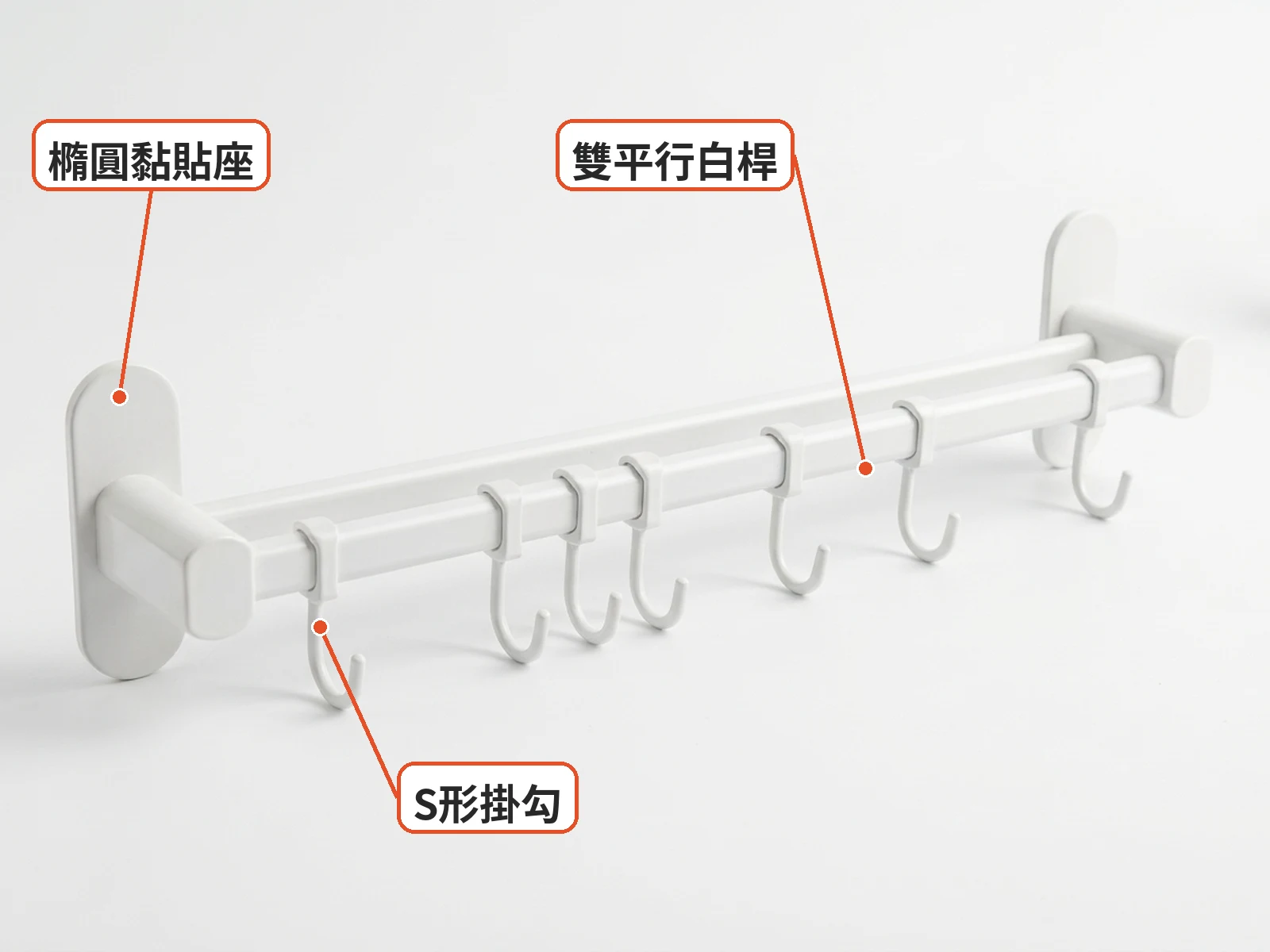
| Look | Two parallel white bars; oval adhesive ends; sliding S-hooks; knives in the rail gap |
| Common labels | No-drill, stable mount, flexible storage, space aluminum (marketing wording) |
| Common claims | Hang utensils, slot knives, lean lids; suits tile walls |
| Common use | Free splash-wall counter space; split light tools and daily knives |
| Price note | About NT$149 (promo prices change) |
| Sold note | About 1,000+ sold |
| Public data thin | Rated load, length options, adhesive cure time, slot width, alloy detail |
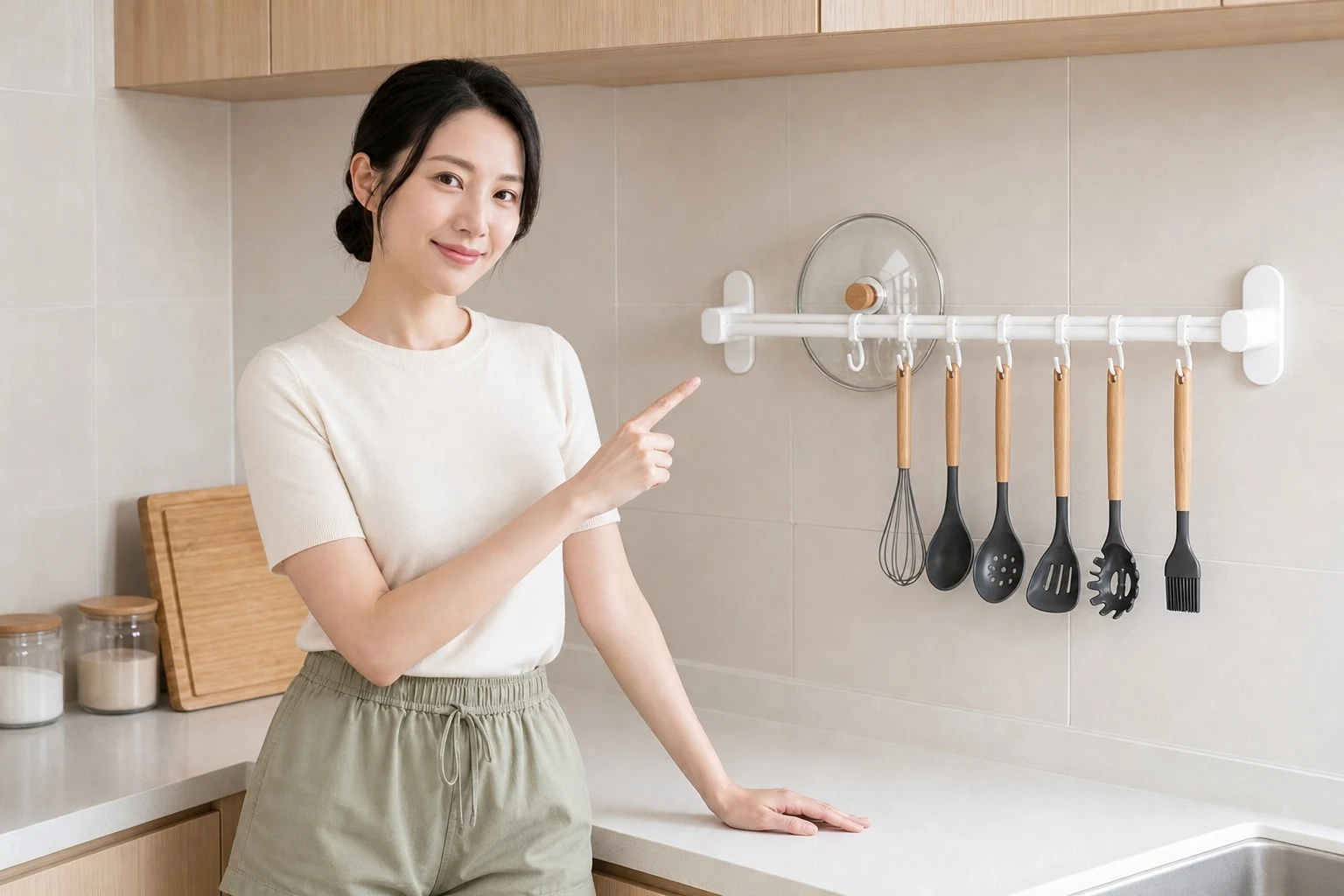
Sources and verification status
Verification status: compiled from public sources; not hands-on tested
Data updated:
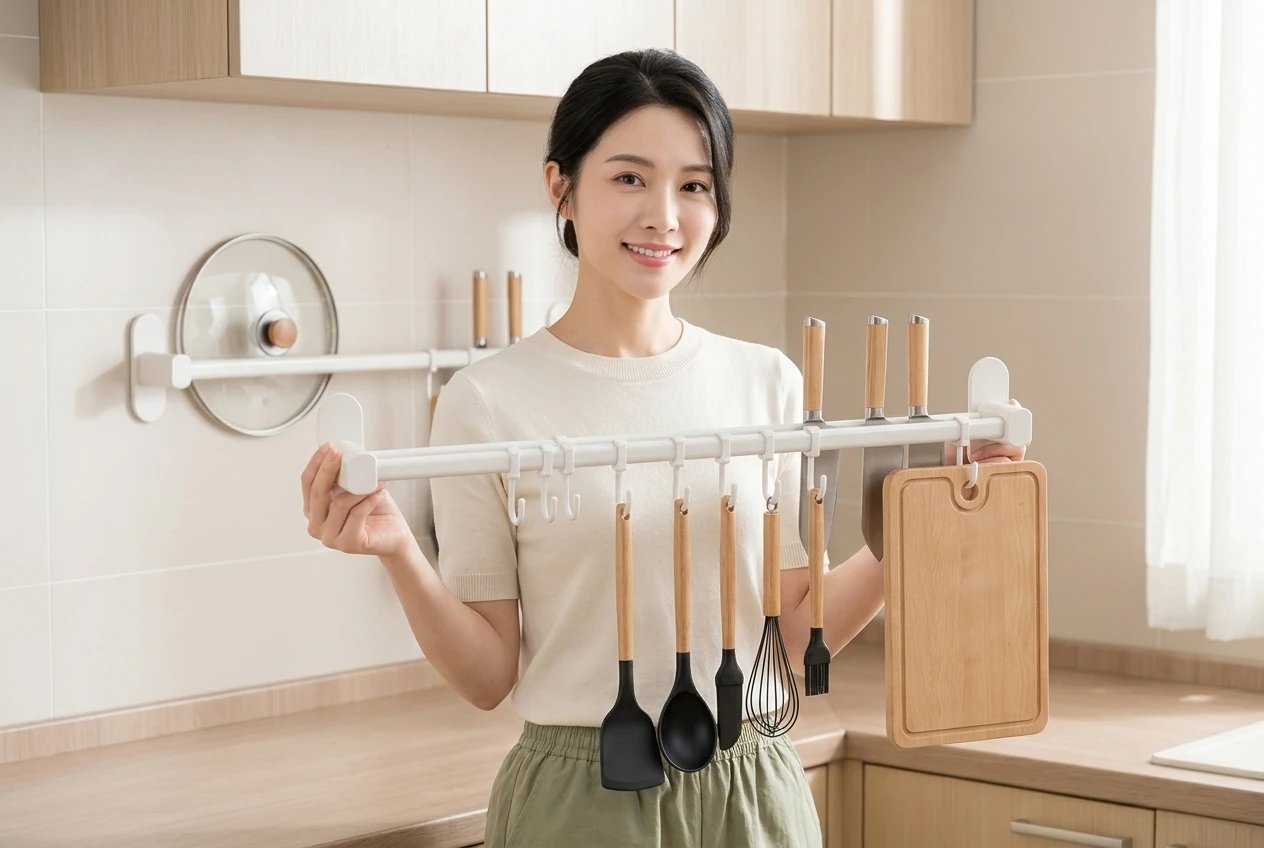
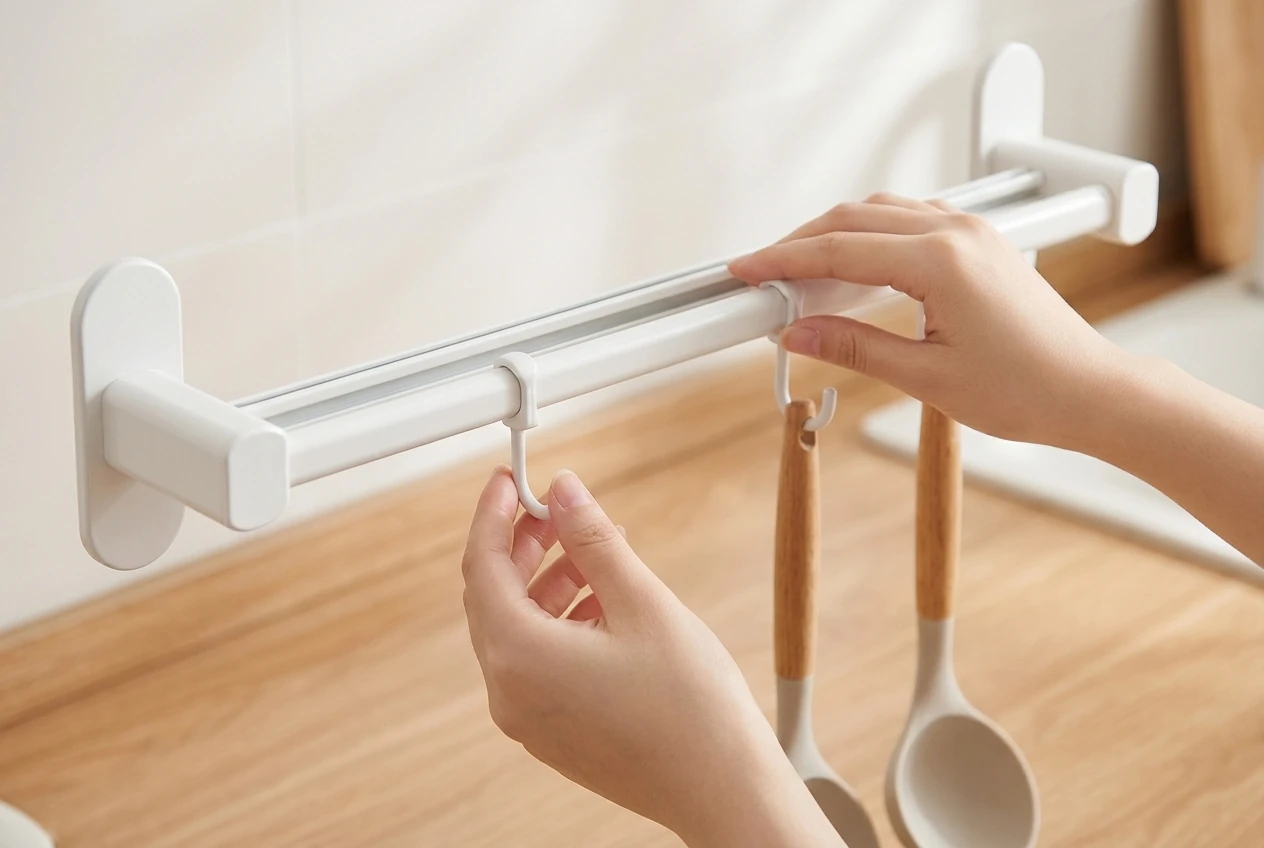
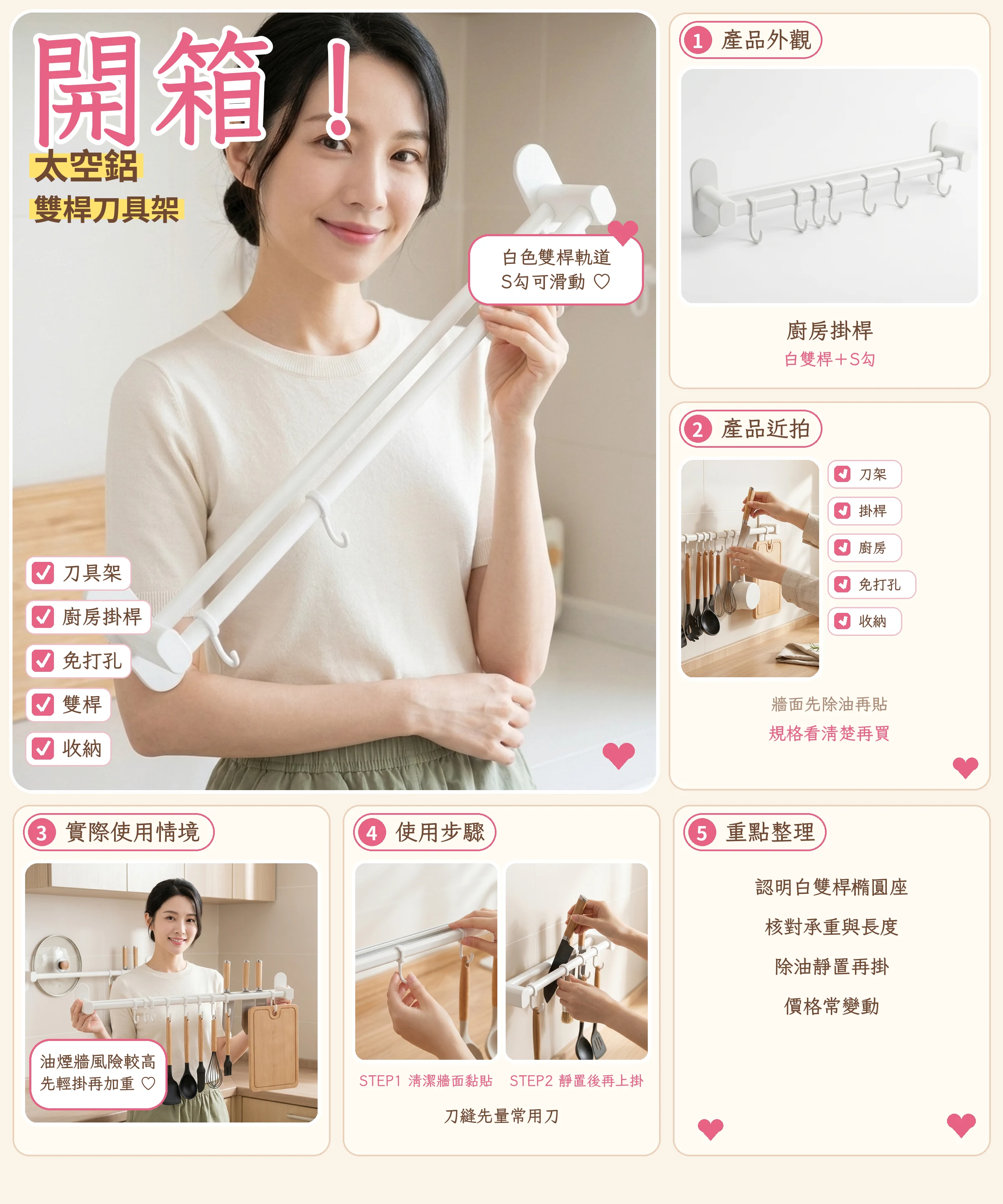
When knives fight spatulas in a drawer and pot lids slide off the wall, the counter turns into a disaster zone. Renters who won't drill into tile start searching for adhesive rails. This space-aluminum hook knife rack is a white dual-rail track with oval adhesive end brackets, sliding S-hooks on the bars, a gap that can hold knives, and space to lean lids behind the rails.
The look is plain: two parallel white bars on oval end mounts, S-hooks that slide, and knives resting in the gap between rails—not a magnetic strip. It is not a wood block, stainless magnetic bar, or single chrome rod; the pitch is adhesive dual rail plus hooks plus knife/lid parking.
Which Kitchen Walls Fit a Space-Aluminum Knife Rail?
If you rent, the wall is smooth tile or a painted splash panel, and you want counter space back, dual rails are a common way to clear the counter. PTT e-shopping and LivingGoods threads on adhesive kitchen storage argue most about wall material and oil smoke: organizers note some surfaces simply will not hold, and stove-adjacent greasy heat shortens even strong tapes. Reddit DIY posts about adhesive knife mounts also stress that pulling a knife out stresses the adhesive more than static weight.
Good fit: modest knife and utensil counts, flat dry walls, people willing to degrease before sticking. Poor fit: hanging heavy cast-iron cookware, peeling paint or sandy plaster, or buyers who insist on screws into studs.
Daily use: clean the wall per the insert, seat the oval pads, wait the suggested cure time, then hang. S-hooks for light tools, rail gap for daily knives, lids leaning behind. Exact length options, rated kilograms, and cure minutes are rarely published for this model, so check the option details.
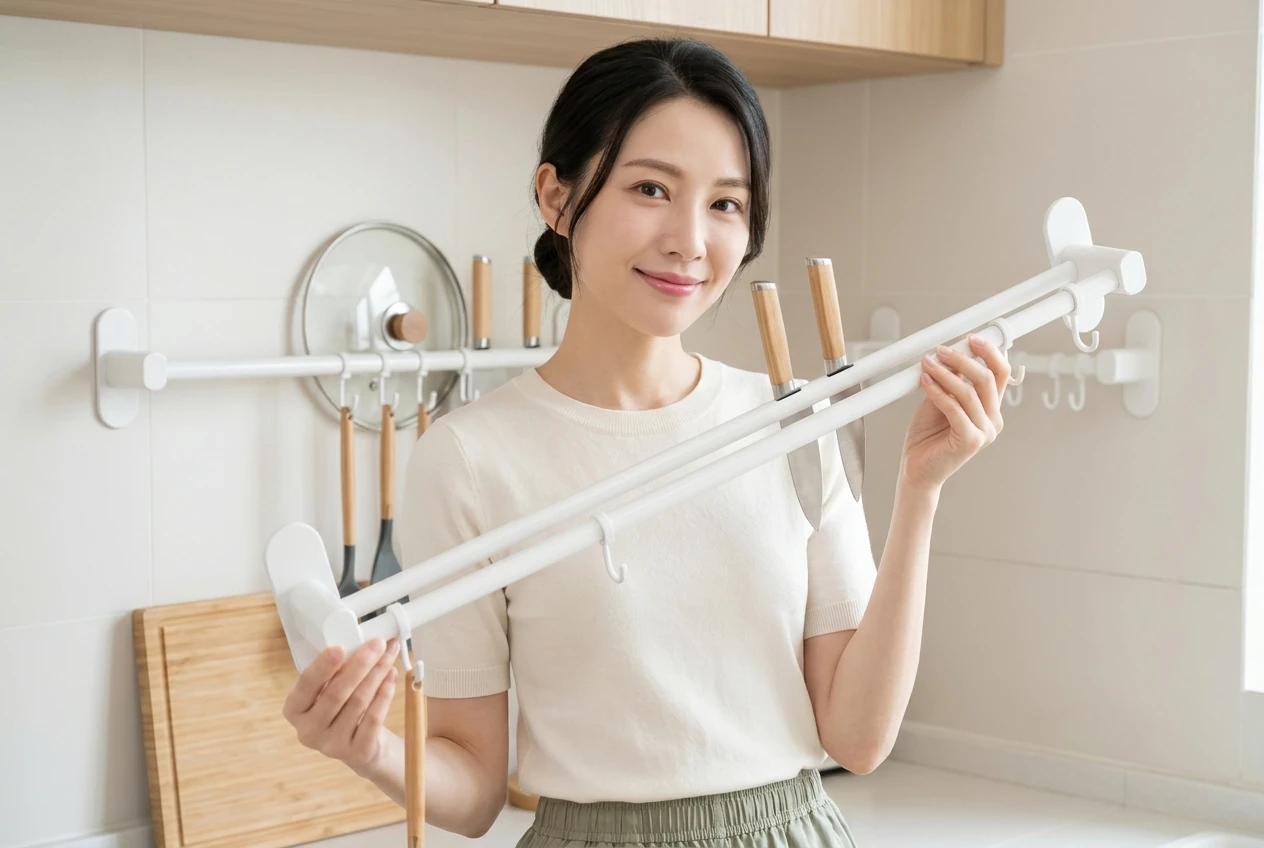
Practical Take: Can an NT$149 Dual Rail Replace a Magnetic Strip?
Magnetic strips grab the blade spine with a different draw feel. This dual rail slots knives and hangs tools, so blade direction and spacing matter around foot traffic. When choosing a space-aluminum knife rail, ask whether the wall will hold and how much weight it will carry.
Street price is about NT$149, with about 1,000+ sold. In the same band compare magnetic bars, counter blocks, or single-hook sets; the dual rail pitch is knives plus utensils plus lids in one line.
On arrival: check rail straightness, pad flatness, hook count and slide. Leave the rail empty a day, then add weight slowly—do not hang the heaviest pot on day one. If a pad peels or the rail drops, clear it immediately, photograph, and start a return.
Degrease with alcohol or a mild cleaner and keep fingers off the adhesive face. Walls beside active burners see heat cycles plus oil film, so any no-drill plan is riskier—prefer a side wall farther from the flame. Very thick handles may not seat in the rail gap; measure first.
When removing, do not pry glaze off the tile: follow the adhesive removal steps and clean residue. Renters who must restore walls care about this more than styling.
Hang daily spatulas on your dominant side to cut drawer digging; wipe lid rims dry so moisture does not creep toward the pads. If kids are around, keep blade height and orientation out of reach, or hang utensils only and keep knives in a block.
Uneven cultured stone or rough paint may contact only part of each oval pad, which weakens the hold—prefer a counter block over gambling on a fall.
If the adhesive pad traps bubbles, press outward from the center with a soft cloth—do not poke the film with sharp tools. After sticking, finger-press around each oval rim so edges seat. In steamy kitchens, wipe the dual rails dry now and then to cut water spots.
If a large board rack or microwave shelf already owns the wall, measure leftover width before buying rail length so two organizers do not fight. Night cooking is easier when daily spatulas hang on your dominant side; keep blade orientation tuned to kids and traffic.
Before returns, photograph S-hooks and the insert together, and note how much residue you cleaned. Long-pressed adhesive can leave a glossy oval ghost on tile that often fades after cleaning, though older glaze may show it longer.
What users say
A PTT e-shopping thread on choosing kitchen racks praises long-lasting adhesive brands yet notes wall material can kill the bond, especially near grease. LivingGoods on no-drill kitchen rods debates adhesive length and no-nail gel, focusing on patient install and residue. A Mobile01 thread comparing kitchen hook systems leans toward cabinet hardware. Reddit r/DIY adhesive knife mounts on tile keeps returning to strong tape versus knife pull force. These are category notes, not long tests of this exact white dual-rail model.
Similar alternatives
- Magnetic knife strips: different draw feel; often still drilled or heavily taped
- Wood or acrylic counter blocks: no wall damage, but use counter space
- Single rail plus S-hook sets: simpler; may not slot knives
FAQ
How is it different from a magnetic strip?
Magnetic strips hold by magnetism; this rail slots knives between bars and hangs tools on S-hooks, so draw feel and load logic differ.
Is it always no-drill?
Adhesive mounts suit most smooth walls, but if your wall is rough or greasy, a screw-mounted rail is the safer choice.
Can I stick it by the stove?
Threads often warn grease and heat near burners kill adhesive early; prefer a farther dry side wall and degrease thoroughly.
How do pot lids sit?
You can lean lids behind the dual rails; keep balance stable and avoid scraping tile glaze.
Where to buy
NT$149 | See the lowest price →
Check the details on the seller's page before you buy.
You might also like

Home & Living
Product analysisWhite Factory Soap Dish Review: Will Bathroom Suction Hold?
No-drill space-aluminum suction looks handy, yet midnight drops still depend on glossy walls and careful install.
NT$99

Baby & Maternity
Product analysisDouble-Clip Pacifier Chain Review: No More Dropped Pacifiers for NT$28? Does the Print Peel?
Pacifier on the floor again? Clip it by day, scratch-test the print, and always remove it for sleep.
NT$28

Appliances
Product analysisUSB Nail Drill Review: Can a NT$100 Pen Remove Gel?
Gel lifting at the edges and no time for a salon visit? Check this NT$100 USB nail drill pen's five bits, speed control and best uses before you buy.
NT$100

Home & Living
Product analysisUmbrella Hanging Dehumidifier Review: Does a NT$9 Box Really Dry Your Closet, or Just Leak?
Wardrobe so damp your sleeves feel sticky? This three-color umbrella hanging dehumidifier box costs NT$9. Learn what water in the box means and how to prevent leaks before you hang a row.
NT$9