Bananagrams Review: The Christmas Game for Word Lovers Who Hate Waiting
Buying Guide Notes · First published:
Updated
Compiled from public sources · Written using published specs and user feedback.
As an Amazon Associate I earn from qualifying purchases.
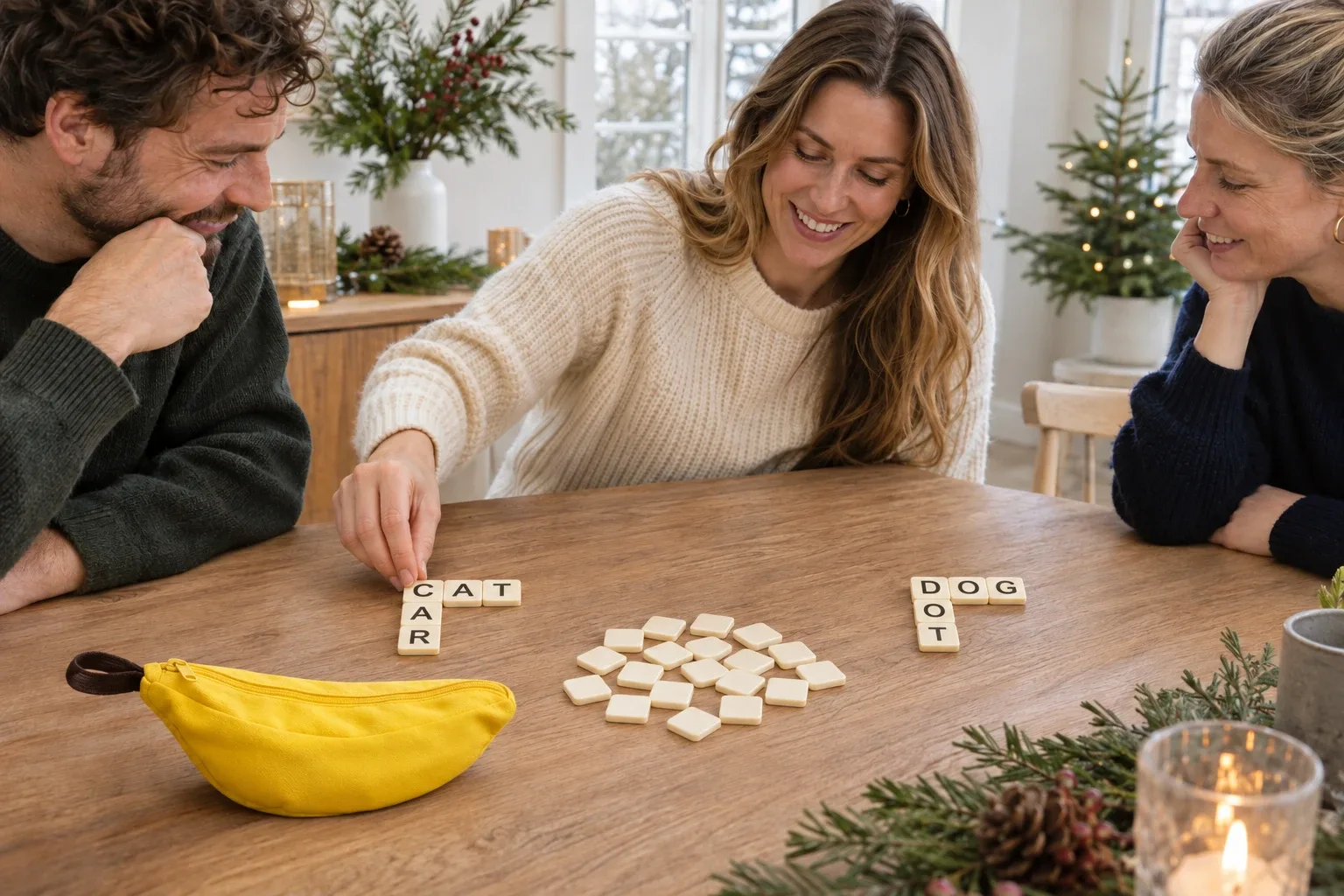
Pros
- + Everyone builds at once rather than waiting through individual turns
- + 144 letter tiles store in a compact banana-shaped zipper pouch
- + The classic set supports solo practice and small-group wordplay
Cons
- - Speed and vocabulary differences can make mixed-skill games frustrating
- - The portable pouch still needs a clear, stable playing surface
- - English Classic is distinct from other languages, Double and My First editions
Sources and verification status
Verification status: compiled from public sources
Data updated:
Compiled from public sources · Updated November 10, 2026
Some Christmas gifts need a long explanation before anyone can enjoy them. Bananagrams has a more direct invitation: unzip a banana, spread out the letters and start making words. That simple introduction is appealing, although it says little about whether the person receiving it will enjoy the race.
Quick Verdict
Best for: word-game fans who like rearranging letters and prefer to stay involved throughout a round.
Main tradeoff: everyone works at their own pace, but the shared race can expose differences in confidence and spelling speed. The festive family gathering is not automatically the right audience.
This analysis concerns Classic English Bananagrams, 144 tiles, ASIN 1932188126. It is a complete game, not an expansion or the children's My First edition.
What Stands Out
The action happens in parallel
Moose Toys describes players building their own word grids at the same time. You are working with your own letters rather than competing for positions on a shared Scrabble board. For someone who gets restless waiting for a turn, that difference is the strongest reason to consider the gift.
The published contents are 144 letter tiles, a zipper pouch and instructions. The listing describes one to eight players and ages seven and up. A solo session and a competitive family round offer different experiences; age guidance does not guarantee that everyone will have equal spelling skills.
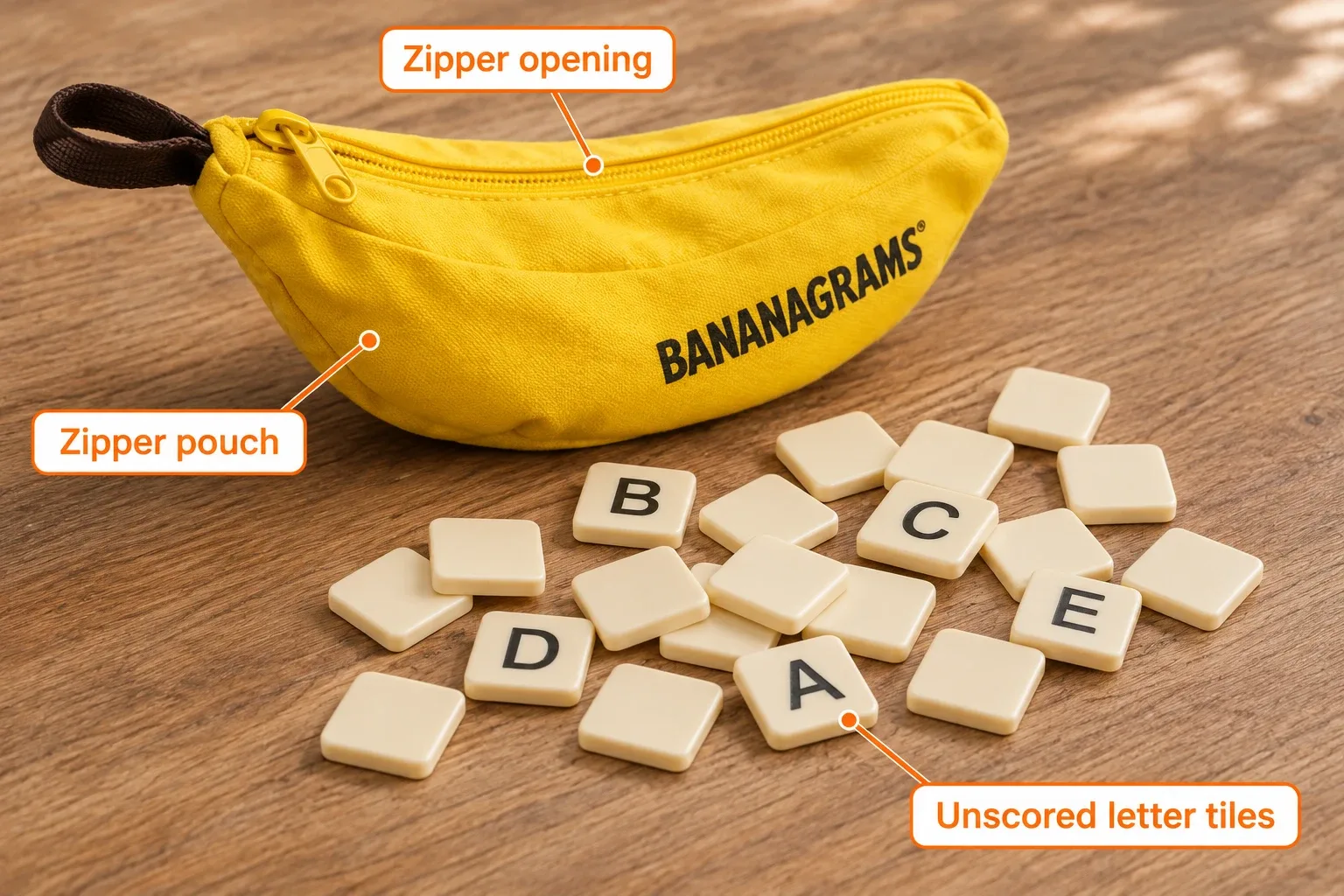
The banana pouch, zipper and unscored letter tiles are shown as illustrative product features. AI-generated illustration.
Small to store does not mean small to play
The pouch is convenient for a holiday visit or a cabin trip. Once opened, however, several personal grids need room to grow. A clear dining table is more useful than a crowded tray beside Christmas snacks.
That distinction makes it a better gift for someone who hosts games than for someone seeking an activity to play while standing in a queue.
Where It Falls Short
Check the recipient's relationship with word games. Knowing many words, spotting anagrams and enjoying speed are separate preferences. Someone can love crosswords yet dislike being hurried.
There is also less direct conversation than in a clue-giving party game. Much of the attention goes to each player's grid. That can suit a focused couple, while a group hoping for stories and laughter between turns may prefer another format.
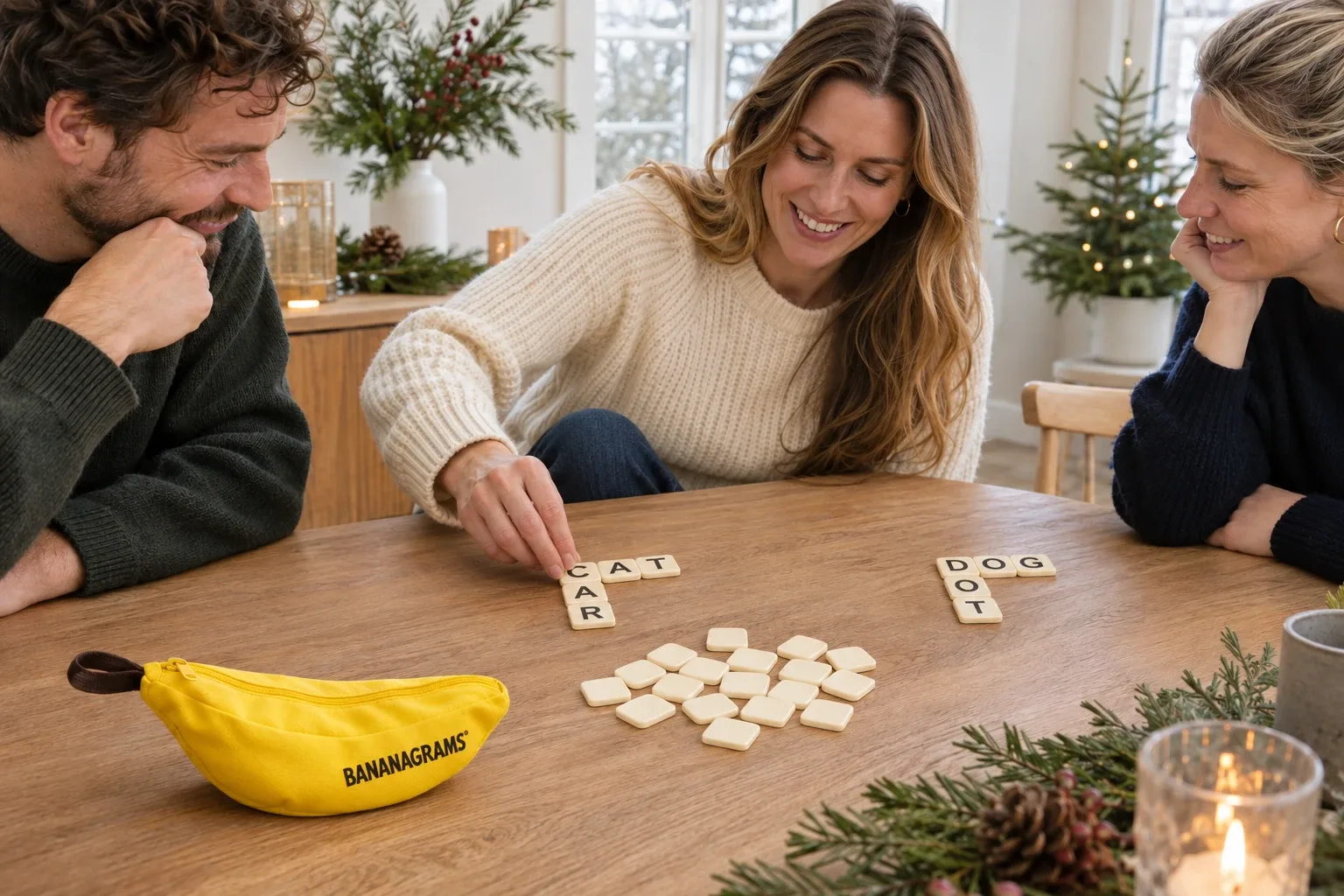
Fictional adults work on separate grids at a holiday table; the arrangement is not a demonstrated game result. AI-generated illustration.
What Owners Say: The Race Divides Opinion
-
What one Classic owner liked. In a March 16, 2026 discussion on r/boardgames, a player said they liked Bananagrams with house rules and owned the normal banana-pouch edition. That is useful support for its familiar small-game appeal, not evidence that every suggested variant is official.
-
Where the race can frustrate. An August 25–27, 2025 camping discussion contained both a recommendation for its compact format and objections to the pressure and limited player interaction. One participant described struggling to keep up when others called for more tiles.
-
Edition and evidence limits. These are individual experiences with classic-style Bananagrams; the commenters did not establish the current Amazon production run. They help explain recipient fit, rather than proving a quality score.
Alternatives Compared
| Choice | Consider it for | Main difference |
|---|---|---|
| Classic Bananagrams | A quick-thinking word enthusiast | Separate grids and simultaneous play |
| Scrabble | Someone who prefers considered turns | Shared board and scoring |
| A cooperative word-clue game | A group seeking more discussion | Conversation and a common goal |
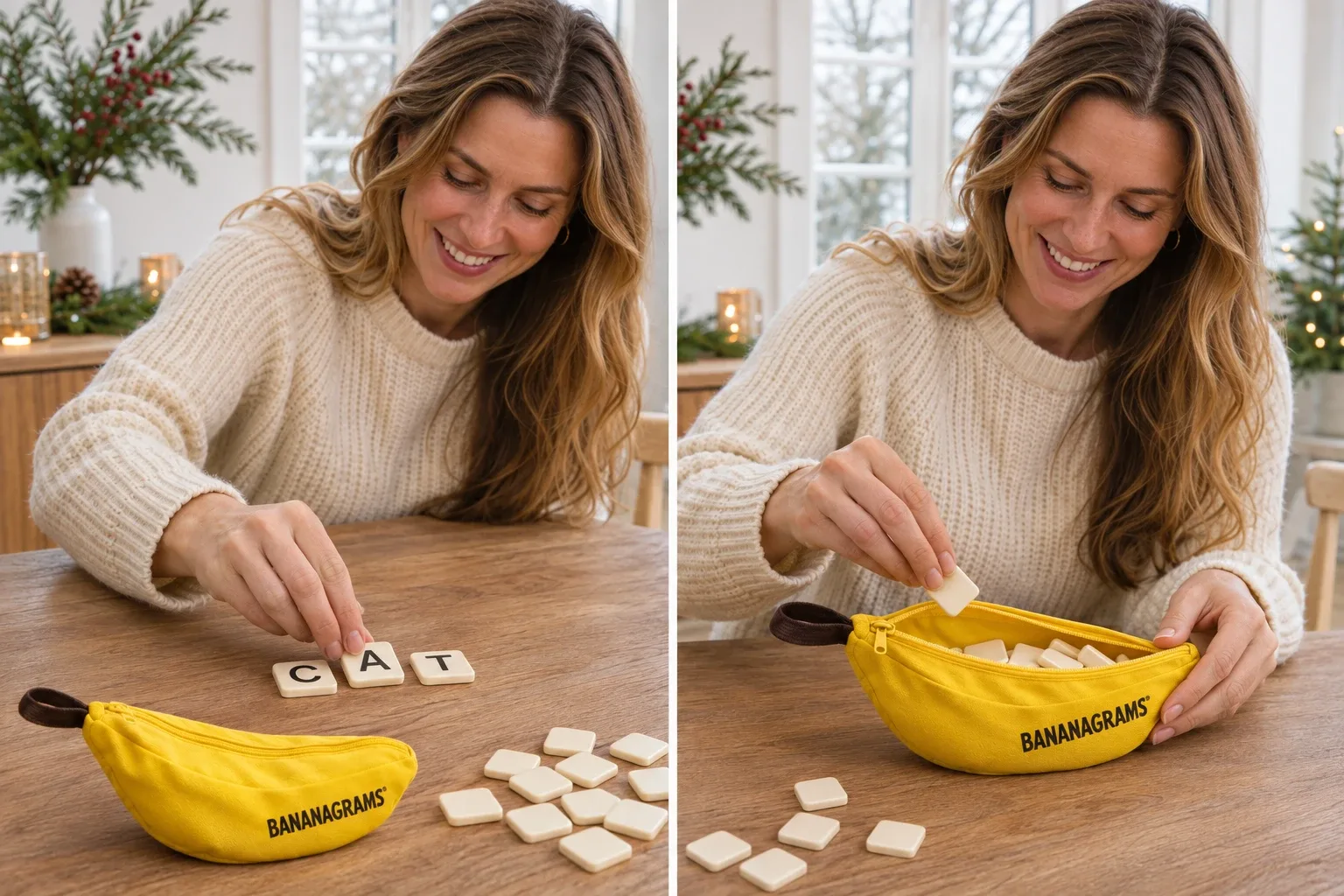
Two close views show letter placement and packing tiles into the pouch, not a complete rules tutorial. AI-generated illustration.
Who It's For
A thoughtful match: a couple who already enjoys word games, or a host who knows their guests enjoy a little pressure.
Think twice: a mixed-language group, a reluctant speller, or a recipient who already owns Classic. Check the tile language and edition before choosing the pouch.
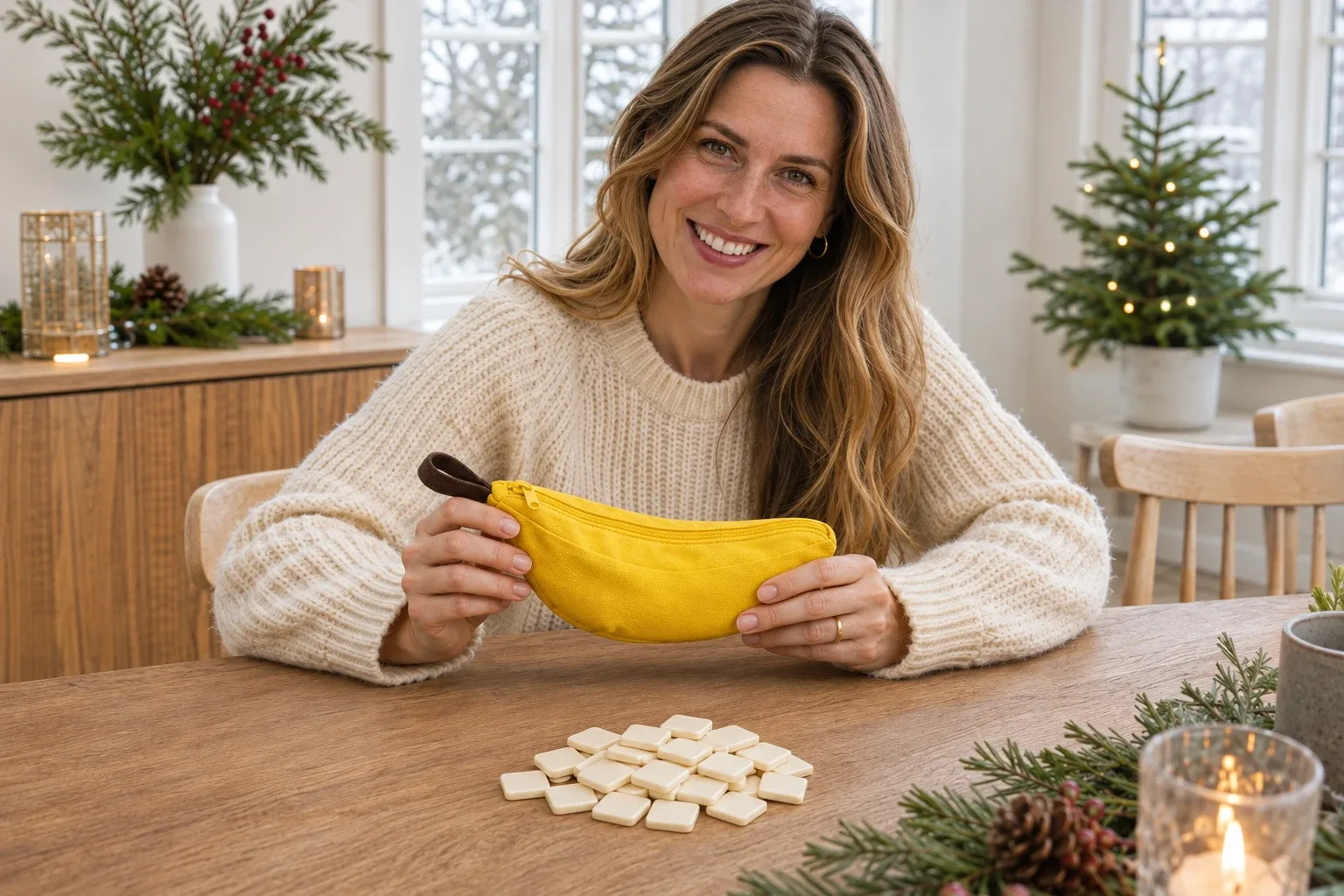
A fictional host poses with the Classic-style pouch and tiles. AI-generated illustration.
How We Researched This
We compared the Amazon identity and contents with the current Moose Toys product page and searched public discussions. Amazon showed buying options without a featured offer in the Taiwan delivery setting during this check; we could not confirm a directly orderable offer from that view. Verify the seller, language, stock and delivery date yourself. This is analysis compiled from public sources, not a play-test. All five images are AI-generated illustrations.
Sources and Buying Link
- Moose Toys: Bananagrams Classic contents and format
- The two dated community discussions above explain both enthusiasm and reservations.
- Check Classic English Bananagrams on Amazon
Confirm the selected edition and arrival estimate before treating it as a Christmas gift.
FAQ
What comes in Classic Bananagrams?
The published contents are 144 letter tiles, a zippered banana pouch and instructions. Confirm Classic English rather than a different language or themed edition.
How many people can play?
The selected listing describes one to eight players, ages seven and up. Solo play and a competitive group session are different experiences.
Is it played on one shared board?
No. Players build their own word grids simultaneously. The pouch is compact, but several growing grids still need table space.
Is it a turn-based game like Scrabble?
Its main format has players work in parallel rather than wait to place words on a shared Scrabble board. Enjoying crosswords does not automatically mean enjoying the speed element.
Is it a good choice for a group wanting constant conversation?
Much attention goes to personal word grids. A clue-giving or storytelling game may fit better when interaction and conversation are the main goal.
Price and purchase links
You might also like
Home & Kitchen
Product analysisQuiddler Review: A Holiday Gift for Word Lovers—If the Table Likes Word Games Too
A compact word-building card game with growing hands, scoring and a broad player range; the best fit is a table that enjoys making words.
Home & Kitchen
Product analysisDecrypto: A Christmas Party Game for People Who Love Clever Clues
A team word-and-deduction game that gives listeners a reason to follow the other side’s clues. It rewards a group willing to learn and concentrate.
Home & Kitchen
Product analysisLEGO 10696 Review: A Christmas Gift for Builders Who Want More Than One Model
A yellow box of mixed bricks gives the recipient several starting points and room to improvise. It makes less sense for someone expecting one detailed display model or a set of minifigures.
Home & Kitchen
Product analysisFred MANATEA Review: A Christmas Gift for Tea Lovers Who Enjoy a Little Fun
The little manatee brings personality to a loose-leaf tea gift. Mug fit, room for the leaves and cleaning still deserve more attention than the joke.