Rechargeable Hand Warmer Safety: What to Check First
Buying Guide Notes · First published:
Compiled from public sources · Written using published specs and user feedback.
As an Amazon Associate I earn from qualifying purchases.
Pros
- + Separates recall checks from certification claims
- + Makes exact model and seller questions explicit
- + Preserves uncertainty instead of inventing a safety winner
Cons
- - No independently certified winner established here
- - Taiofan physical model code and manual not independently verified
- - Public records do not test the delivered unit
Sources and verification status
Verification status: compiled from public sources
Data updated:
Verified on:
- CPSC recall26-659, July30,2026: exact model scope and remedy
- UL Solutions Product iQ description; no exact Taiofan certification match verified
- Born_Replacement1810, November15,2026: replacement question
- Heady_Mariner, November15,2026: positive Zippo account, model unspecified
- Heady_Mariner, November15,2026: same-day rechargeable clarification
- Amp300, November15,2026: individual remedy/connector concerns
Choose a rechargeable hand warmer by checking its exact physical model, current recall status and traceable safety documentation before comparing heat settings or battery-life claims. A popular listing, an attractive case or a seller's protection claim does not answer whether the particular product you will receive has independently verified certification.
Checked November 15, 2026. This guide is compiled from public sources. We have not tested heating, charging, temperature control, battery endurance or fire resistance. It explains a buying process rather than naming a tested safest warmer. Our examined Taiofan listing remains a documentation case study, not a purchase recommendation.
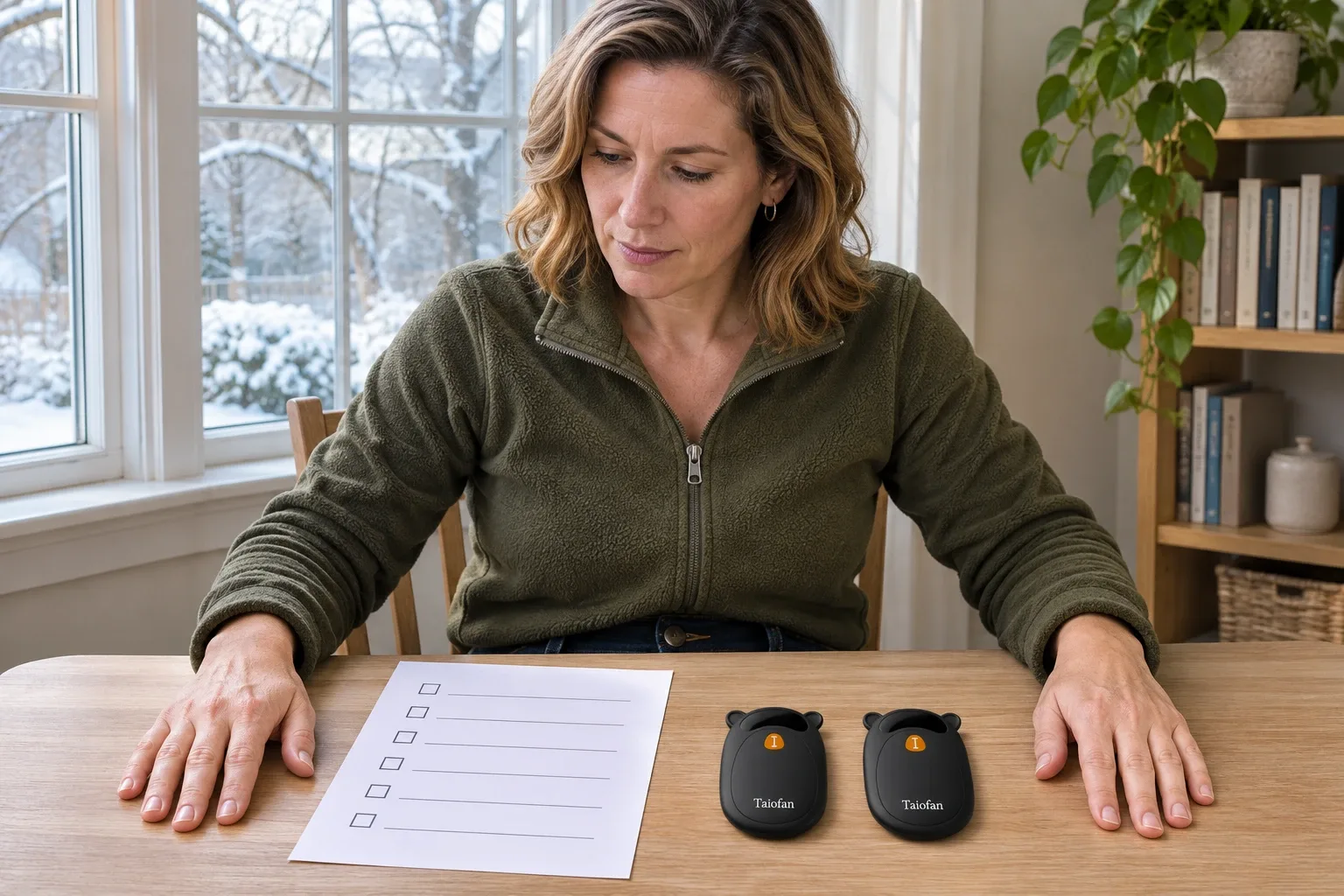
AI-generated illustration: checking a purchase list beside the Black Taiofan example, off and unplugged. Not safety-test evidence.
Quick Verdict
Postpone the purchase when the model identity or claimed certification cannot be checked. The practical first question is whether the seller can connect the exact item to understandable instructions and verifiable records. Only after that should convenience, shape and charging features decide between otherwise suitable choices.
What happened in the OCOOPA recall?
The CPSC notice dated July 30, 2026, recall 26-659 identifies UT3053, UT3056, ZLS-118, ZLS-118S, ZLS-118D, H01 and H01(PD). It describes overheating and ignition hazards and directs owners of recalled units to stop using them and contact OCOOPA Direct for the stated remedy. Model and batch identification appear on the underside. Follow the notice's refund and defective-battery disposal instructions; do not improvise disposal in ordinary trash or general recycling.
Those identifiers matter more than a similar-looking product photo. This article does not recommend an OCOOPA replacement or interpret an unlisted model as independently certified. A recall check and a certification check answer different questions.
What should you compare before buying?
| Buying approach | Price status | Evidence to request | Best for | Who should skip it |
|---|---|---|---|---|
| Taiofan two-pack, ASIN B0FKTH4V7V | $19.99 displayed at our check | Physical model, instructions and any claimed certification record | A case study in checking a listing before purchasing | Buyers needing an independently verified recommendation today |
| A different rechargeable warmer | No separate offer verified for this guide | Exact model, relevant documentation and the actual seller | Buyers willing to investigate the specific product | Anyone choosing only by review count or a decorative badge |
| Keeping existing suitable winter gear | No new warmer purchase required | Whether it already meets the intended activity | Someone whose immediate need can wait while documentation is checked | Someone expecting this row to prove equivalent heating performance |
The last two rows describe decisions, not verified competing product offers. We have not invented price ranges for unexamined alternatives. A comparison can legitimately end with waiting rather than replacing an unresolved product with another unresolved product.
Why are we not recommending the Taiofan listing yet?
Amazon displayed $19.99, 4.4 stars and 338 ratings for B0FKTH4V7V, with a new in-stock offer sold by Jiayang E-commerce and shipped by Amazon for US ZIP 10001. These are retailer observations from November 15, not a battery-safety assessment. The price and rating count fall outside our usual $30–$200 and 1,000-plus-rating selection preferences; this is an explicit user-requested research exception.
We did not verify independent certification for the exact finished product. That gap does not establish that the product is defective, counterfeit or involved in the OCOOPA recall. It means we lack enough evidence to endorse it on the safety grounds this article addresses.
The brand's Amazon description gives each unit as 3.5 × 2.16 × 0.39 inches, rather than package dimensions. We use those published dimensions for illustrative scale, not as independent physical measurements. The Black two-pack is the single visual example; we did not locate a separate manufacturer manual establishing its physical model code or charging procedure.
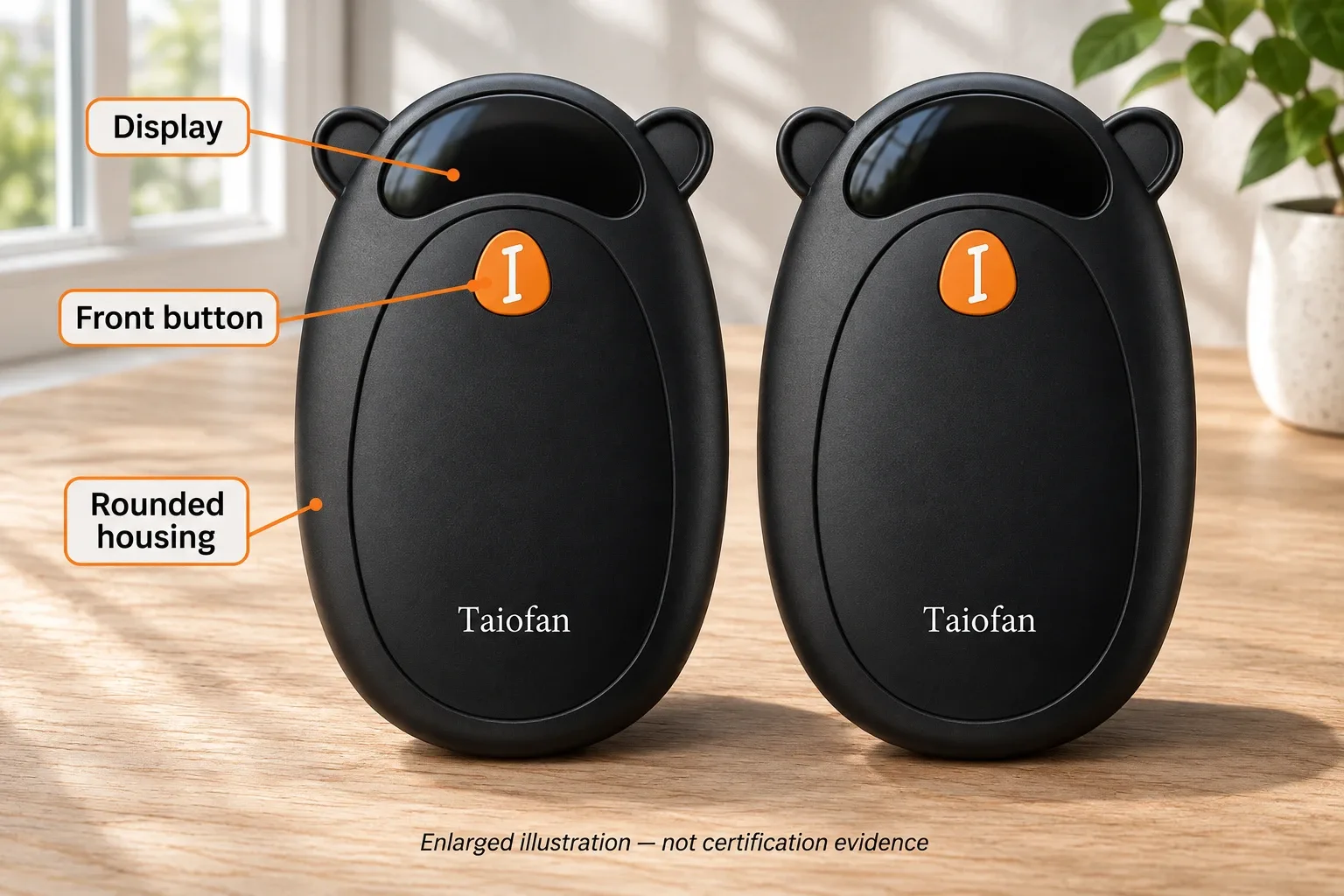
AI-generated illustration: enlarged listing example; labels describe visible exterior features, not certified protection.
What would make a certification claim checkable?
Ask the seller or manufacturer for the certification organization, the covered model and a record identifier that can be checked independently. Then compare the identity on that record with the offered item. A screenshot containing a logo but no useful model connection leaves an important question unanswered.
UL Solutions describes Product iQ as a way to verify UL certification information for products or components. That distinction is useful: when a seller mentions a certified component, ask what the record actually covers rather than assuming it describes the complete warmer. We have not completed a Product iQ match for the Taiofan ASIN, and this guide does not claim that we did.
This is an editorial verification workflow, not a statement that one particular standard applies to every warmer. We are not presenting a universal mandatory certificate checklist or a legal compliance determination. If the claim remains ambiguous, record the question and postpone the recommendation instead of filling the gap with an assumption.
Does an overheat-protection claim settle the question?
No. A feature description tells you what the seller says the design includes. It does not show how that feature was assessed, which version was examined or whether the listing and the delivered item match. Treat it as a question to investigate, rather than a substitute for product identification and supporting documentation.
Likewise, a charging connector describes a connection type. It does not establish a complete charging specification. Before purchase, obtain the model's instructions and check what power supply and cable the manufacturer specifies, what the package includes and whether the proposed recipient already has the required equipment. This guide has not verified Taiofan-specific charging instructions and therefore gives no charging recipe for it.
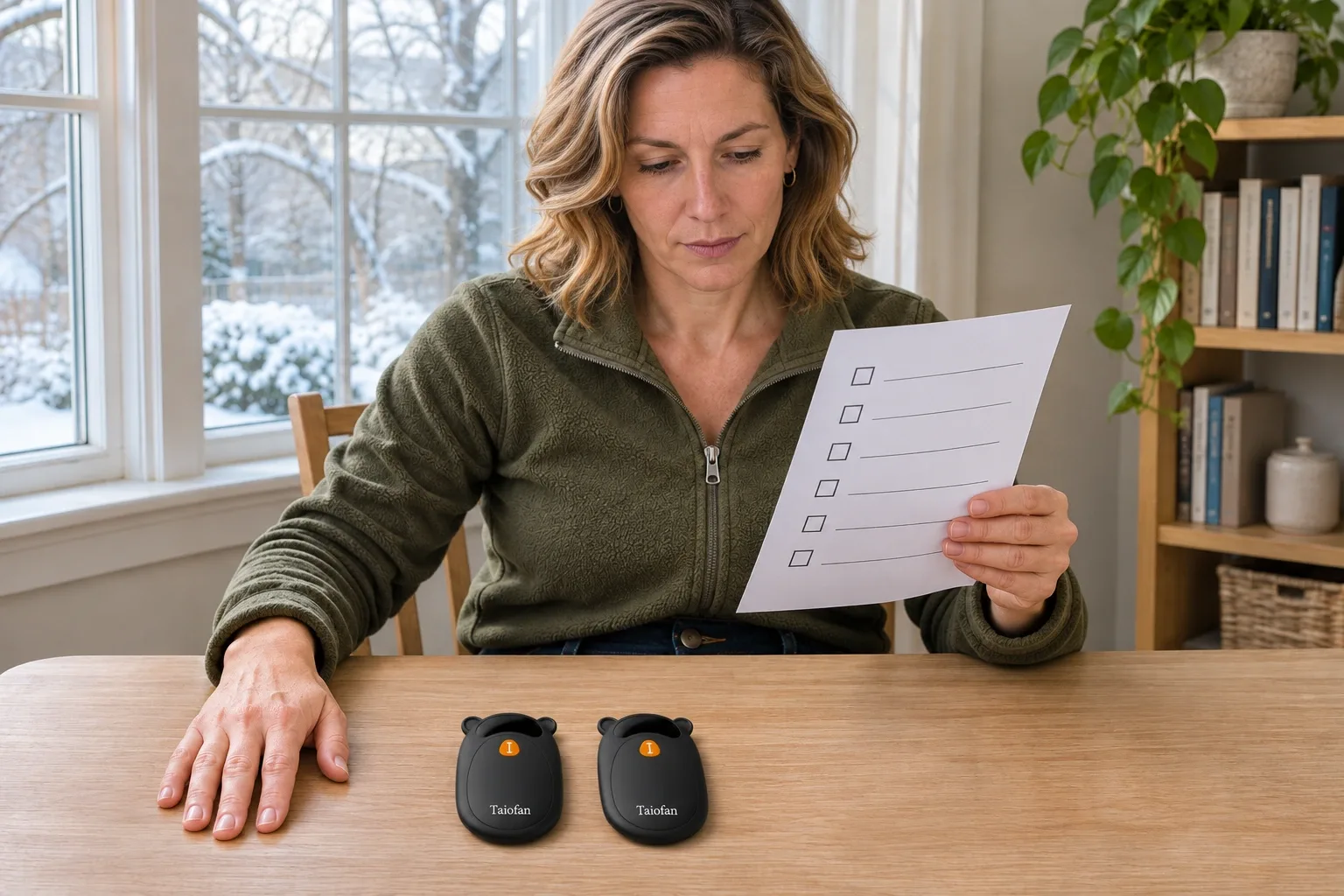
AI-generated illustration: purchase planning with units off; the blank checklist is not a certification document.
What stands out about this buying approach?
It makes the unanswered questions visible. A written comparison of model, seller, instructions and certification claim is more useful than a vague impression that a page looks reassuring. You can send the same precise questions to the seller without asking for a generic promise that the product is safe.
It separates convenience from evidence. Magnetic pairing, an LED display or a pocket-friendly shape may matter after the documentation checks. They do not independently answer the safety question. Keeping those categories separate helps avoid paying for features while the central purchase concern remains unresolved.
Where does this approach fall short?
Public records cannot establish the condition of a particular delivered unit, and a documentation check does not reproduce laboratory testing. We cannot promise zero risk, estimate failure rates or rank all available hand warmers by safety from these sources.
The process also takes time and may produce no immediate recommendation. Sellers may provide incomplete answers, models can change and listings may pool reviews across variations. An unresolved answer is a limitation to preserve, not a reason to invent a winner. This guide deliberately leaves the Taiofan case unresolved.
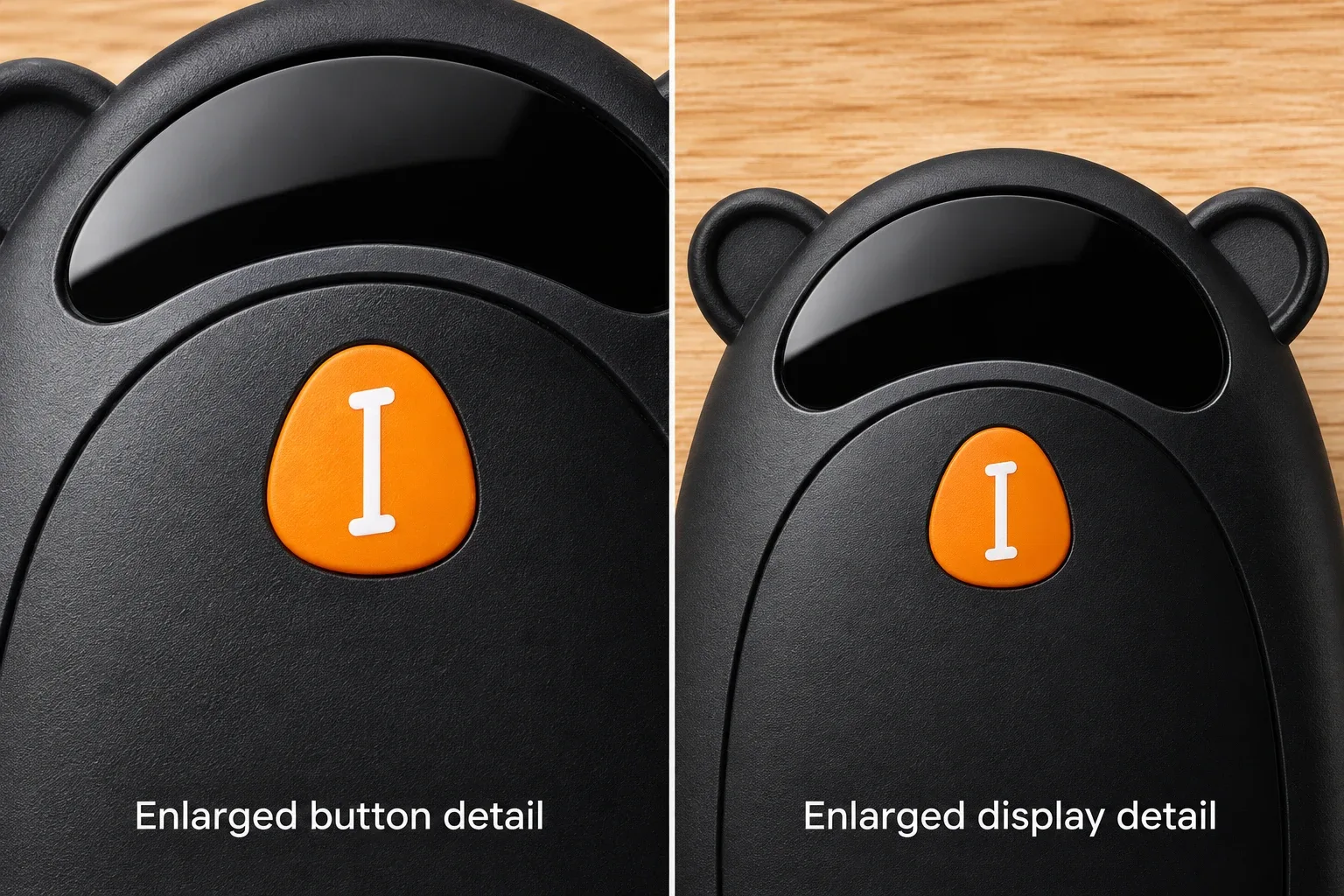
AI-generated illustration: both panels are enlarged exterior details, not heating or charging demonstrations.
What do owners actually worry about?
- Replacing a recalled product. Born_Replacement1810, November 15, 2026, asks for reusable alternatives after an OCOOPA recall. This is a buying concern, not evidence that a replacement is certified.
- A positive experience has limits. Heady_Mariner, November 15, 2026, reports continued satisfaction with a Zippo, then clarifies that it is rechargeable the same day. The exact model is unspecified; it is not a Taiofan review or a certification finding.
- Charging and remedy concerns affect buying. Amp300, November 15, 2026, reports a delayed recall response and dislikes an alternative's older connector. This is one person's account, not a verified company-wide response rate. It illustrates the practical questions buyers ask.
We excluded the automatic moderator message. We also do not adopt another commenter's battery-cycling advice as general care instructions. Use the actual manufacturer's instructions for the identified product rather than a stranger's maintenance routine.
Who is this guide for?
It is for buyers replacing a recalled warmer, gift shoppers comparing unfamiliar marketplace brands and anyone trying to understand what a certification claim actually refers to. It should help you ask better purchase questions without pretending to perform an engineering evaluation.
Skip it if you need a finished ranking of independently verified models or measured temperature and runtime results. We do not have those results. For the separate cost-and-runtime decision, see our disposable-versus-rechargeable comparison.
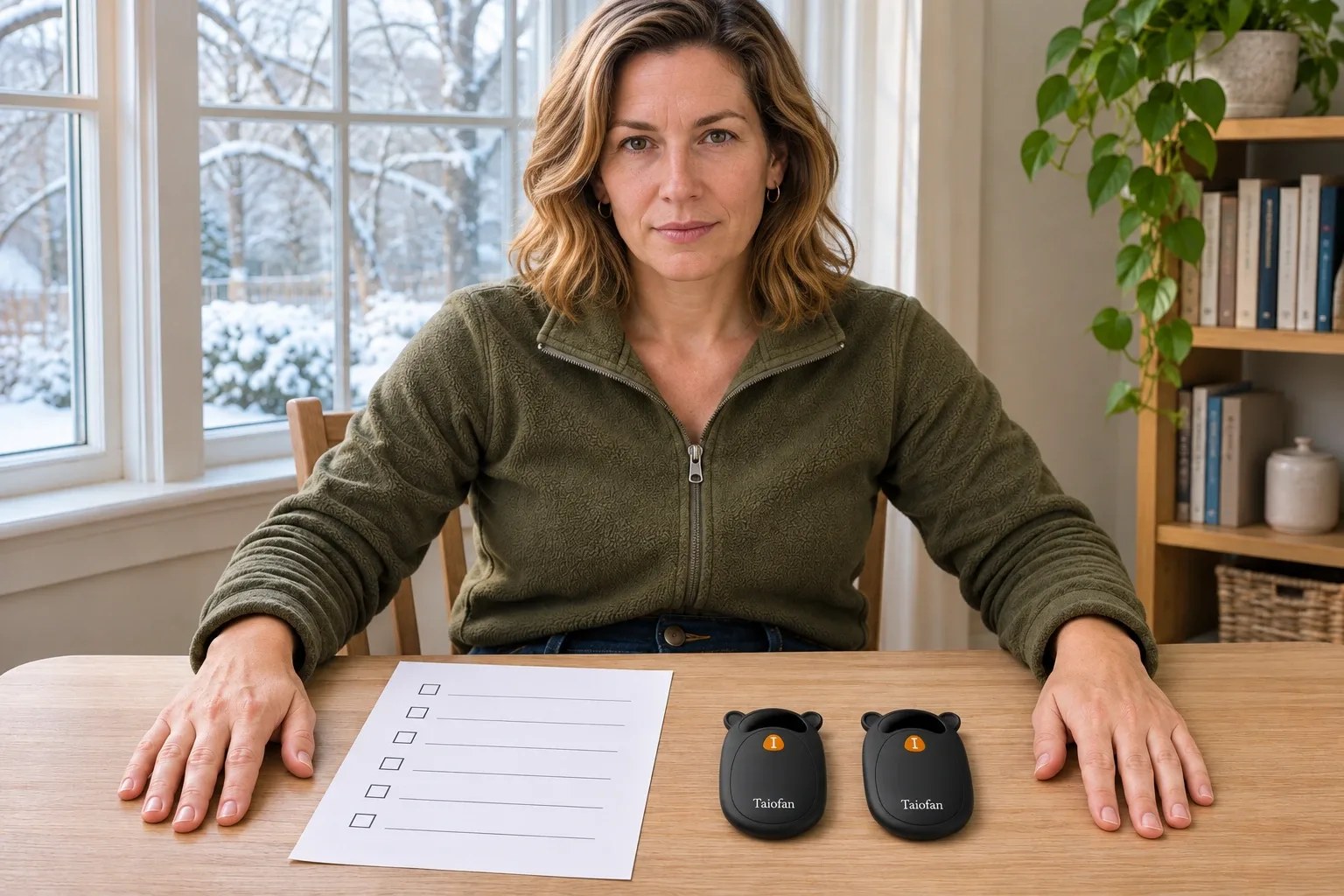
AI-generated illustration: neutral portrait with the listing example; no ownership, endorsement or testing is implied.
How we researched this
We checked the current CPSC notice, UL Solutions' description of its certification database, the exact Taiofan Amazon offer and the supplied Reddit discussion. The original post and cited comments have November 15, 2026 UTC timestamps, read from the page. We kept unsupported replacement and certification claims out of the recommendation. We found no reliable exact-Taiofan-version owner discussion demonstrating independent certification.
The illustrations use the Black Taiofan pair from the checked listing, scaled to its brand-published single-unit dimensions. They show purchase planning and exterior details with the units switched off, not charging, heating or a safety test. No illustrated document, display or feature label is certification evidence.
FAQ
Does not appearing in one recall mean a warmer is certified?
No. An absence from a particular notice does not establish an independent certification record. Check both questions separately for the exact physical model.
Did you verify Taiofan as a safe replacement?
No. We verified a retailer offer, not independent certification or physical performance. It remains a research case study rather than a recommended replacement.
Can a component record prove the entire warmer is covered?
Do not assume that. Check the scope and model identification of the actual record. UL Solutions' database description distinguishes products and components.
Should I copy another owner's charging routine?
Use the identified product's current manufacturer instructions. We did not verify a charging procedure for the Taiofan item and do not prescribe one here.
What information should I ask the seller for?
Ask for the physical model, current instructions and the certification organization and record identifier behind any claimed certification. An incomplete answer is missing evidence, not proof that the item is defective or certified.