KM Lid Cleaning Brush Review: Tackling Thermos Gasket Gaps
30-second verdict
Explore the KM 3-in-1 lid brush, its gasket hook and gap bristles, plus cleaning tips, alternatives, coating concerns and details.
Buying Guide Notes · First published:
Compiled from public sourcesWritten using published specs and user feedback.

Sources and verification status
Verification status: compiled from public sources; not hands-on tested
Data updated:
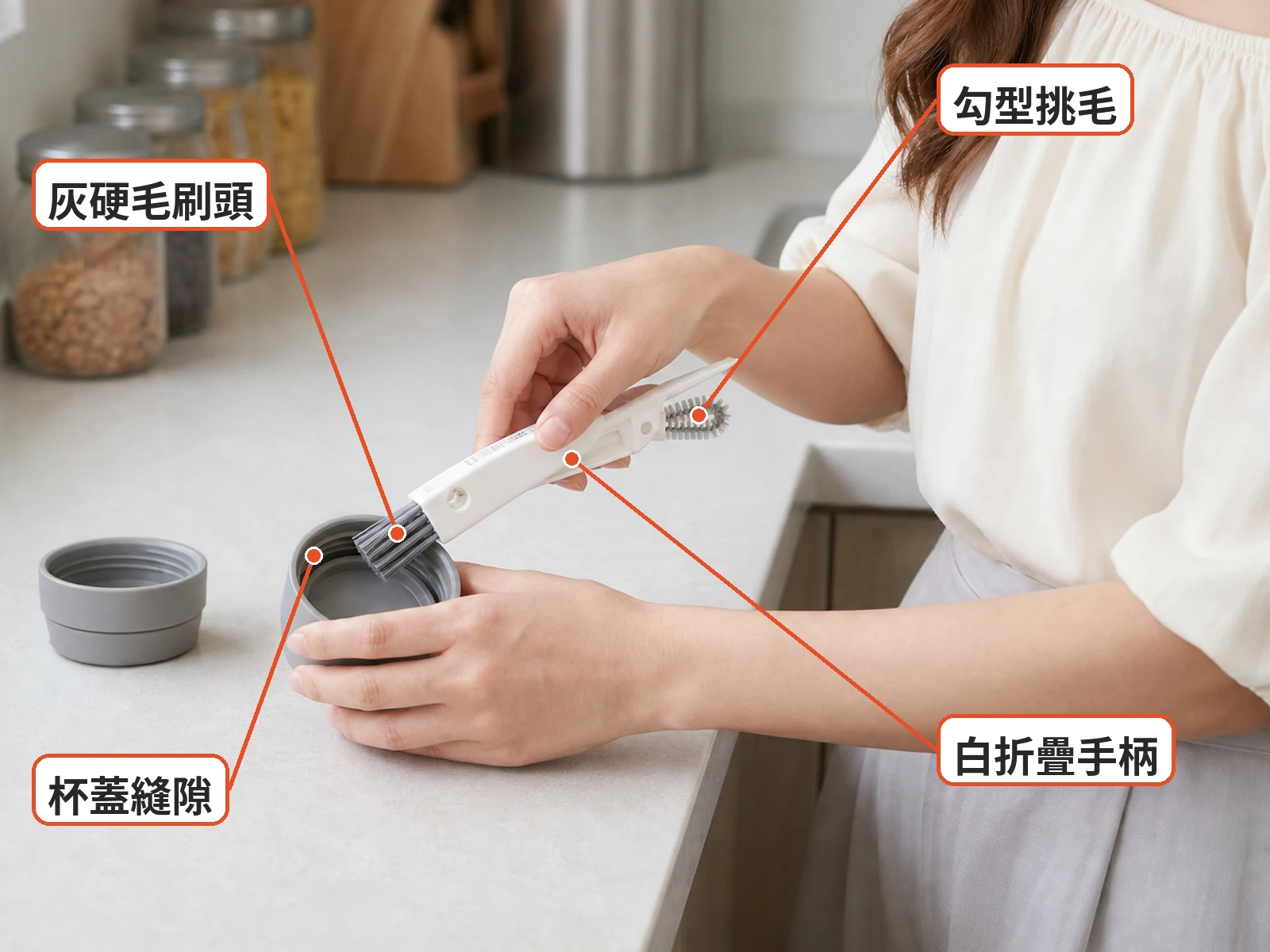
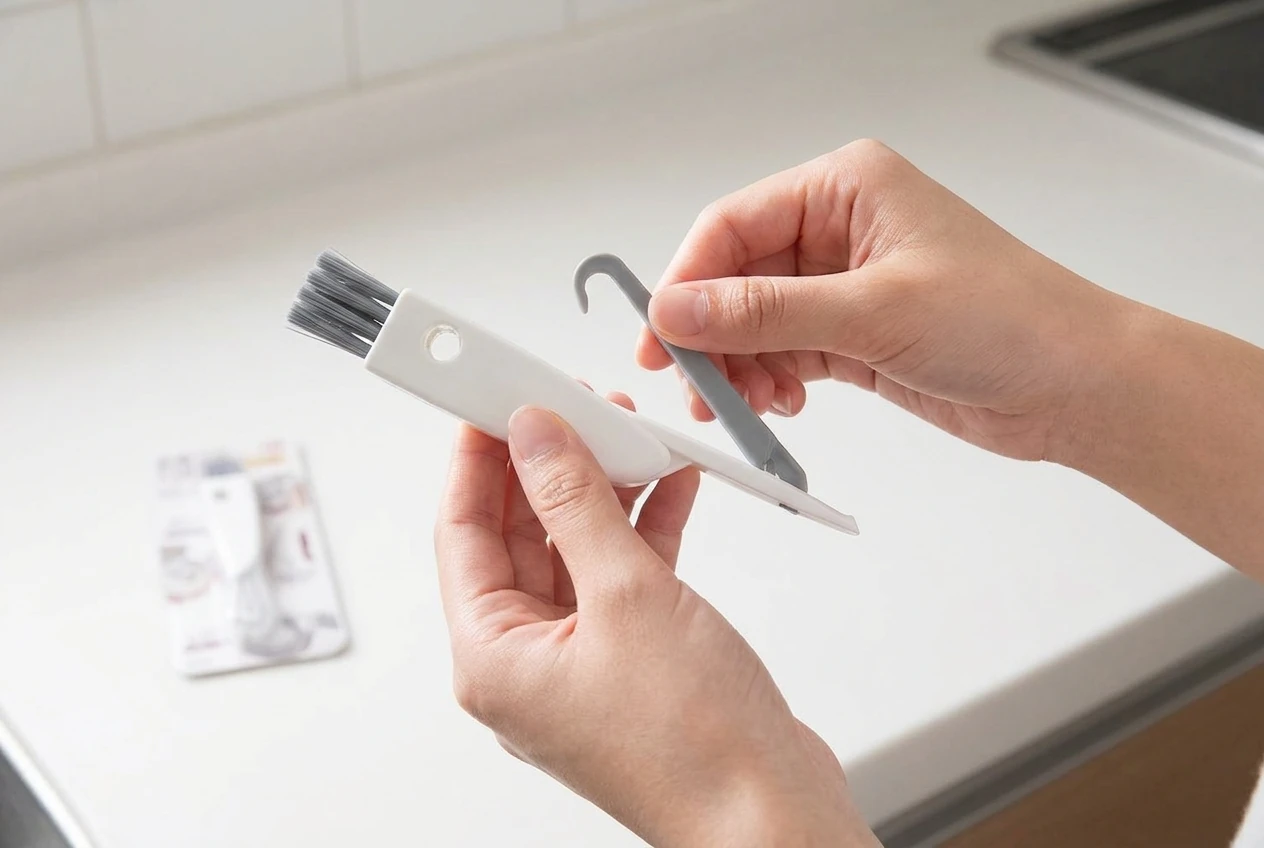
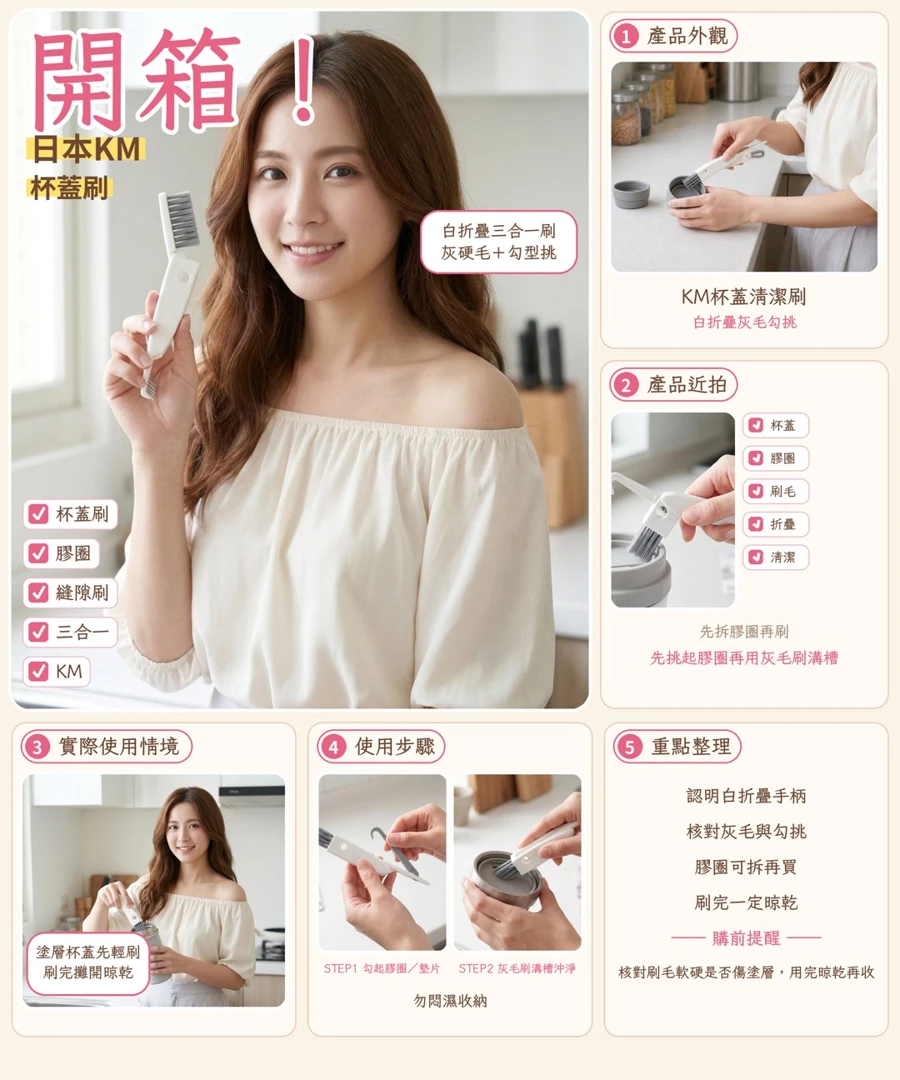
A tumbler can look clean while residue remains beneath its lid gasket. The Japan KM 3-in-1 bottle lid cleaning brush is designed for small areas like these, with a white folding plastic handle, gray stiff bristles and a fold-out hook pick. Its packaging commonly illustrates a U-shaped silicone brush, gap brush and gasket pick.
Unlike a long sponge bottle brush, this is a small detail tool. The gray bristles are intended for narrow grooves, the hook can help lift removable gaskets, and the U-shaped silicone brush can be used on rim edges. Whether the tips fit your lid depends on its shape; the listing does not give the U-shaped brush's exact dimensions.
Which drinking habits fit a lid brush?
A small gap brush may be useful if you regularly carry a thermos, use a reusable drink cup or have several lids with silicone rings. Lid grooves and drinking openings can be awkward for a large sponge brush to reach. A narrower brush and pick offer another way to approach those areas.
It may be less useful if you mostly wash wide mugs, or if your main concern is the bottom of a deep bottle. Long straws and deep bottles still call for brushes with enough reach. Check your usual cups before deciding whether another tool would fill a gap in your cleaning kit.
On arrival, check that the folding parts move smoothly, the bristles are intact and the hook is secure. Rinse the brush before first use and gently check for loose fibers. Public information does not establish whether the bristles shed over long-term use.

Practical take: how much can it help with gaskets?
The brush targets lid details, but that does not guarantee it will remove every dark stain or patch of mold. Results depend on the residue, the material and the cleaning method. The listing shows more than 20,000 sold; that figure alone does not establish compatibility or durability.
For a removable gasket, consult the cup's instructions first. The hook can help lift the ring gently, but do not force a tightly fitted ring or pry apart a lid that is not designed to come apart. Wash the ring and groove separately, rinse them and allow the parts to dry before reassembly.
The gray bristles are stiff, so be especially careful around soft silicone or delicate coatings. Start gently in an inconspicuous area and watch for damage. The U-shaped silicone brush can be used along a rim, although its fit will depend on the rim's thickness.
Warm water and mild dish soap are an option for cleaning, followed by a thorough rinse. Some people soak tea stains with baking soda, but check your cup's care instructions before using it. Wash the brush itself as well, so residue does not remain between the bristles.
The KM brush can sit alongside a sponge bottle brush and a straw brush: use the smaller tool for accessible lid grooves and a longer one for deep bottles or long straws. If an existing brush already reaches your lid's gaps, consider whether you need another tool at all.
Keep cleaning tools hygienic. Do not use an unwashed brush on other dishes or a raw-food cutting board, and replace a brush with moldy bristles rather than masking the smell. Keep the hooked tool away from children who might play with it.
The folding design is convenient for storage, but let the brush dry fully before folding it away. If the hook becomes bent and difficult to control, consider replacing the tool rather than risking unnecessary strain on a gasket.
Some lids are molded in one piece or have rings that are not intended to be removed. In those cases, the hook is less useful; do not force the lid apart just because the brush has a pick. The bristles may still reach accessible grooves, depending on the lid.
The compact brush can also travel with a reusable cup. After washing, leave it open to dry instead of sealing it wet in luggage. Check the folding joints for trapped water when you get home.
A cracked or permanently warped gasket cannot be repaired by scrubbing and may need a compatible replacement. Check the bottle-neck threads after cleaning the lid, too: residue can collect there, and the right tool depends on the cup material.
What users say
In a PTT e-shopping cup-brush discussion, the original poster asked about coffee and oatmeal residue in a narrow thermos. Some replies said washing promptly helps, while others mentioned soft brushes lacking scrubbing power or enough length. These are comments about cup brushes generally, not tests of the KM tool.
Another PTT discussion about finding a thermos lid or silicone ring illustrates that replacement lid parts can be a concern. It should not be treated as feedback on this particular cleaning brush.

Similar alternatives
- Daiso or other Japanese gap-brush sets: compare brush shapes and included tools, which vary by set.
- Long straw and baby-bottle brush sets: useful for long straws and deep bottles, though they take more storage space.
- An old toothbrush and floss picks: available household options for some details, provided the tools are clean and easy to control.
Compare these options against the lids you actually wash: check the width of the grooves, whether the gasket is removable and how deep the bottle is. The KM tool focuses on lid details rather than deep bottle bottoms. Its exact heat rating and dishwasher compatibility are not clearly stated in the available information.
Pre-purchase checklist
- Check that the folding handle, gray bristles, U-shaped silicone brush and hook suit your needs.
- On arrival, check the folding action and whether the hook is secure.
- Consider whether stiff bristles are suitable for your lid; start gently on coatings and soft silicone.
- Look for heat, material and dishwasher information in the supplied instructions.
- Confirm whether your gasket is removable and make room to dry the brush fully.
- Check the selected item, shipping origin, return terms and warranty information.

Specs
| Item | Detail |
|---|---|
| Product | Japan KM 3-in-1 bottle lid cleaning brush |
| Appearance | White folding plastic handle, gray stiff bristles and fold-out hook pick |
| Common functions | U-shaped silicone brush, gap brush and gasket or pad pick |
| Sales count | More than 20,000 sold |
| Information not clearly available | Exact heat rating, material certifications, dishwasher compatibility, bristle replacement and origin details |
Pros
- Small folding design is easy to store and aimed at lid grooves and gasket areas.
- Hook pick can help lift removable pads and rings for separate cleaning.
- Combines a silicone brush, gap brush and pick for detail work.
Cons
- Stiff bristles require care around soft silicone and delicate coatings.
- It is not a long straw brush; deep bottles and long straws may need separate tools.
- Public details on heat rating, origin and long-term shedding are limited.
Where to buy
FAQ
Must I remove the gasket to clean it?
If the cup instructions allow removal, take the gasket out periodically to clean it and the groove separately. The hook can help, but do not force non-removable parts. Dry the pieces before reassembly.
Will the bristles shed into the cup?
Long-term shedding is not clearly documented. Rinse a new brush and gently check for loose fibers, then rinse the lid and drinking opening thoroughly after cleaning.
Can it clean baby bottles or straws?
The gap brush may reach some small openings, depending on their size and material. Long straws and deep bottle bottoms generally need appropriately sized dedicated brushes.
How should I store it after use?
Rinse the brush and leave it open or hang it until fully dry before folding it away. Replace the brush if the bristles become moldy.
You might also like

Home & Living
Product analysisShower Head Cleaning Brush Review: Can It Clear Clogged Nozzles?
A few jets dead? Soak in vinegar, twist in a fine brush, and try a NT$5 fix first.
NT$5

Home & Living
Product analysisU-mop Right-Angle Floor Brush Review: Can It Reach Tile Gaps?
The U-mop right-angle floor brush uses an angled head and long-handle design for bathroom corners and grout lines that flat brushes struggle to reach; bristle stiffness, shaft length and replacement-head details still need checking before purchase.
NT$149

Tech & Gadgets
Product analysisMultipurpose Cleaning Gel Review: Residue on Mechanical Keys?
Dust stuck in your key gaps but worried about residue? This bright blue cleaning gel costs NT$5. Learn how to test it and use it on a mechanical keyboard before you stock up.
NT$5