Newborn 60ml Mini Baby Bottle Review: Water And Medicine Uses
30-second verdict
A 60ml standard-neck mini bottle fits water, medicine, and tiny doses—not main feeds; verify material and neck parts first.
Good for
- Caregivers needing tiny water or medicine portions
- Families wanting a low-cost spare mini bottle
- Homes that already own a main larger bottle
Not for
- Parents expecting 60ml to cover main newborn feeds
- Shoppers needing wide-neck daily formula bottles
- Buyers who require full public heat and flow specs first
Buying Guide Notes · First published:
Compiled from public sourcesWritten using published specs and user feedback.

Sources and verification status
Verification status: compiled from public sources; not hands-on tested
Data updated:
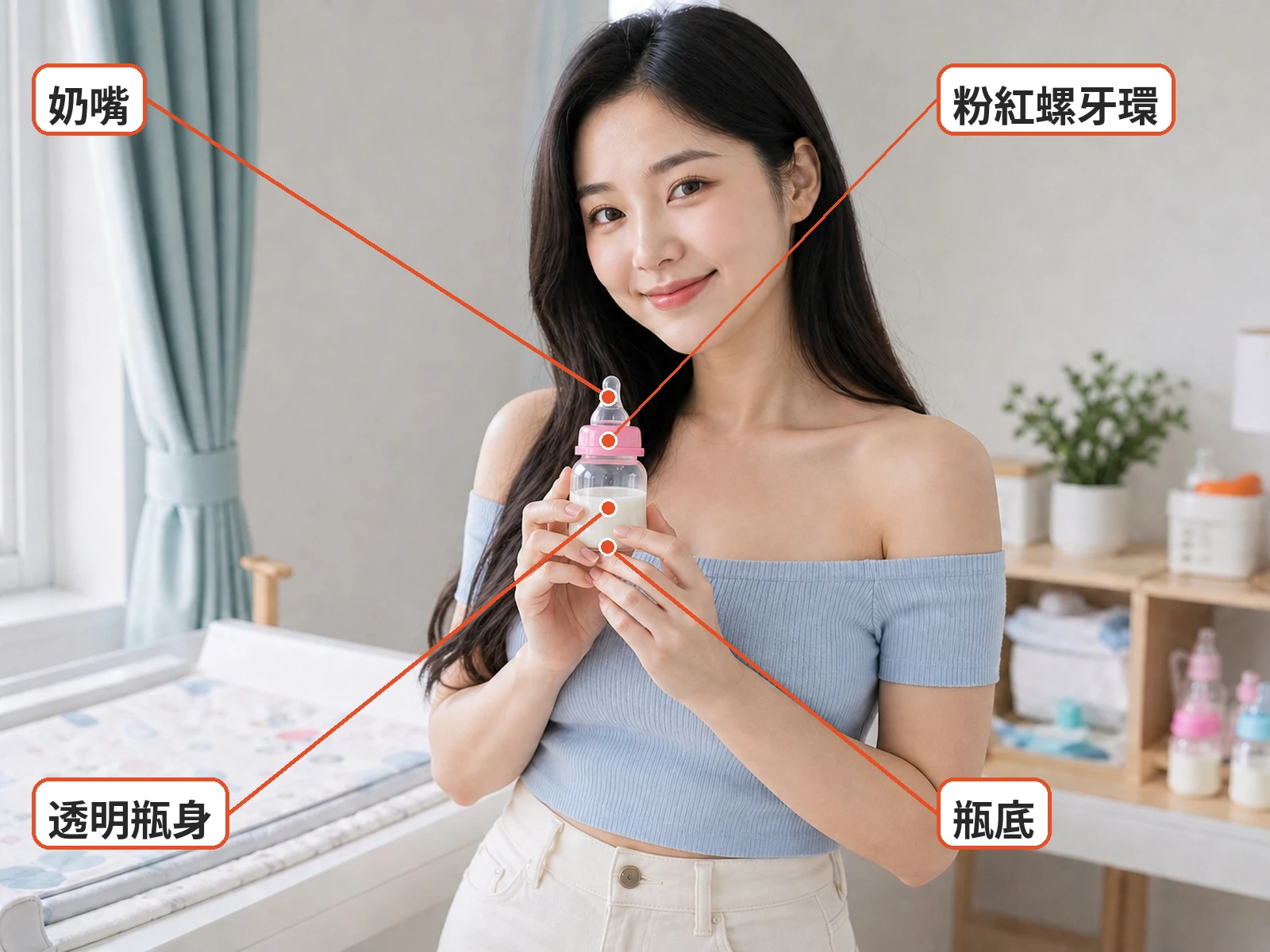
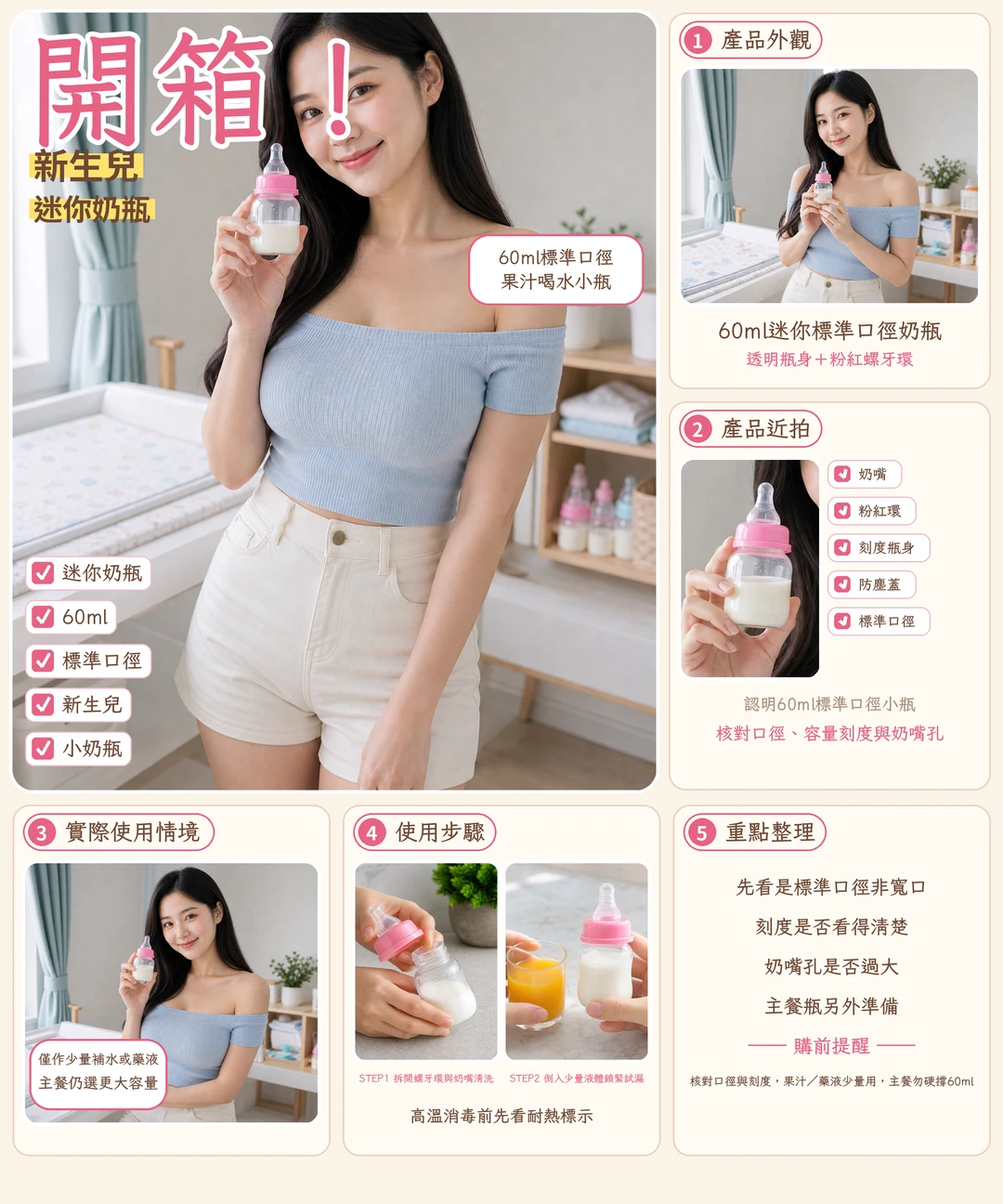
Some families keep a small bottle alongside their regular feeding bottles for small amounts of liquid. The newborn 60ml mini bottle has a clear curved plastic body, commonly shown with ml/oz markings, a colored screw ring and a translucent silicone nipple. Some combinations include a clear dust cap. It has a standard neck rather than a wide neck.

Water, medicine and other small portions are common uses for mini bottles, but the fact that a bottle can hold a liquid does not mean that every baby needs extra water or should receive medicine from a bottle. Ask a pediatrician about your newborn’s individual feeding needs before deciding how to use it.
Who Is This 60ml Mini Bottle For?
The small capacity may appeal to caregivers who already have main feeding bottles and want a separate container for small portions. The body has volume markings, but the listing does not specify their accuracy. Do not assume that a small bottle is precise enough for measuring medicine.

As the only daily formula bottle, 60ml may be limiting. Parents in Mobile01 and Dcard discussions mention that small bottles can become insufficient as feeding amounts increase; some also suggest using them for water later. These are experiences to consider, not a fixed schedule for every baby.
The bottle has a standard neck. If you already own nipples or brushes, ask about compatibility first. A shared neck description does not guarantee that parts from different brands will fit, and nipple shape and flow also affect suitability.

Practical Considerations: Capacity And Limits
Capacity is only one part of choosing a mini bottle. Readable markings, an appropriate nipple and a confirmed cleaning method matter too. The public sales count is approximately 10,000 or more, but that figure does not establish material quality or suitability for a particular baby.

A roughly 60ml bottle can hold a small portion without using a larger feeder. For everyday formula feeds, consider the 150–180ml bottles mentioned in parent discussions and choose according to your baby’s needs rather than expecting the mini to remain the main bottle.
For medicine, the amount and method matter. The listing does not specify nipple hole size, flow or marking accuracy, so it is not possible to judge whether this bottle is appropriate for a particular medication. Ask a doctor or pharmacist whether a medicine syringe or another dedicated tool is suitable, and measure the dose as instructed.
Extra water is another decision to discuss with a pediatrician, particularly for a newborn or younger infant. Breast milk or formula feeding should follow your baby’s needs and medical guidance. A bottle shown with juice is not a recommendation to offer juice routinely: parents in the PTT BabyMother discussion caution against using juice for hydration under age one.

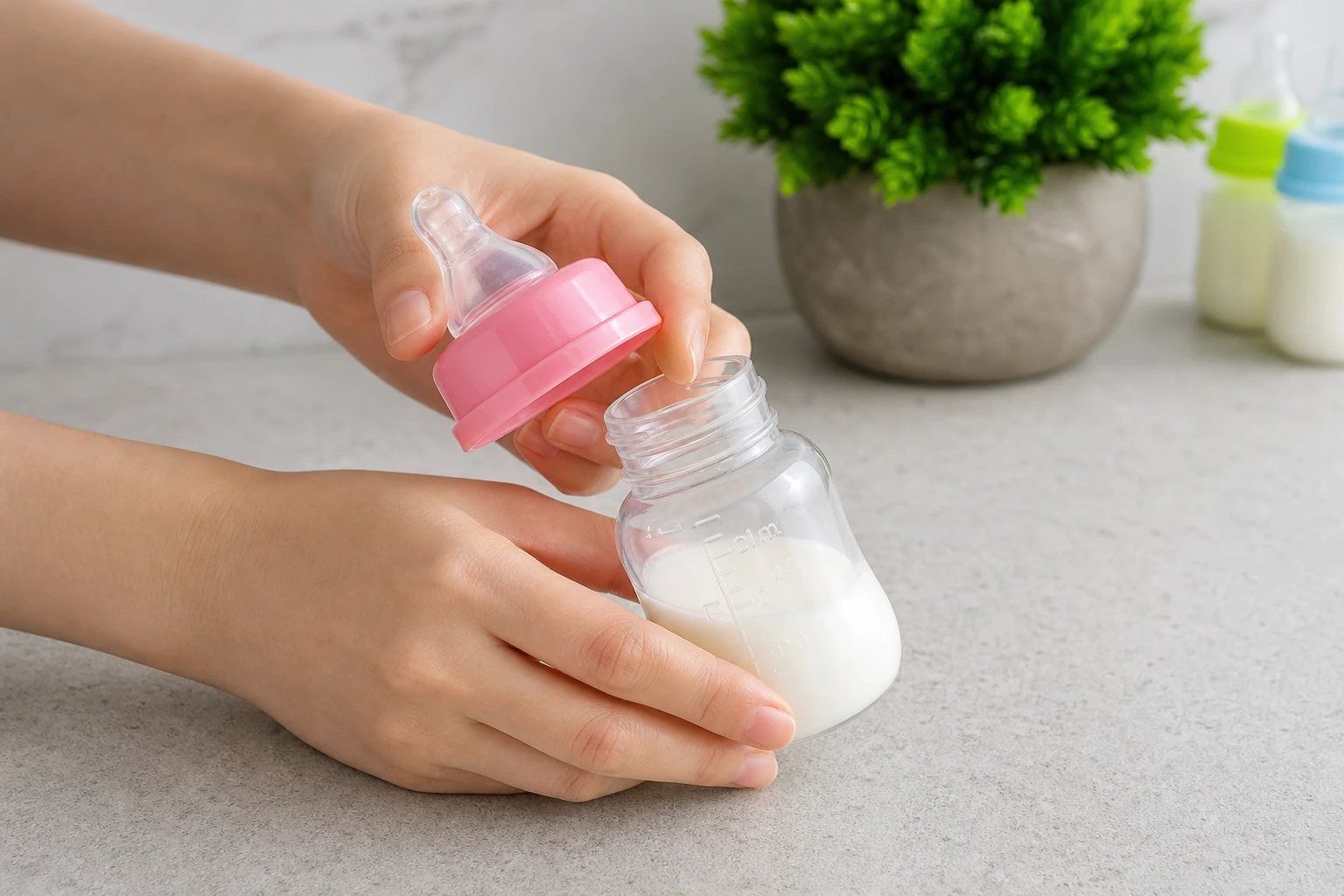
For cleaning, take apart the bottle, ring and nipple, paying attention to residue around the threads and nipple opening. A standard neck can be less convenient to clean and fill with formula powder than a wide neck, so check whether your brush fits. Consider replacing components if they become cracked or scratched.
The exact plastic grade, heat limit and supported sterilization methods are not stated in the available listing. Check the bottle and packaging when it arrives and ask the seller if the instructions are unclear. Do not assume that steam, UV or boiling is permitted without confirmation.
Pink, blue and green rings can help identify bottles, but their color does not establish nipple flow. The shipped color and inclusion of a dust cap are also unconfirmed. Ask before ordering if either matters, and check the parts, seal and markings on arrival. A water fill can help reveal leaks before feeding.
The listing does not give exact exterior dimensions either. If storage space is tight, you can measure the bottle after it arrives. Clean and dry the parts before putting them away, and take care with the storage time and temperature of any liquid carried outside the home.

What Users Say
In a Mobile01 newborn bottle discussion, parents suggest that small bottles may later be used for water while larger bottles serve main feeds. Another Mobile01 thread discusses capacity combinations, glass and PPSU, and the convenience of wide necks.
Parents in a Dcard discussion mention that small bottles can become insufficient quickly. In a PTT BabyMother thread, parents caution against juice for hydration under age one. These are category discussions, not tests of this particular bottle or substitutes for medical advice.

Similar Alternatives
- 150–180ml wide-neck glass or PPSU bottles: A capacity range mentioned by parents for main feeds, with a wider opening that is generally easier to fill and clean.
- Medicine syringes or dedicated feeders: Ask a doctor or pharmacist whether one is appropriate for measuring and giving a small dose.
- Age-appropriate straw trainer cups: An alternative for practicing drinking water when a child reaches a suitable developmental stage.
The right tool depends on whether the priority is everyday feeding, a small medicine dose or later drinking practice. A mini bottle can be a supplement rather than a replacement for all three.
Before You Buy Checklist
- Confirm that you need an approximately 60ml standard-neck bottle rather than a main feeder.
- Ask which color, nipple and dust-cap combination will be supplied.
- Check compatibility with existing nipples and brushes, and ask about nipple hole size and flow.
- Check material, heat limits, BPA-related labeling and supported sterilization methods; ask the seller if details are missing.
- On arrival, inspect the markings, seal and bottle condition; consider replacing cracked or scratched parts.
- Ask a doctor about extra water for a newborn and a doctor or pharmacist about medicine tools and administration.
- Review the selected option, shipping location, return conditions and warranty.

Specs
| Item | Detail |
|---|---|
| Product | Newborn 60ml mini standard-neck baby bottle |
| Look | Clear curved plastic body with ml/oz marks, colorful screw rings (pink/blue/green), translucent silicone nipple; some include a clear dust cap |
| Capacity / neck | About 60ml class; standard mini neck, not a wide-neck feeder |
| Common use | Water, medicine, tiny liquid doses or care portions—not a daily main formula bottle |
| Sold (from sales count) | About 10,000+ sold |
| Open gaps | Exact plastic grade and heat limits, nipple flow size, sterilization method support, BPA labeling detail, shipped color/accessory mix |
Pros
- The mini capacity holds small liquid portions and can supplement an existing main bottle.
- The public sales count is approximately 10,000 or more, though specifications still need checking.
- Colored rings help identify bottles; standard-neck parts are relatively common, but compatibility needs confirmation.
Cons
- The 60ml capacity may quickly become insufficient for main feeds.
- Public details on plastic grade, heat limits and nipple flow remain incomplete.
- A standard neck is generally less convenient to clean and fill with formula powder than a wide neck.
Where To Buy
FAQ
Can it be a newborn’s main bottle?
The 60ml capacity may soon be insufficient for regular feeds. Parents discuss 150–180ml bottles as an option; choose a main bottle according to your baby’s needs.
Can it be used for a newborn’s water or juice?
Ask a pediatrician whether your newborn needs extra water. Parents in a PTT BabyMother discussion caution against juice for hydration under age one.
How does a standard neck differ from a wide neck?
A wide neck is generally easier to fill with formula powder and clean. This mini has a standard neck; confirm compatibility with your nipples and brushes.
Can it be steam sterilized or boiled?
The available information does not fully specify heat limits or supported sterilization methods. Check the bottle and packaging and ask the seller before using heat.
You might also like

Tech & Gadgets
Product analysisMini Cable Organizer Review: Can Clips Keep Chargers On Desks?
Mini adhesive dome clips can keep charger cables near the desk edge. Check cable diameter, surface and hole options first.
NT$5

Pets
Product analysisCarbon Filter Pet Water Bottle Review: Will It Leak in Your Bag?
Bottle and kibble bag fighting for space? This one combines food, water, and a carbon filter; leak-test it at home before your first walk.
NT$80