OXO Compact vs Regular Cold Brew: Batch Size & Cleanup
Quick Verdict
Choose Compact for a small footprint and about 16oz recipe yield, or regular for 24–28oz per recipe. Both still require hand washing beyond the glass carafe.
Good for
- Compact: smaller counters and smaller batches
- Regular: buyers who want more concentrate per brewing session
Not for
- Buyers expecting headline vessel capacity to equal finished yield
- Anyone wanting the complete brewer to be dishwasher safe
Buying Guide Notes · First published:
Compiled from public sources · Written using published specs and user feedback.
As an Amazon Associate I earn from qualifying purchases.
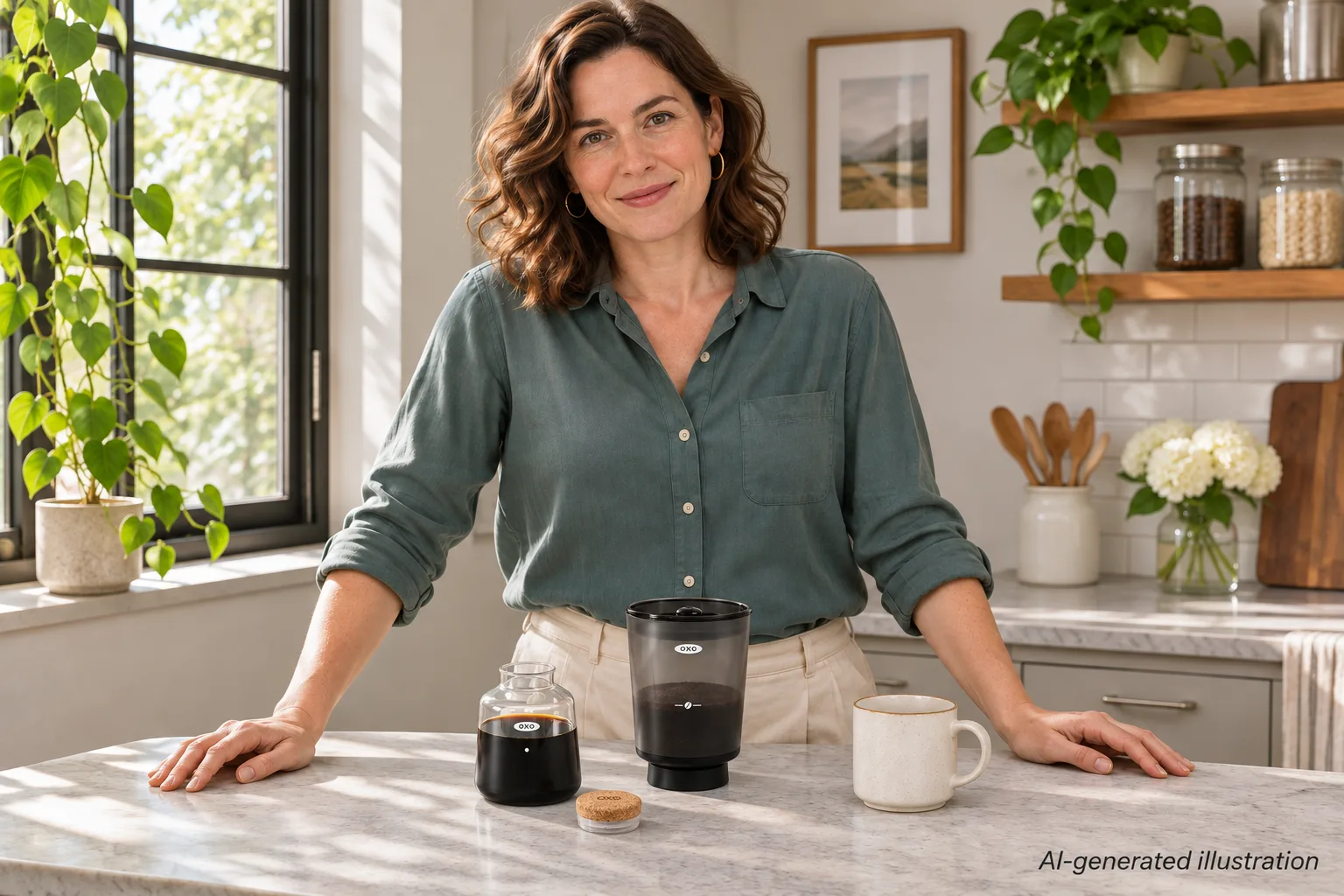
Choose the OXO Compact if saving space matters more than making a large batch; choose the regular OXO brewer if you want more concentrate between brewing sessions. The Compact's recipe yields about 16 ounces of concentrate, while the regular brewer's official recipe yields 24–28 ounces. The numbers in their shopping titles describe different things, so “24 oz versus 32 oz” is not a reliable shortcut for comparing finished coffee.
Checked November 12, 2026. This comparison is compiled from public sources, not a tasting or leak test. We matched both Amazon.com offers, read OXO's current product pages and downloaded their linked instruction booklets, then examined dated owner discussions. All five illustrations use the Compact model only; they do not depict a side-by-side physical test.
What exactly are the two Amazon listings?
The Compact is 11237500, ASIN B07HB3GH6W. Its new offer was $39.95, in stock, shipped by Amazon and sold by Hour Loop for the sample US delivery location. The regular brewer is ASIN B00JVSVM36, whose new offer was $49.99, in stock, sold and shipped by Amazon.com.
The regular listing's model field says 1272880UK and its part field says 1272880V2. OXO's linked full-size instructions belong to the 1272880 family; we did not open a box to verify a regional suffix or every included accessory. Match the actual package before using a replacement part intended for another version.
| Buying detail | OXO Compact | Regular OXO Cold Brew |
|---|---|---|
| Observed Amazon price | $39.95 | $49.99 |
| Exact checked ASIN | B07HB3GH6W | B00JVSVM36 |
| Official recipe water input | 24 oz / 700mL | 40 oz / 1,200mL |
| Official recipe concentrate yield | About 16 oz | 24–28 oz |
| Draining control | Starts when brewer is placed on its carafe | Brew-release switch; stops when carafe is removed |
| Listed exterior dimensions | 5.1 × 5.1 × 10.75 inches | 9.53 × 9.53 × 14.72 inches |
| Best for | Smaller kitchens and smaller batches | More concentrate per brewing session |
The dimensions are the selected brand listings' exterior figures, not our measurements of individual components. Price observations are not historical ranges or guaranteed totals. At these two offers, the regular model cost $10.04 more before any location-specific taxes or charges.
View Current Offers on Amazon →
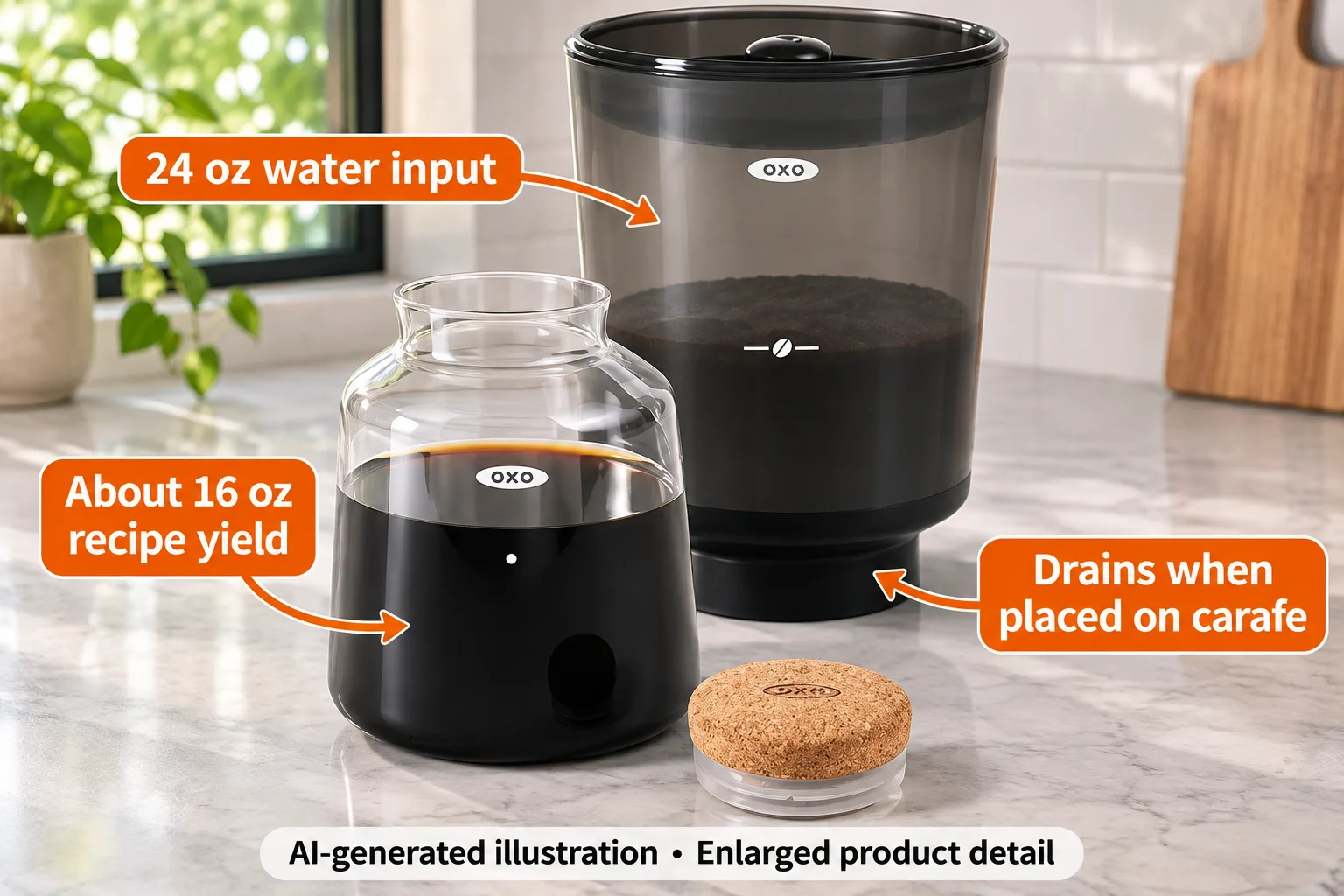
AI-generated illustration — enlarged Compact example; recipe figures are from its instructions, not a measured brew.
Why doesn't a 24-ounce brewer yield 24 ounces of coffee?
Water input, carafe capacity, and concentrate yield are separate measurements. Grounds retain some of the water, so the volume poured into a brewing container is not the volume collected afterward. OXO's Compact instructions start with 24 ounces of water and list about 16 ounces of concentrate.
For the regular model, the Amazon title emphasizes a 32-ounce glass carafe. The linked official recipe starts with 40 ounces of water and lists a 24–28-ounce yield. A container's advertised capacity should not be read as a promise that every recipe produces that much finished concentrate.
Both booklets suggest diluting concentrate with water or milk, and both describe their recipes as starting points. The number of drinks depends on how much concentrate you use and your dilution preference. We have not measured caffeine content, extracted strength, or the number of full mugs a particular household will obtain.
Where does the Compact stand out?
The smaller footprint is its clearest practical advantage. The checked Compact listing is 5.1 inches across, whereas the regular unit's listed width and depth are 9.53 inches. That matters on a narrow counter or a refrigerator shelf already occupied by food containers.
The Compact also nests for storage, according to OXO. Its carafe has a cork stopper with a silicone seal. That makes it a storage vessel for the concentrate as well as the receiving container, but it does not make the glass unbreakable or the cork suitable for a dishwasher.
Buy the Compact if you want a smaller batch and can accommodate the time needed to make another. Skip it if a smaller concentrate yield will turn brewing into an unwanted chore. Space savings are useful only when the batch also fits your routine.
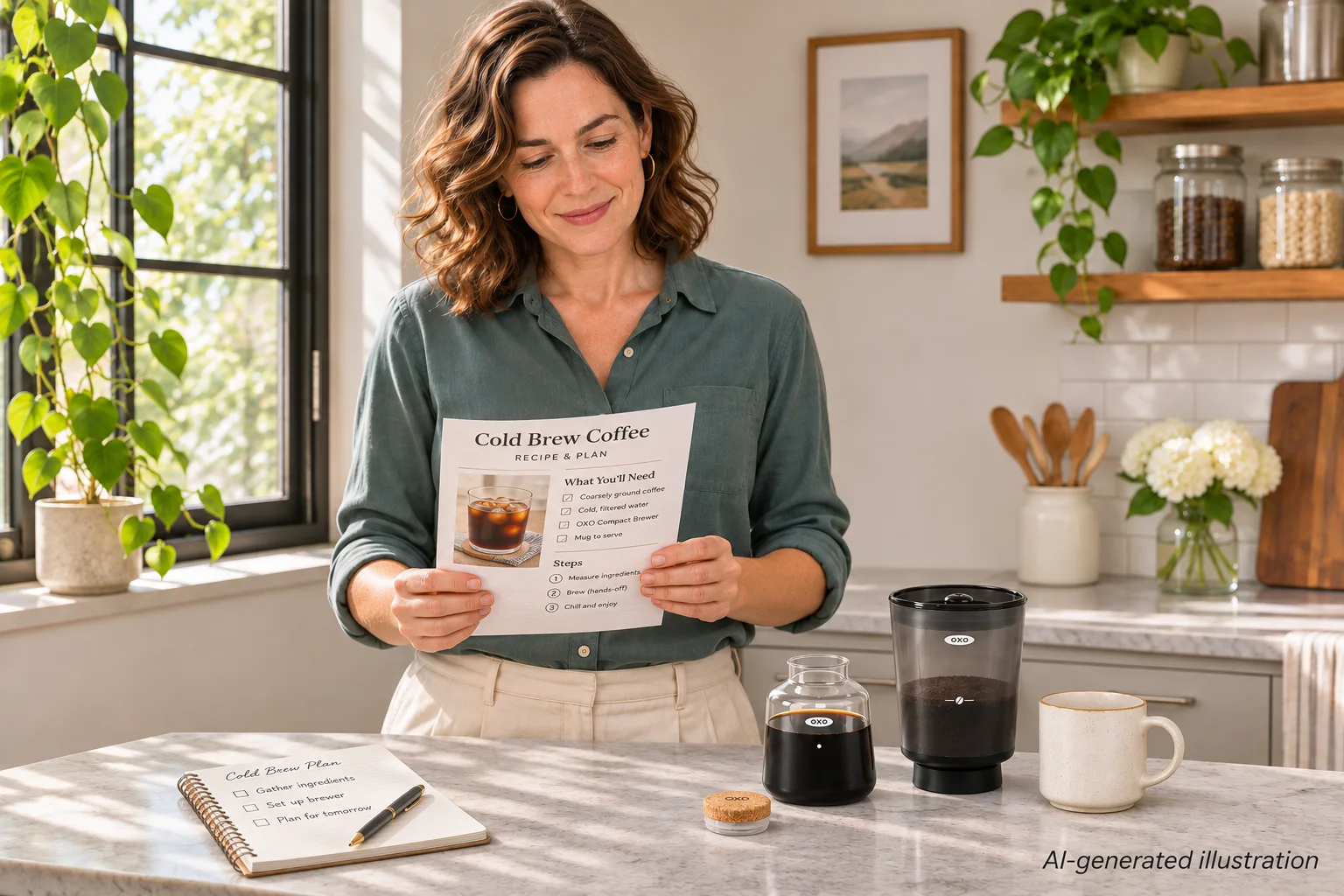
AI-generated illustration — planning a Compact recipe; no hands-on test was performed.
When is the regular brewer the better choice?
The regular brewer makes more sense when you would rather brew less frequently and have room for its stand and brewing container. The official recipe uses more grounds and water and yields more concentrate. Its manual switch also gives it a different draining workflow from the Compact's automatic-on-carafe arrangement.
Buy the regular model if its larger batch is useful and the extra footprint is acceptable. Skip it if you rarely drink cold brew or would regularly leave a large batch unused. We do not recommend it on the assumption that a bigger machine automatically produces better-tasting coffee.
Why might the Compact drip before it has finished brewing?
The Compact is designed to drain when its brewing container is placed on the glass carafe. Its instructions have you steep first and place the container on the carafe after brewing. Stacking the parts as though that were the steeping position can therefore confuse a first-time user.
The Compact booklet distinguishes counter brewing, at 12–24 hours, from refrigerator brewing, at 20–24 hours. Follow the booklet for the purchased unit rather than judging readiness by how quickly liquid drains into the carafe. Draining time and steeping time are different stages.
The manual also emphasizes the gasket's position, tightening the base, and aligning the markings to obtain a proper seal. That is a reason to read the assembly instructions after cleaning. It is not a guarantee that following a short checklist fixes every leak or that a damaged part can safely be ignored.
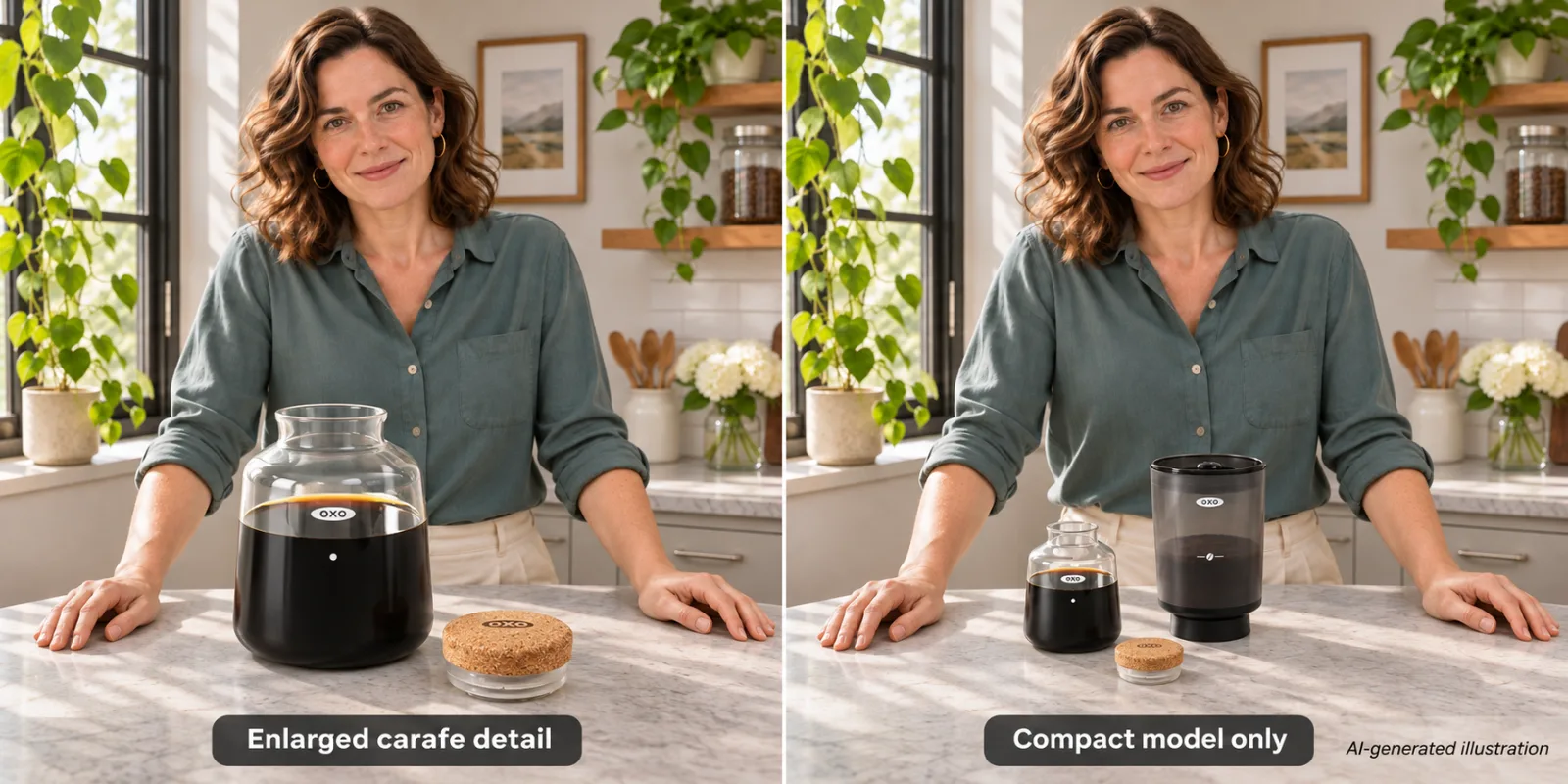
AI-generated illustration — two-panel Compact example; left panel is an enlarged detail.
Which parts can go in the dishwasher?
The linked instructions for both brewers say the glass carafe is dishwasher safe and the other parts should be hand washed. For the Compact, that includes the cork lid and removable brewing components. You still need to disassemble and clean the parts the booklet identifies.
The regular Amazon listing is less consistent: a feature field broadly says dishwasher safe, and one bullet calls the mesh filter dishwasher safe, while another says to hand wash all parts except the carafe. The official linked booklet gives the more conservative care rule. Do not use a broad shopping label to infer that the complete assembled brewer belongs in a dishwasher.
What do owners say about batch size and results?
We read the original comparison thread rather than adopting quoted professional tasting conclusions from it. These are individual reports from 2023, with no proof that their packages match today's regional or V2 identifiers.
- Space savings came with a smaller batch. On August 6, 2023, snowballmouse described liking the Compact in limited-space use, while saying they would choose the larger brewer if space were not a concern. That combines praise and a capacity limitation in one person's experience. Read the comment.
- The unhappy taste report included a successful adjustment. On August 6, 2023, groovy-bears said the initial Compact concentrate lacked the flavor they wanted, then explained that changing their approach produced a ready-to-drink brew they liked. Keep that improvement attached to the complaint; it does not establish that the Compact is inherently flavorless or that everyone should copy the recipe. Original account and August 7 follow-up.
- One larger brewer was returned for leaking. On August 11, 2023, MCG987 reported returning the larger unit after leaks developed after about five uses. The post does not establish a failure rate, diagnosis, or reliability comparison with the current listing. Read the report.
Which would we choose for a small household?
Choose by space and desired batch, then accept the cleaning routine. The Compact is the more natural starting point when counter space is tight and about 16 ounces of concentrate is useful. The regular brewer is the more practical option when a 24–28-ounce recipe yield reduces repeated work.
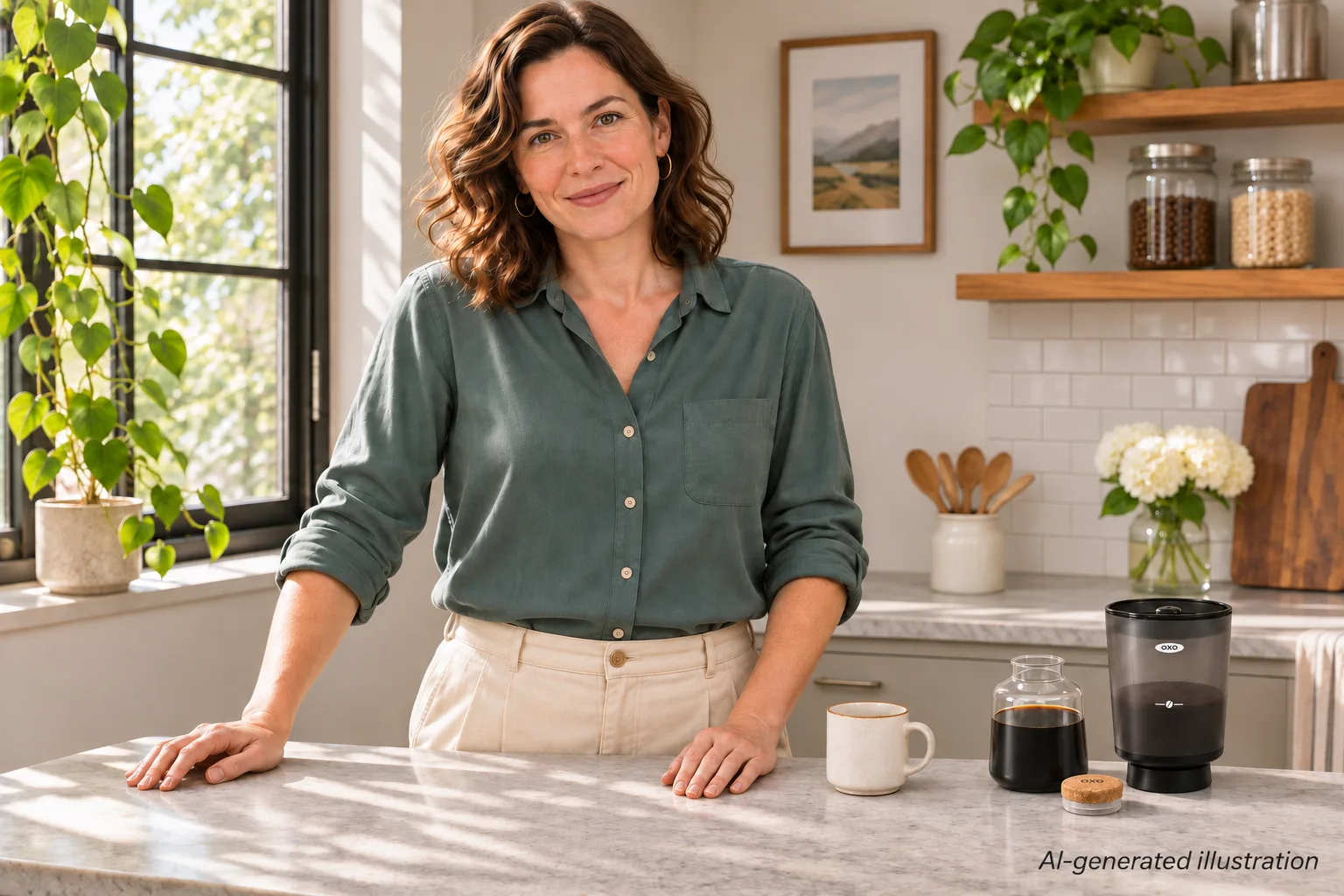
AI-generated illustration — Compact example only, not a physical comparison with the regular brewer.
How we researched and sources
- OXO Compact product page and its linked instruction booklet.
- OXO regular brewer product page and its linked 1272880-family instructions.
- Amazon Compact selection and regular selection, checked November 12, 2026. The brand's Compact page was out of stock while the checked Amazon new offer remained available.
- Dated owner comments and their limitations are linked individually above.
Pros
- + Compact suits small counters and smaller batches
- + Regular yields more concentrate per official recipe
- + Reusable stainless-steel filtration
- + Both glass carafes are dishwasher safe
Cons
- - Most parts still need hand washing
- - Headline capacities do not equal recipe yields
- - Taste depends on recipe and dilution
- - Current regular listing uses UK/V2 model suffixes
Sources and verification status
Verification status: compiled from public sources
Data updated:
Verified on:
FAQ
Is the Compact’s 24-ounce label its finished coffee yield?
No. The linked Compact recipe uses 24 ounces of water and lists about 16 ounces of concentrate. Water input and finished yield are different measurements.
Does the regular brewer always make 32 ounces of concentrate?
No. The listing describes a 32-ounce carafe; the linked official recipe yields 24–28 ounces from 40 ounces of water. Actual yield varies with the recipe and grounds.
Should the Compact sit on its carafe while steeping?
Follow the manual: steep first, then put the brewing container on the carafe to start automatic draining. The draining stage is separate from the steeping period.
Can the entire brewer go in the dishwasher?
The linked booklets say the glass carafes are dishwasher safe and the remaining parts should be hand washed. The regular Amazon filter-care claims conflict, so follow the actual unit’s official instructions.
Which model was tested for taste or leaks here?
Neither. This comparison is compiled from public sources. Owner experiences are dated individual reports, and all generated images depict the Compact as an illustration, not a physical comparison test.
You might also like
Home & Kitchen
Product analysisOXO Cherry & Olive Pitter Review: A Small Gift for Bakers, With a Batch-Size Catch
A handheld single-fruit pitter for small baking and appetizer prep, with a removable shield and a repetitive workflow for larger batches.
Kitchen & Dining
Product analysisOXO Brew vs Baratza Encore: The Timer Grinder for Drip Brewers
The OXO Brew costs $50.97 less than the Baratza Encore ZCG and adds a timer, but reviewers found it weak at espresso.
Tools & Home Improvement
Product comparisonChannellock 460 vs 440: Jaw Size and Weight
Home & Kitchen
Product comparisonOXO Fish Turner on Nonstick Pans: Metal vs Silicone
The 1130900 has a stainless head. Compare metal and softer tools by the exact pan’s care instructions, with size, handle-wear reports and buying limits.