Suction Pot-Lid Rack Review: Will It Hold Without Drilling?
30-second verdict
An arched dual-tier suction lid rack for smooth walls and light-to-mid lids—keep the drip tray emptied.
Good for
- Renters avoiding drills on relatively smooth walls
- People who need upright draining for lids or thin boards
- Shoppers who want a bottom drip tray
Not for
- Kitchens with rough paint, wallpaper, or heavy grease
- Users hanging very heavy cast lids
- Anyone unwilling to maintain suction cups
Buying Guide Notes · First published:
Compiled from public sourcesWritten using published specs and user feedback.

Sources and verification status
Verification status: compiled from public sources; not hands-on tested
Data updated:
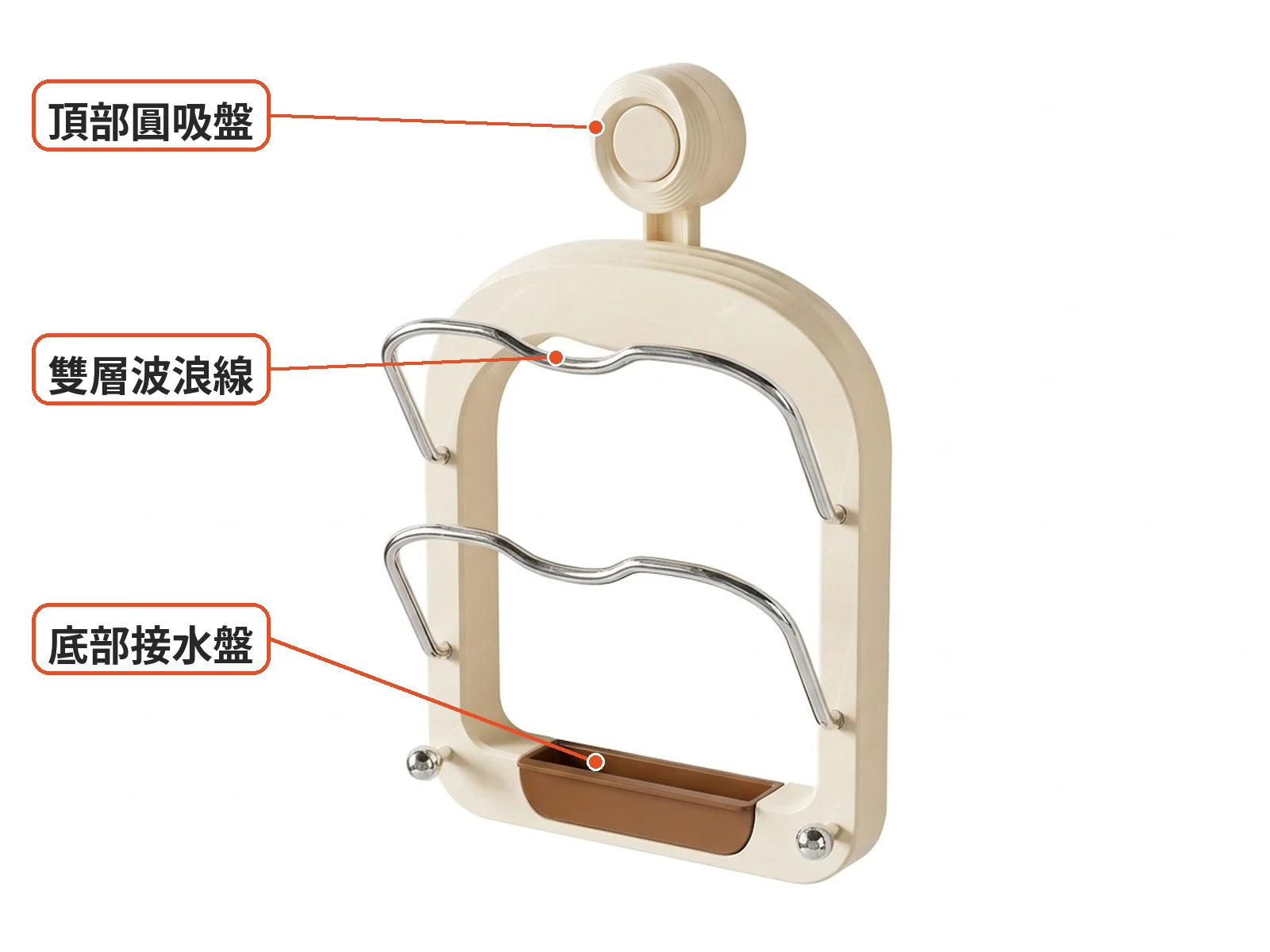
When lids slide down the wall and wet boards steal half the counter, many renters want a suction rack—not a drill. This suction wall pot-lid and board rack is an arched plastic frame with two wavy chrome wire tiers, a circular top suction mount, and a bottom drip tray. Common colors are beige, cream, and white.
Easy to spot: a press-lock suction button on top, dual wavy wires for lids or thin boards, and a small drip tray below. It is not a magnetic knife bar or adhesive shelf—the pitch is suction plus dual wires plus drip catch. Wall smoothness almost decides success.
Which kitchen walls fit a suction pot-lid rack?
On PTT SpaceArt, renters praise glass walls for cleaning and suction; cheap night-market cups “keep falling” or leave glue sheets. Replies also warn that weak no-drill gear is not worth a broken lid. Smooth tile or glass helps; rough paint, wallpaper, and greasy walls fail more often. Glass or glossy backsplashes usually beat deeply grouted tile; if a cup bridges a grout line it leaks air—hunt a continuous flat patch.
Good fit: renters avoiding drills, who need upright draining for lids and thin boards on relatively smooth walls. Less ideal: rough or greasy walls, heavy cast lids, or anyone refusing weekly suction care.
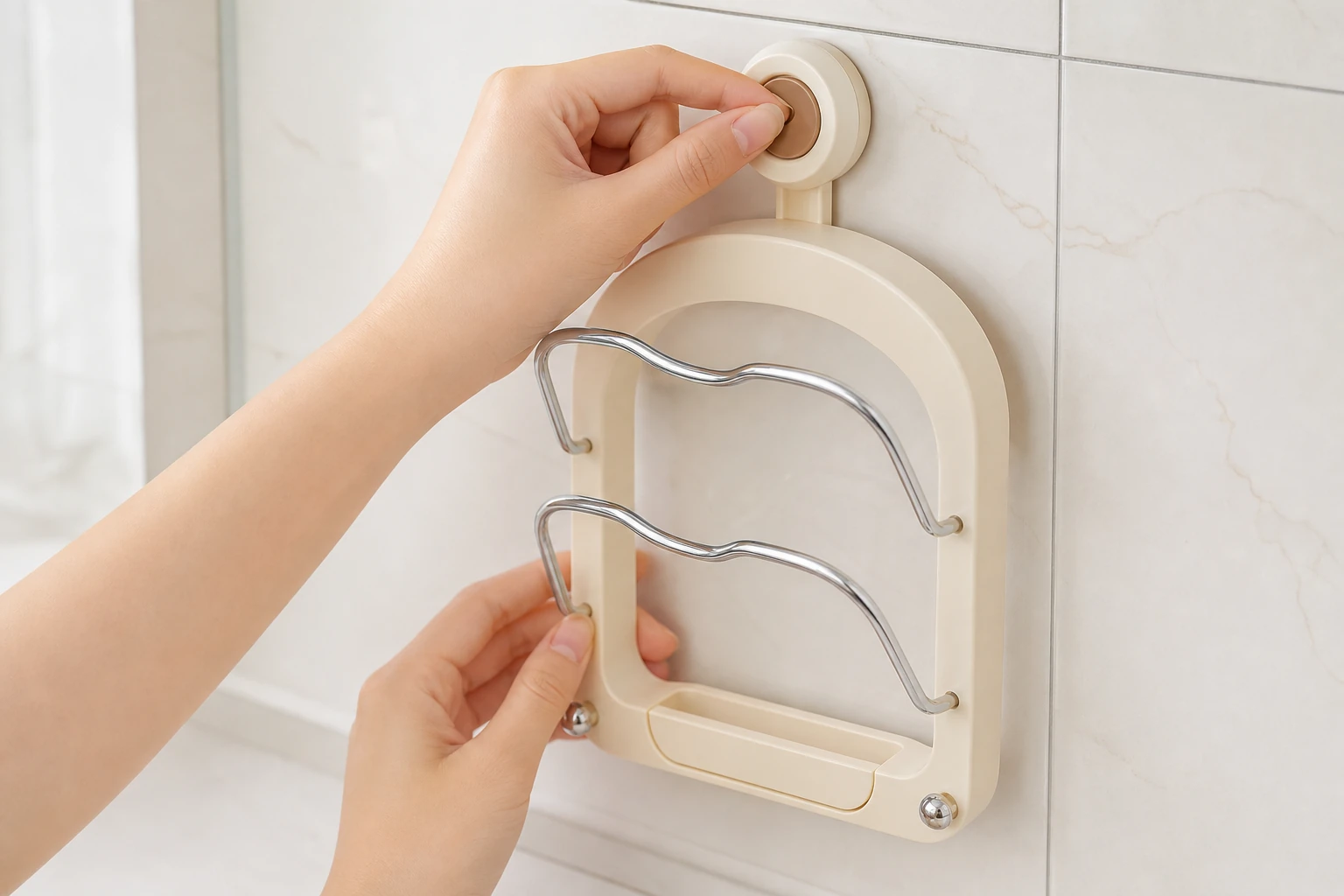
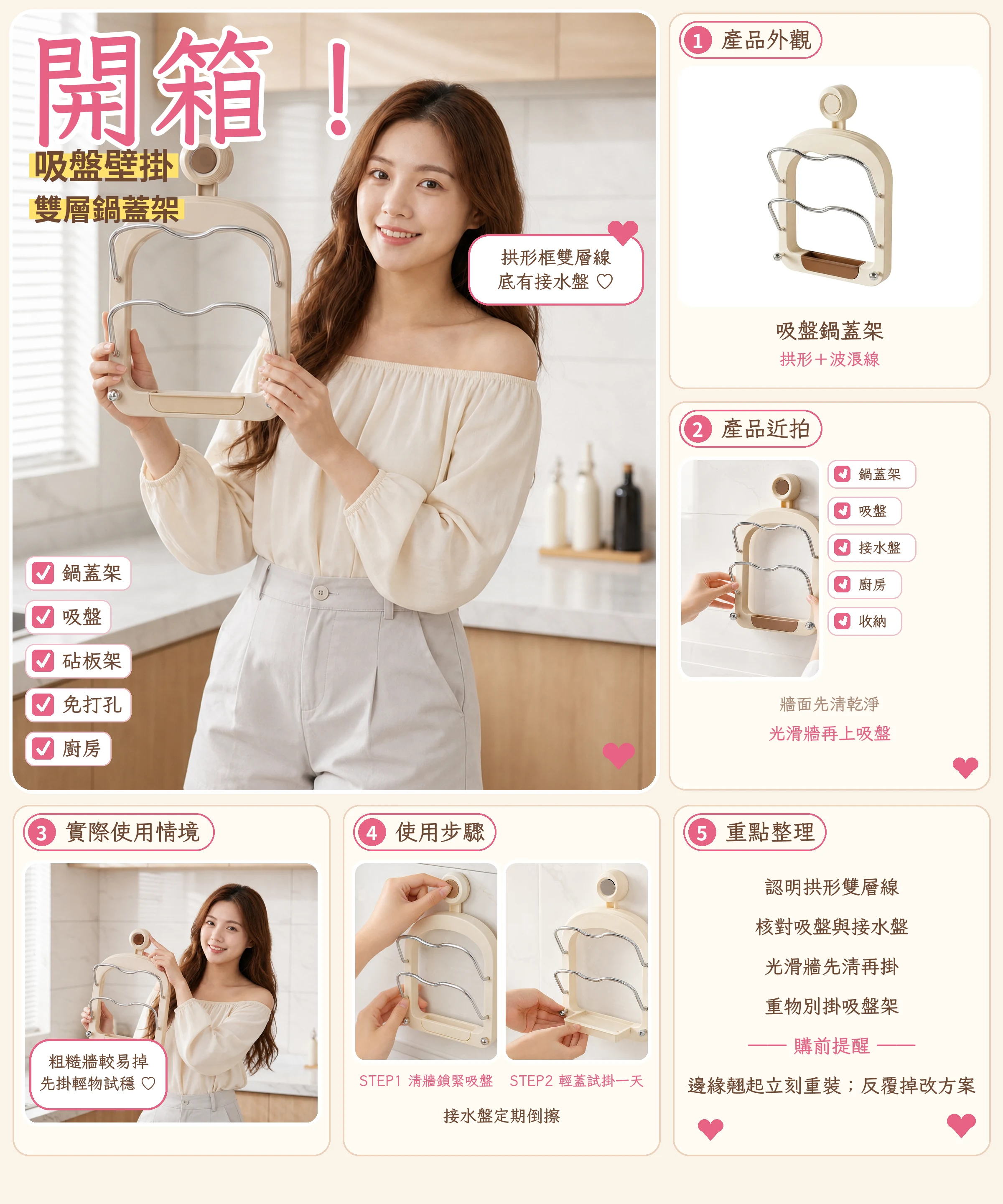
Clean and dry the wall first, lock the suction, then load a light lid for a day as a test. Empty and wipe the drip tray often. If the cup edge lifts or the frame tilts, remount immediately—don’t wait for a crash. First load should be the lightest lid for a few hours; only then add a second tier. Do not fill the rack with heavy lids on day one.

Practical take: will a dual-tier suction rack really hold?
Most people looking up a suction pot-lid rack review want to know if it will fall in the night. Suction depends on the wall and cleaning; cheap racks often fall. This shape is clear—arch, dual waves, tray—but load and hold still need your on-site test. Price is about NT$125, with roughly 659 sold. Under a greasy range hood, degrease thoroughly first—otherwise even a strong cup sits on lubricant.
Peers include adhesive no-drill racks, magnetic glass hangs, and in-cabinet drainers. This one’s pitch is an arched dual-wire body with a drip tray. If your wall is tiny and greasy, a cart or cabinet option may be steadier.
Beige, cream, or white? Match the backsplash; function usually matters less than suction habits. Check wire edges and plastic cracks on arrival. Dual tiers help split duty: upper for small daily lids, lower for larger lids or thin boards, cutting collisions.
Seat lids upright in the waves; avoid outward tip. Confirm wire spacing before thick boards. In humid seasons, remount weekly as maintenance.
Details rarely published for this model include exact load ratings, cup diameter, and approved wall lists—read the notes and test at a low-risk height. If it keeps falling, switch methods instead of gambling lids on the floor. When moving out, suction usually removes cleaner than drilled holes; repeated drops mean the wall is wrong—change methods instead of endless remounts.
It can sit beside utensil hooks, but don’t overload one failing suction zone. Heavier items demand better wall conditions and locking steps. Treat the drip tray as a wetness meter: frequent water means wipe lids before hanging to be kinder to walls and floors.
Clean by rinsing the tray and drying the wires; wipe oil off the cup and let it dry fully. Greasy walls raise failure rates fast. Set expectations right and midnight lid crashes get rarer.
When locking the cup, press the frame for a few seconds, then nudge sideways—micro-slide usually means leftover water or oil film, so reclean before forcing the lock. Textured stone or matte spray walls already start with low odds; do not fight the physics.
Wire spacing decides which lid rims seat: thin metal lids usually clip well; thick wood boards or lids with tall knobs may tip outward halfway in. Measure your two most-used lids before filling both tiers; leaving one slot empty cushions a drop so it is less likely to cascade.
What users say
PTT SpaceArt on no-drill storage notes rental glass walls clean well and suit suction/adhesive racks, while cheap night-market cups often fall or leave glue sheets; branded no-drill bars felt steadier, and replies warn weak mounts are not worth broken items. These are category notes, not a long test of this exact arched dual-tier lid rack.

Similar alternatives
- Adhesive no-drill racks: different glue logic and wall limits
- Magnetic glass hangs: need magnetic walls or added glass
- In-cabinet drainers: no wall suction, uses cabinet space
Keep expectations on smooth walls with light-to-mid lids and thin boards; treat it as a universal heavy no-drill shelf and disappointment follows.
Before-you-buy checklist
- Confirm the look: arched plastic frame, dual wavy metal wires, round top suction cup, and a bottom drip tray
- The wall must be smooth, clean and dry; rough surfaces, wallpaper and thick grease fail more often
- Hang a light lid first and test for a day; if the suction edge lifts, remount right away
- Empty and dry the drip tray regularly; in humid seasons, remount weekly for upkeep
- Exact load rating, cup diameter and approved wall list are thinly published, so check the listing and test it yourself
- Confirm the option and shipping origin
- Read the return and warranty terms

Specs
| Item | Detail |
|---|---|
| Product | Suction wall dual-tier pot-lid/board rack |
| Look | Arch plastic frame; dual wavy chrome wires; top suction; drip tray; beige/cream/white |
| Mount | Suction wall mount (needs smooth wall) |
| Price note | About NT$125 (prices change often) |
| Sold (from sales count) | About 659 sold |
| Open gaps | Exact load rating, cup diameter, approved wall list |
Pros
- Dual wavy wires seat lids or thin boards upright
- Bottom drip tray cuts counter drips
- No-drill suction suits many rentals
Cons
- Hold quality depends on wall smoothness and cleaning
- Heavy cast lids are riskier
- Exact load ratings are rarely published
Where to buy
NT$125 | See the lowest price →
Check the details on the seller's page before you buy.
FAQ
Which walls work better?
Smooth tile or glass helps; rough paint, wallpaper, and heavy grease fail more often.
Can it fall suddenly?
Yes. Test with light items; remount if the cup lifts; switch methods if drops repeat.
How to care for the drip tray?
Empty and wipe often; dry the wires to limit rust spots.
Thick boards OK?
Check wire spacing and balance; very thick/heavy boards may be safer in a cabinet drainer.
You might also like

Home & Living
Product analysisWhite Factory Soap Dish Review: Will Bathroom Suction Hold?
No-drill space-aluminum suction looks handy, yet midnight drops still depend on glossy walls and careful install.
NT$99

Home & Living
Product analysisSpace Aluminum Knife Rack Review: Can a No-Drill Rail Hold Your Knives?
Tired of drawer knife fights? Match the white dual-rail no-drill rack to your wall prep first.
NT$149

Home & Living
Product analysisUniversal Silicone Pot Lid Review: Can One Lid Fit Pots and Bowls of Different Sizes?
Lids always a little off-size, and cling film is annoying? This universal silicone pot lid uses a stretch-fit design for bowls, pots, and fridge leftovers.
NT$35

Home & Living
Product analysisPinwu Magnetic Disc Review: Will It Hold a Remote on the Wall, and Will a Power Strip Fall Off?
Round magnetic discs look grab-and-go, but hold strength still depends on flat walls and how heavy the remote or strip is.
NT$40