USB-C 3-in-1 OTG Card Reader Review: A Handy Travel Backup?
30-second verdict
This white USB-C reader combines SD, TF, and USB-A connections for backup file transfers. Check the port count and speed claims before buying.
Good for
- Travelers who juggle camera SD, dashcam TF, and USB sticks
- Users who want a short cable that crowds ports less
- Shoppers needing a low-cost spare reader
Not for
- LightningiPhoneusersEditorswhoneedfullratedcardthroughputasamainreaderShopperswhoexpecta4-in-1titletomeananextraport
Buying Guide Notes · First published:
Compiled from public sourcesWritten using published specs and user feedback.

Sources and verification status
Verification status: compiled from public sources; not hands-on tested
Data updated:
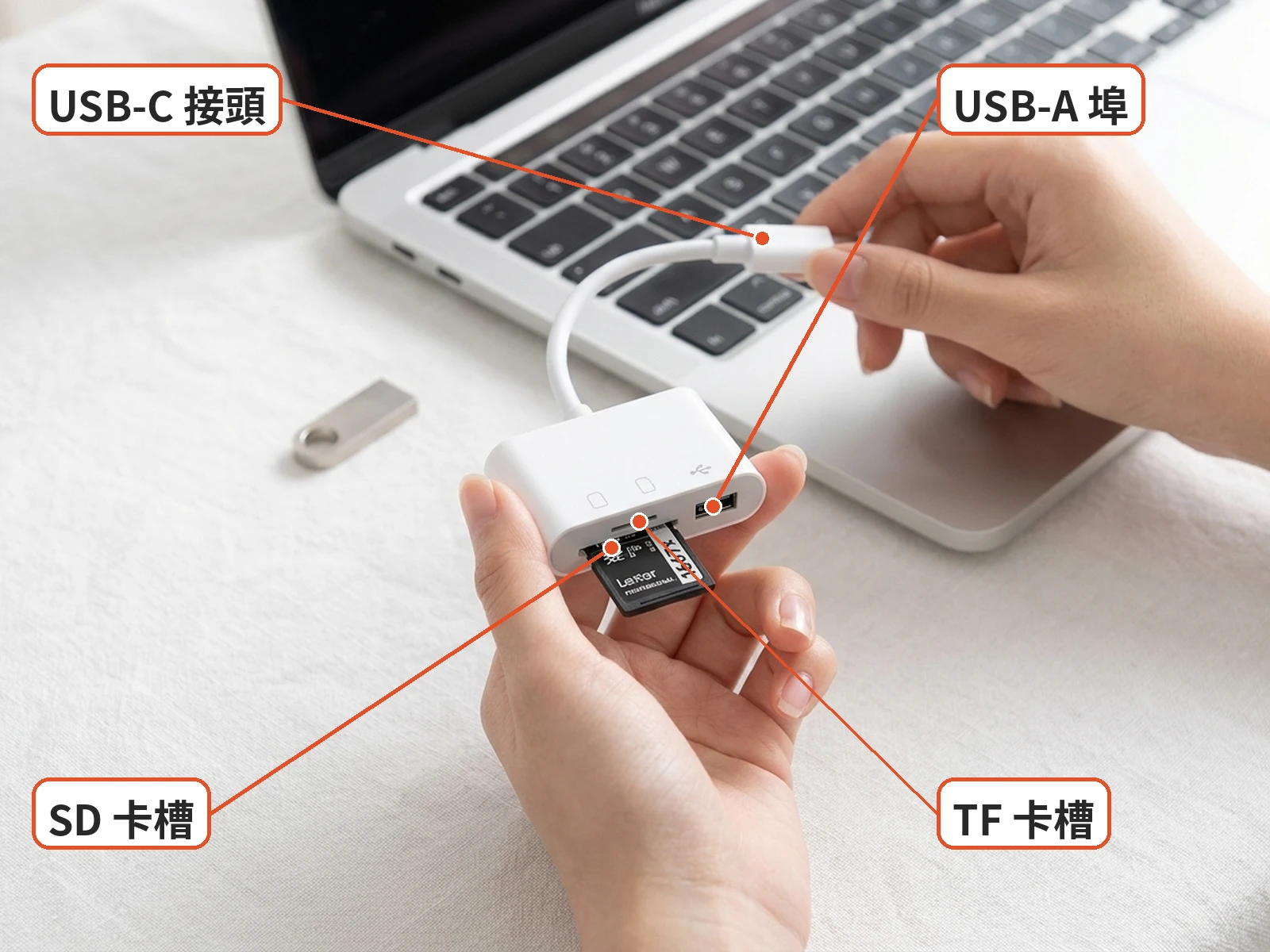
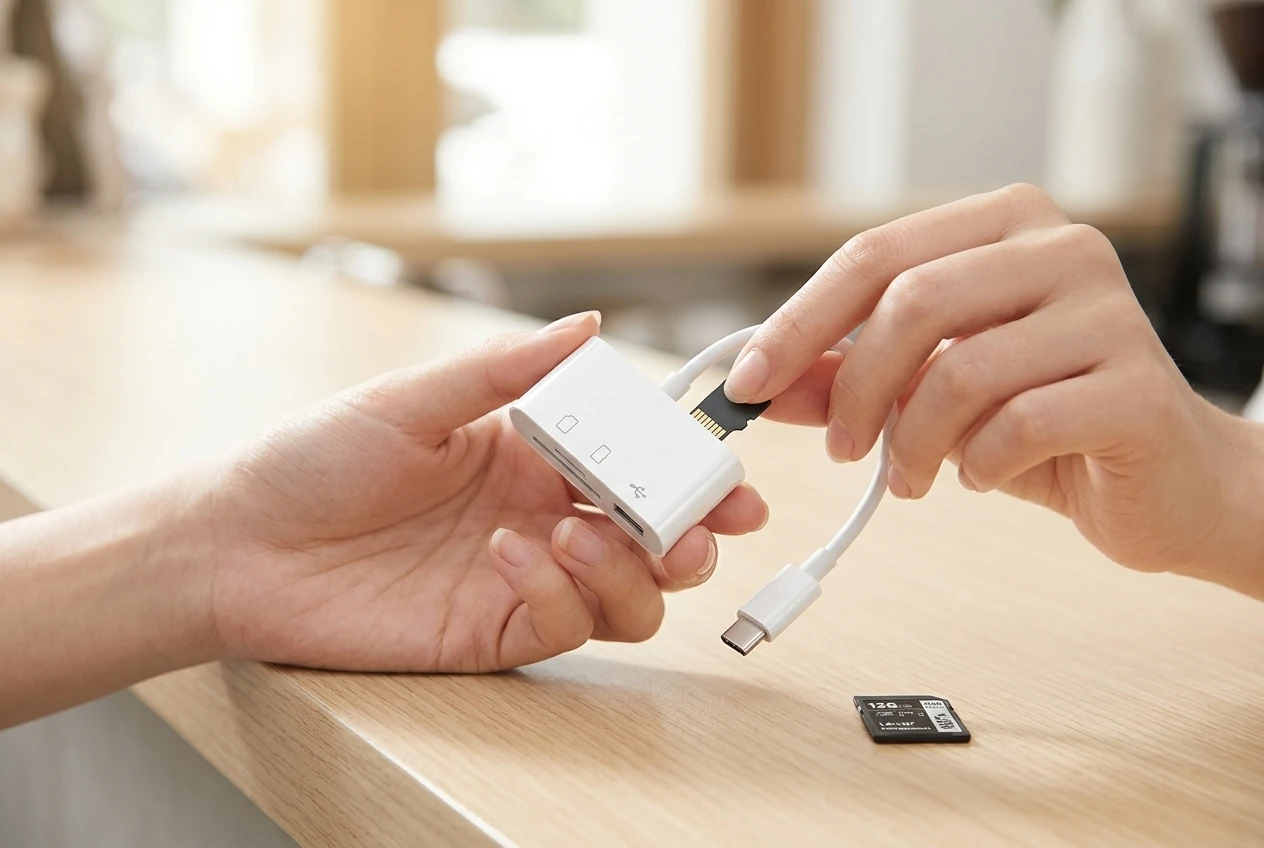
When you need to transfer files from a camera SD card, a dashcam TF card, and a USB stick, a Type-C reader may be worth considering. This USB-C 3-in-1 OTG card reader is a white rounded hub with a short integrated USB-C cable, front SD, TF, and USB-A ports, and three gray icons on top; marketing frames usually title it a 3-in-1 reader.
Easy to spot: not a metal dual-slot stick and not a TF-only keychain—just a short-cable white hub with three ports. List titles sometimes say 4-in-1 or i15 even when the photo shows three sockets, so that mismatch belongs on your checklist.
Who is the white 3-in-1 reader for?
Best for travelers who carry camera SD, dashcam TF, and a tiny stick together. PTT reader threads still push branded dual-interface units for stability; OTG threads warn compatibility can flip after a phone swap. Treat this as a spare, not a cutting-room main reader.
Good fit: Android and USB-C laptop users who hate packing extra adapters. Less ideal: Lightning iPhones, editors who need full rated card speeds, or shoppers who expect a 4-in-1 title to mean an extra port.
On arrival, count the ports and test an old card on a computer. On your phone, check OTG support and file access permissions.

Practical take: does this white hub, starting at about NT$49, meet your needs?
Searches for a USB-C 3-in-1 card reader review ask whether it mounts, how fast it is, and how it differs from dual sticks. Port integration and a short cable that crowds less are the wins; blazing speed and every Apple phone are not. Price sits near NT$49, with roughly 1,000+ sold, while 4-in-1 claims remain unconfirmed.
Peers include Kingston dual-interface units, Lexar RW310x, and the site’s existing POLYWELL dual stick. This reader stands out for its white housing, short cable, and USB-A port. If you need exact transfer speeds or USB-IF certification, check the details for the unit you plan to buy.
Use tip: verify files on a computer before relying on transfers to your phone, and eject the card before removing it to reduce the risk of file system damage. Avoid sharp ninety-degree bends at the cable root.
Color strategy is simple: white shows on dark desk mats and matches most laptops; a clear pouch keeps lint out of the slots in a bag.
It can live beside dual sticks and single-slot keychains: the hub for card-plus-stick days, the stick for minimal bulk, the keychain as backup. Clear roles beat missing one adapter on a trip.
For safety, scan unfamiliar USB sticks, handle the reader with dry hands, and avoid leaving it in a hot car. If mounts fail, change ports and reset OTG before forcing the plug.
Store the reader and cards separately so a half-inserted card does not get bent; before travel, run a quick read/write test with a test card.
If you only transfer files from TF cards, a single-slot reader may be enough. The 3-in-1 can be more useful if you also use a USB stick for presentations. Set expectations on integration, not speed records.
When shopping, count your real interfaces: TF-only buyers need not pay for USB-A; card-plus-stick travelers justify the white hub’s pouch slot.
If a slot loosens, retire valuable cards from it—spring life on budget readers is finite.
Mold lines or uneven icon print usually mean cosmetic batches; contact quality matters more than perfect silkscreen.
What users say
PTT PC_Shopping reader thread lists Kingston, Lexar, Transcend, Galileo, and POLYWELL picks, stressing stability and DDR200 quirks, with some riders keeping cheap dual sticks in scooter boxes. PTT iOS OTG hunt notes that one cable rarely covers Android, iPad, iPhone, and PC, and that some readers may no longer work with a replacement phone. Mobile01 reader shootout compares speed, heat, and firmware—cheap plastic is not automatically bad, but rated vs measured gaps are common. Category talk—not a lab report on this exact white 3-in-1 hub.

Similar alternatives
- Kingston MobileLite Duo 3C: steadier dual-interface pick, higher price
- Lexar RW310x: SD+TF dual-head stick often praised for stability
- POLYWELL USB3.0 SD/TF dual stick: smaller, no USB-A expansion
Bottom line: a white USB-C short-cable 3-in-1 built for packing fewer adapters—treat port count, OTG support, and speed claims as checklist items before it stays in the cable pouch.
Specs
| Item | Detail |
|---|---|
| Product | USB-C 3-in-1 OTG card reader (SD / TF / USB-A) |
| Look | White rounded hub; short integrated white USB-C male cable; front SD, TF, and USB-A ports with three top icons |
| Common use | Phone/laptop SD camera dumps, dashcam TF pulls, or USB sticks when the host supports OTG |
| Price note | From about NT$49 |
| Sold (from sales count) | About 1,000+ sold |
| Open gaps | Whether 4-in-1/i15 list claims match the 3-port body, USB generation and real speeds, multi-device bus limits, brand warranty |

Pros
- One white hub covers SD, TF, and USB-A so travel kits stay lighter
- Integrated short cable crowds neighboring ports less than a direct stick
- Low price works as a spare reader without buying a flagship dual-interface unit
Cons
- Titles may claim 4-in-1/i15 while the body shows three ports—trust the hardware
- Public speed and chip specs stay thin; do not assume full rated card throughput
- OTG depends on the phone; some models block files or under-power the hub
Where to buy
NT$49 | See the lowest price →
Check the details on the seller's page before you buy.
FAQ
How is this different from a Polywell dual reader?
Dual sticks are usually SD+TF dongles; this white short-cable hub adds USB-A for stick-plus-card kits.
Will it work on iPhone?
USB-C iPhones that allow external storage may work; Lightning phones will not take this plug. An i15 list tag is marketing, not MFi proof.
Can SD and a USB stick run together?
The reader has three ports, but simultaneous operation and sufficient power are not guaranteed. Transfer important files separately and test the reader on a computer before relying on phone transfers.
Is it USB 2.0 or 3.x?
Public copy is often vague; PTT reader threads say cheap hubs need your own benchmarks. For edit dumps, pick clearly rated UHS/USB3 units.

You might also like

Tech & Gadgets
Product comparisonBest USB-C Chargers 2027: 4 Picks for Charging Laptop and Phone
How do you match USB-C chargers, power banks and cables so the wattage adds up? We compare the Anker 67W, Anker Prime 200W, a magnetic power bank and the Baseus 240W cable on ports, output and limits.

Home & Living
Product analysisPinwu Magnetic Disc Review for Renters: Will a Power Strip Fall?
Round magnetic discs look grab-and-go, but hold strength still depends on flat walls and how heavy the remote or strip is.
NT$40

Tech & Gadgets
Product analysisDTAudio DTA-K150 Earbuds Review: Stable on Your Commute?
Bean-style buds with a battery window on the case tempt commuters; confirm the Bluetooth version and features on Shopee before you buy.
NT$379

Tech & Gadgets
Product analysisMagnetic Power Bank Review: Is iPhone Wireless Charging 22.5W?
Purple body, magnetic charging, and a percentage display make this handy for quick commuter top-ups; brand, wattage, BSMI, and flight rules still need checking before checkout.
NT$438